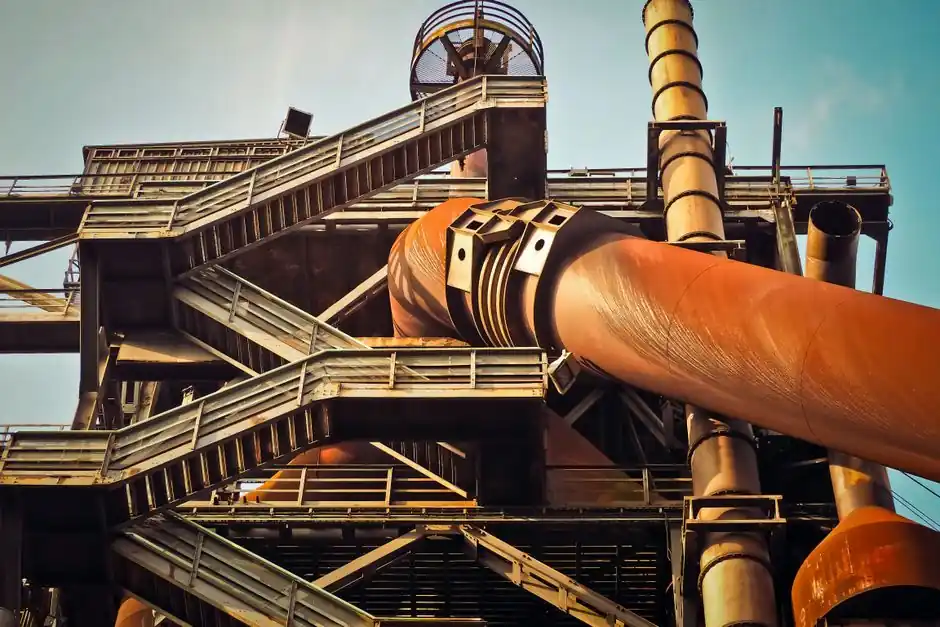
Steel-plastic composite (SP) pipe pairs a polymer inner liner with a steel-wire or steel-strip skeleton, giving residential plumbing the corrosion immunity of plastic and the pressure capacity of steel in a single lightweight run [S2].
The category has four working sub-types on the market: plastic-aluminum, plastic-steel, plastic-fiber, and plastic-copper composites, each tuned for a different pressure, temperature, and water-hammer band [S2]. For site engineers sizing a home riser, the decision now hinges on three hard numbers: working pressure, continuous service temperature, and the local chlorine or pH of the supply water [S4].
Where SP Pipe Fits Against Plain Steel and Plain Plastic
A 2025 manufacturer comparison sets the SP family (marketed under trade names such as HeatFlex, FibreFlex, and FibreFlexPro) between galvanized steel and all-plastic systems on three axes: strength, corrosion behaviour, and install labour [S1]. The fiber-reinforced grades (FibreFlex, FibreFlexPro) handle low-to-medium pressure domestic risers and the higher-temperature heating circuits, while HeatFlex targets hot-water and radiator loops where thermal stability is the binding constraint [S1]. Plain steel pipe still wins on raw strength and is the default for high-pressure or oil-and-gas service, where API 5L seamless line pipe can carry roughly 20% more pressure than a comparable welded steel pipe, at a higher upfront cost [S3].
For a typical single-family dwelling, the SP family sits in the pressure-and-temperature band where PVC (rated to about 60°C / 140°F), PEX (flexible but UV-sensitive), and CPVC (rated to about 93°C / 200°F) are the usual all-plastic alternatives [S5]. SP pipe picks up the hot-water and heating-duty cases that PVC cannot cover, while avoiding the soldering and tool inventory that copper demands [S5].
Selection Criteria Engineers Should Apply on Site
The peer-reviewed 2026 AHP study by Mutlag, Abed, and Al Mashhadany evaluated five residential water-supply materials (thin-walled copper, PVC-lined galvanized steel, PP-R, PVC-U, and thin-walled stainless steel) against three weighted criteria: safety and reliability, cost, and health and cleanliness [S4]. SP pipe was not one of the five named cases, but it occupies the same decision space as PVC-lined galvanized steel, which scores well on corrosion resistance while keeping the steel skeleton's mechanical strength [S4]. The same paper's conclusion is generalisable: any SP candidate must be screened on pressure rating, temperature ceiling, and potable-water hygiene certification before the cost column is even opened [S4].
A 2021 procurement guide reinforces the plastics choice for residential water supply, recommending PP or HDPE over PEX where the local code allows it [S6]. For SP pipe the same logic applies: confirm the inner-liner resin (PP-R or HDPE are the common choices), confirm the maximum continuous service temperature (95°C is a typical published ceiling for hot-water SP grades), and confirm the pressure class at the design temperature, not at 20°C [S6]. For trench-laid service, plan on a wider, deeper trench for steel and a narrower, shallower one for SP and plastic, because the composite's flexibility tolerates tighter bends and less bedding compaction [S1].
Material-by-Material Comparison for Residential Specifiers
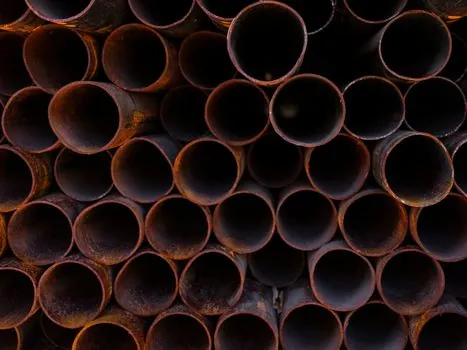
Set against the four most common residential pipe materials, SP composite scores as follows: [S1]
Working pressure: SP composite typically matches or exceeds standard PVC and PEX at room temperature, and is rated below seamless steel but adequate for domestic risers (which are usually PN16 or PN20 class). Continuous service temperature: SP composite is published up to roughly 95°C on the hot-water grades, against about 60°C for PVC, about 93°C for CPVC, and 50+ years of service for copper at full domestic temperatures [S1][S5]. Corrosion behaviour: SP composite is intrinsically non-reactive to chlorine and most dissolved minerals, and unlike plain steel it does not need galvanizing or internal coating to resist rust in humid or saline supply water [S1]. Installation labour: SP composite uses push-fit or compression joints, needs no welding or threading, and is light enough for a single fitter to carry, whereas galvanized steel demands lifting gear and a welder or threader on site [S1].
For a quantitative anchor, seamless API 5L line pipe carries about 20% more pressure than a comparable welded steel pipe, so any move from welded steel to SP composite should be justified on temperature, corrosion, or labour, not on raw pressure [S3].
Installation, Trenching, and Site Handling
Galvanized and welded steel pipe install demands wider trenches, deeper bedding, lifting equipment, and a skilled welder or threader, with straight trench lines enforced because steel does not bend around corners [S1]. SP composite pipe inverts that picture: it is light enough to be carried by one fitter, joins with push-fit or compression couplings, and can be routed around corners and through confined ceiling voids without elbow-heavy fabrication [S1]. For a typical 15- to 32-mm residential riser, that labour delta is the largest single line item on the bill of materials, often outweighing the per-metre price premium of SP over PVC [S1][S2].
On a hot-water or radiator loop, the SP grade with the highest published thermal stability (the HeatFlex class in the RK Infra lineup) is the conservative pick, because repeated thermal cycling between 20°C and 80°C is the failure mode that cracks all-plastic risers over a 10- to 15-year horizon [S1].
Failure Modes, Limits, and Health Considerations
SP composite is not the right call for every residential line. For cold outdoor service or UV-exposed runs, all-plastic PEX and HDPE remain the default, with PEX explicitly restricted from outdoor use because UV degrades the cross-linked polyethylene [S5][S6]. For drainage, waste, and vent, ABS and PVC still dominate, with ABS carrying a BPA-content caveat that some specifiers reject on health grounds [S5]. SP composite is also not a substitute for stainless steel on aggressive chemistry: a 2020 municipal-water study recommends stainless Types 304/304L and 316/316L for wastewater treatment plant service, where chloride levels and surging pressure exceed anything seen in a domestic riser [S3].
On the health axis, the 2026 AHP analysis weights cleanliness as a primary criterion for any potable-water pipe, and concludes that liner material matters as much as the structural skin: a steel skeleton wrapped around an unapproved liner resin fails the safety column regardless of pressure rating [S4]. For residential code compliance, the SP product datasheet should list a recognised potable-water certification (for example, a national hygiene approval for the inner PP-R or PE-RT liner) before the pipe is accepted on site [S4].
Standards, Sourcing, and the October 2026 Buying Window
Three standards families govern a residential SP install. For the steel skeleton, ASTM A53 covers general-purpose welded steel pipe and API 5L covers line pipe for higher-pressure service, both referenced in current US infrastructure supply chains [S3]. For the inner liner, PP-R and PE-RT grades are specified to their respective ISO and ASTM resin standards, and the assembled composite is typically third-party certified to a national potable-water approval scheme [S4]. For the jointing system, push-fit and compression couplings must be matched to the SP manufacturer’s published pressure and temperature derating curves, because a generic brass compression fitting on an SP liner is a common site-failure root cause [S1].
For cross-category stainless and process-pipe price benchmarking in the same October 2026 sourcing window, the stainless-steel equipment buying signals digest provides a useful market-temperature read. For renovation-stage pipe selection on legacy homes, the PVC-U pipe selection guide covers schedule, pressure class, and compatibility constraints that often dictate whether an SP retrofit is even feasible. A broader engineering reference for SP pipe geometry, liner options, and joining methods sits in the steel-plastic composite pipe encyclopedia entry, and the underlying plastic-pipe family background is in the plastic pipe reference.
The trackable next signals for residential SP selection in late 2026 are: (1) any update to the national potable-water approval lists covering PP-R and PE-RT liner resins, since the 2026 AHP study flagged liner certification as the dominant health-risk lever [S4]; (2) published long-term creep data at 95°C continuous service, which is the binding constraint for hot-water SP grades in multi-storey residential risers [S1]; and (3) any movement in API 5L or ASTM A53 pricing, which sets the floor for the steel skeleton cost component in the SP composite [S3].
Component reference pages worth checking: construction tools.