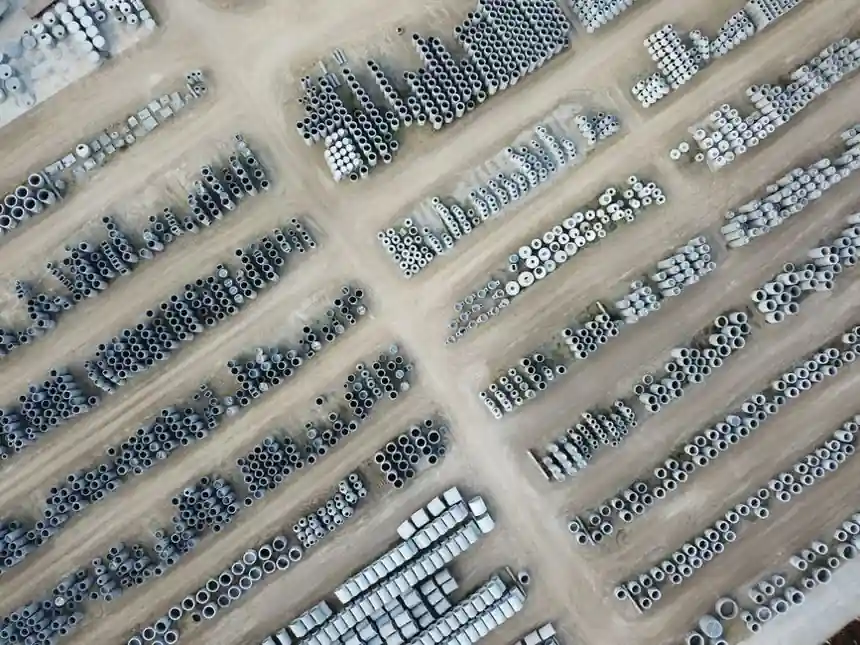
HDPE pipe stocked in distribution warehouses typically spans ¾" to 54" outside diameter in IPS, CTS, DIPS, and SIDR dimensioning systems, with PE4710 as the dominant resin at DR 7 through DR 32.5 pressure classes [S1][S3].
Buyers who skip pressure-rating verification pay for it twice: once at the fusion machine and once at the trench. The selection question is not "HDPE or not," but which DR-PR class, which dimensioning convention, and which rack the warehouse can load without violating OSHA 1910.176(b) [S5][S9].
Define the Service Before You Pick a Pipe
Start with the fluid, not the catalog. HDPE is rated for potable water, wastewater, mining slurry, natural gas distribution, geothermal loops, and industrial chemical service, and the same PE4710 cell class covers most of them, but the dimension ratio that survives in one service will burst in another [S1][S3].
Solid-wall HDPE is offered up to 63" OD in standard stock and 136" OD in large-diameter runs, with pressure ratings from 63 psi (DR 32.5) to 335 psi (DR 7) on the same PE4710 cell [S3]. For elevated-temperature service (district energy, industrial process loops), PE-RT sits beside the HDPE shelf and is the right pick above about 140°F operating temperatures [S3]. When the application is gas distribution, the pipe must trace to ASTM D2513, the gas-industry PE standard that is separate from the water-grade ASTM D3035 [S1][S9].
Match the Sizing System to the Job
Four sizing conventions compete on a typical PE pipe warehouse shelf, and mixing them up is the most common procurement error: [S2]
IPS (Iron Pipe Size) is the workhorse for water and industrial service, ¾" through 54" OD, controlled outside diameter [S1][S9].
DIPS (Ductile Iron Pipe Size) was formalized in 1948 to hold a controlled inside diameter, and it is still the dominant sizing for potable water and sewer in the U.S. [S1].
CTS (Copper Tubing Size) is the small-diameter choice, typically gas service lines and potable water services, and it appears in WL Plastics document WL 129 sized to ASTM D2513 [S1].
SIDR (Standard Inside Diameter Ratio) is engineered for conduit and inside-diameter-sensitive applications, with PE4710 conduit grades stocked separately from pressure pipe [S1].
Metric equivalents run 50 mm to 1000 mm for Class 200 (PN 13.8), Class 250 (PN 17.2), and Class 335 (PN 23.1) FM-approved PE4710, useful when projects cross the Atlantic or ship to the Middle East [S1].
Pressure Class and Dimension Ratio (DR-PR)
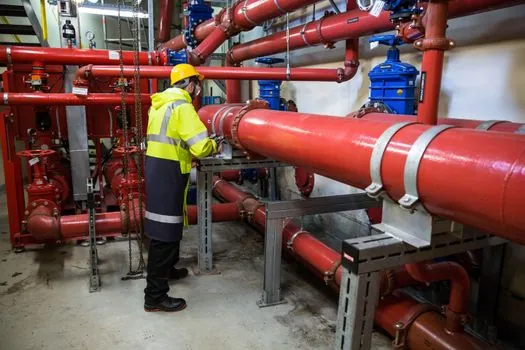
Under ASTM D3035, every PE pipe is specified by its dimension ratio (DR = OD divided by minimum wall thickness) and a pressure rating (PR) at a stated design temperature, typically 73°F [S9]. The lower the DR, the thicker the wall, the higher the pressure.
For PE4710 at 73°F, ISCO's published range covers DR 7 (335 psi) through DR 32.5 (63 psi) on the same resin cell, which is why two pipes of the same OD can have very different working pressures [S3]. The European convention expresses the same number as PN (nominal pressure) class, with PN 10, PN 16, and PN 20 the most common water-service ratings, and the two systems cross-reference cleanly once you know the DR [S6].
For PE pipe installation design, the PPI Handbook of Polyethylene Pipe (referenced through the Performance Pipe Field Handbook) is contingent on the pipe being installed per recognized flexible-pipe industry practice, not the manufacturer's minimum [S7]. That means embedment soil modulus E', trench width ratio Bd/Do, and native soil ratio E'N/E' all feed into the deflection check, and a warehouse that stocks pipe without stocking the corresponding fusion equipment is selling half a system [S4][S7].
Storage Racking: Where OSHA Meets the Rack Builder
OSHA 1910.176(b) requires that "storage of material shall not create a hazard," and the same standard calls for materials to be "stacked, blocked, interlocked, and limited in height so that they are stable and secured against sliding or collapse." PE pipe falls into the ambiguous "etc." category and stacks poorly on its own [S5].
Three racking patterns dominate materials warehouses handling PE pipe:
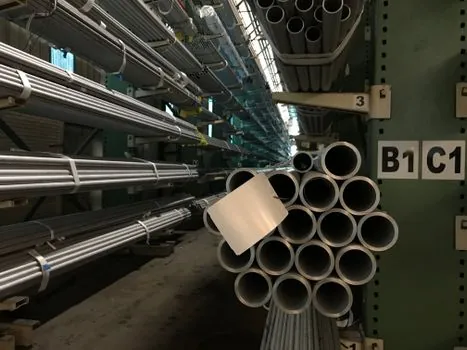
Vertical pipe racks with frequent crossbars, the simplest way to keep 20-foot lengths from rolling, work for PE, HDPE, PEX, PVC, ABS, and corrugated, and a standard 10-slot vertical rack separates stock by size and material so pickers do not have to dig [S5].
Cantilever racks with 39-inch adjustable arms are the right pick when forklifts handle bundles, because the arms extend 90° out from the frame and the lift truck can drive straight in without a vertical base to negotiate [S5].
Anti-skid rubber lining at the base of vertical racks keeps pipe from clumping at the front and adds a second layer of OSHA-compliant stability on top of the crossbars [S5].
One warehouse-floor decision that is often missed: long PE pipe stored in direct sunlight heats up and expands, so racks placed near dock doors or under skylights should be shaded or the stack height derated to account for thermal growth, an issue unique to PE versus metal pipe [S2][S5].
PE Pipe Versus Alternatives: When to Stock Something Else
HDPE wins on corrosion resistance, chemical resistance, leak-free fused joints (zero leak rate versus ductile iron and PVC), 100-year design life, and a 25x OD minimum bend radius that lets it swallow minor route changes without fittings [S2][S3]. Against ductile iron, HDPE is lighter, faster to install, and does not need cathodic protection; against PVC, HDPE tolerates higher surge and fatigue; against steel, HDPE is corrosion-proof but temperature-limited [S3].
HDPE is the wrong pick when the fluid exceeds PE-RT's continuous operating range (district energy and high-temperature industrial loops), when the code body mandates a non-plastic material (some fire-protection and certain fuel lines), or when the contractor cannot mobilize a qualified fusion technician, because a heat-fused joint done badly is worse than a mechanical joint done well [S3][S7]. The PE pipe family also includes PPR pipe for hot-and-cold plumbing indoors, plastic pipe broadly for non-pressure drains, and stainless pipe where high temperature or aggressive chemicals rule out any polyethylene grade.
Fittings, Fusion, and the Warehouse Bundle
A PE pipe warehouse that stocks pipe but not fittings is leaving margin on the table. The standard fittings list is elbows, tees, reducers, flanges, and custom fabrications, and ISCO publishes a "full range" alongside its HDPE pipe stock for exactly this reason [S3]. Fittings and the pipe must be the same cell classification (PE4710 to PE4710) and the same DR family to fuse reliably, so the warehouse SKU strategy should key on cell class plus DR, not on trade name alone [S1][S3].
For pipe support hardware that does not touch the fluid, the pipe clamp and pipe fitting categories on the shelf determine how fast a crew can hang or restrain a run, and undersized clamps on DR 11 pipe at 200 psi are a common field failure that starts at the warehouse, not the job site.
Procurement Checklist for a PE Pipe Order

Confirm cell classification: PE4710 is the current workhorse for water, gas, and industrial service at 73°F [S1][S3].
Confirm dimensioning system: IPS, DIPS, CTS, or SIDR; mixing them up in a single run is the most expensive way to learn a procurement lesson [S1].
Confirm DR-PR or PN class against the design pressure, with a surge allowance per the PPI Handbook [S3][S7].
Confirm standard reference: ASTM D3035 for water/industrial DR-PR, ASTM D2513 for gas, PPI Handbook for installation, OSHA 1910.176(b) for storage [S5][S9].
Confirm fittings and fusion equipment are on the same PO, from the same cell class, and the same supplier can deliver them on the same truck [S3].
Confirm rack system matches handling method: vertical racks for hand-loaded small diameter, cantilever for forklift-handled bundles, anti-skid bases for any rack near a sloped floor [S5].
The next tracking signal to watch is the PPI Handbook of PE Pipe revision cycle (referenced through the Performance Pipe Field Handbook [S7]) and any update to FM Approval pressure class listings for PE4710, which historically have expanded the upper end of the DR range as cell classifications improve [S1]. On the storage side, OSHA interpretations of 1910.176(b) specific to plastic pipe stacking height remain the controlling document, and a warehouse that documents its rack selection against that standard is audit-ready when the compliance officer walks in [S5].
Background reading: Acetylene vs Propane for Oxy-Fuel Cutting: Speed, Cost, and Spec Matchup.