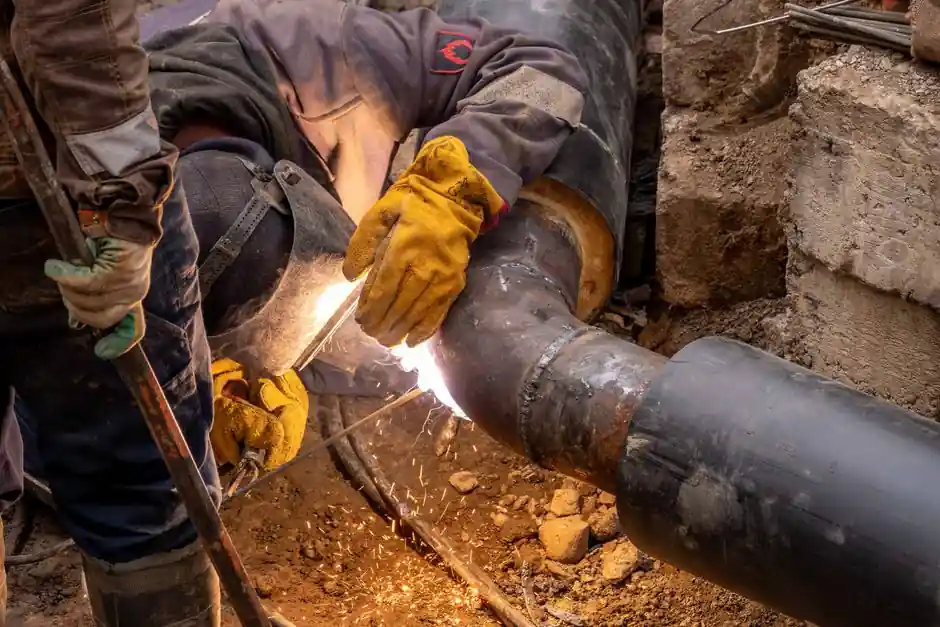
For renovation work, PVC-U (unplasticised polyvinyl chloride) is the rigid plastic pipe typically specified for cold potable water risers, sanitary drainage, irrigation laterals, and buried service lines, with a published service life exceeding 100 years and a recommended operating window of 0-60°C [S3][S4].
Renovation differs from new build because the fitter is rarely working with a clean trench: existing routing, slab penetrations, structural clearances, and limited downtime force a tighter match between pipe schedule, outside diameter, and joint method than a greenfield spec would demand [S1][S2].
PVC-U vs Other PVC Variants: Where Each Fits in a Renovation
PVC-U contains no plasticiser, which makes it rigid, strong, and chemically resistant to most acids, alkalis, and salts encountered in soil and grey-water service [S3]. By contrast, plasticised PVC is softer and used for cable insulation and flexible tubing rather than pressure pipe, and cPVC (chlorinated PVC) is the variant typically used where domestic hot-water lines are required [S3][S5]. For cold-water and drainage renovation, PVC-U is the dominant rigid choice and is also the form that the wider industry references when comparing PVC-U pipe against metal replacements.
Where the renovation touches a hot-water riser, cPVC is the correct upgrade path; PVC-U should not be substituted there because its upper temperature limit is 60°C and it becomes brittle below 0°C [S3]. For the cold side, soil, vent, and waste stacks, plastic pipe families are competitive on weight (roughly one-sixth that of steel) and on chemical inertness versus copper or galvanised lines that are being replaced [S1].
Schedule, Pressure Rating, and What Renovation Loads Actually Demand
Schedule 40, Schedule 80, and Schedule 120 are the three schedules most commonly pulled for buried and pressure work, with the full schedule range running from 10 to 160 [S4]. At the same nominal outside diameter, a higher schedule means a thicker wall, a smaller bore, and a higher pressure rating: Schedule 40 spans 120-810 psi, Schedule 80 spans 210-1230 psi, and Schedule 120 spans 380-1010 psi depending on diameter [S4].
For most residential and light-commercial renovation, Schedule 40 is the working default because it keeps the bore close to legacy copper/galvanised sizes, which simplifies slab and wall penetrations [S1][S4]. Schedule 80 earns its place on industrial renovation where the line sees higher working pressure, mechanical abuse, or deeper burial: the deeper the pipe, the greater the backfill load, and thicker walls are the standard mitigation [S4]. For DIY-scale work, 1-inch Schedule 40 PVC with matching pipe fittings is the most common starting point because the same sizing logic applies to irrigation, drainage, and structural builds [S6].
Renovation-Specific Selection Criteria Beyond Schedule
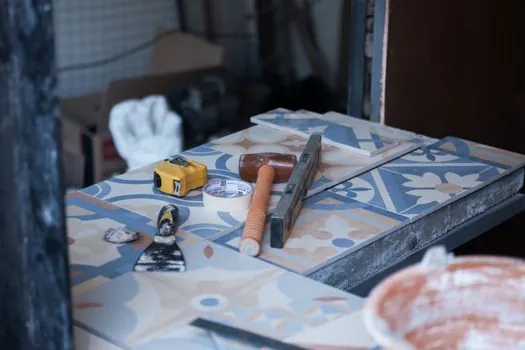
Four criteria drive most retrofit decisions: fluid compatibility, burial depth and backfill, joint method, and exposure. PVC-U will not corrode in moist soil and resists many acids, alkalis, and salts, but it is UV-sensitive and degrades under direct sunlight, so exterior above-grade runs need paint, lagging, or a different routing [S3]. Trench depth in renovation is usually dictated by the existing slab or foundation rather than ideal practice, but the working minimum is 18 inches of cover or below the local frost line, with a sand or soft-soil bed in rocky ground to protect the wall [S1].
Joint method is the other renovation pivot: solvent-cement joints (primer plus cement, quarter-turn insertion, held for cure) are the standard for new PVC-U runs, while transition couplings, flange adapters, or mechanical pipe clamps are used to tie into existing copper, galvanised, or cast iron [S1]. For a renovation that has to be handed back to service quickly, solvent-cure time and the related hot- and cold-weather cement grades are schedule items on par with the pipe class itself, because the alternative is a mechanical joint that costs more but can be pressurised immediately.
Comparison: Schedule 40 vs Schedule 80 vs Schedule 120 PVC-U
The table below is built from published pressure ranges and burial guidance, and is the kind of side-by-side a procurement engineer wants before a renovation kickoff [S4]. On cost, Schedule 40 typically wins because wall stock is thinner per metre, and a 10-foot length of small-diameter PVC-U commonly lands under USD 10 at retail, with thicker schedules scaling up in price with wall mass [S5].
For buried service work, deeper cover means more backfill pressure, so the schedule should rise with depth rather than staying fixed at the lowest cost option [S4]. A complete pipe-fitting datasheet should also expose the pressure class, material standard, and joint type so a renovation spec can be matched against the existing line; the related pipe fitting datasheet checklist walks through what that document has to list before procurement signs off.
Installation Practices That Decide Whether the Renovation Holds
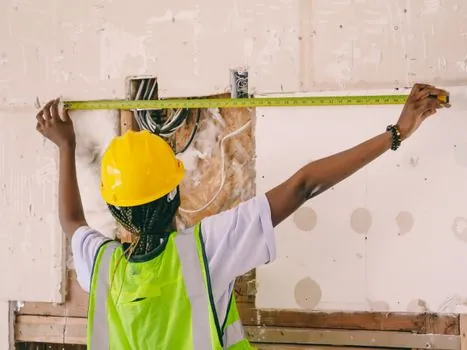
Three field steps decide if a PVC-U renovation will reach its 100-year design life: a square cut with a miter box or plastic pipe cutter, full deburring, and a dry fit that confirms the pipe seats at least one-third of the socket depth under hand pressure before any primer is opened [S1]. Solvent joints then follow a fixed sequence: primer on both surfaces, cement on both surfaces immediately after, full-insertion with a quarter turn to spread cement, and a hold of several seconds so the pipe does not back out of the socket [S1].
For buried runs, allow side-to-side slack in the trench to absorb thermal expansion, and bed the pipe on sand or fine soil in rocky ground; backfill should be placed and compacted in lifts rather than dropped, because point loads from rocks are the most common cause of wall failure before the line ever sees service pressure [S1]. Renovation projects with tight shutdown windows benefit from a staged procurement approach, because PVC-U and its PPR pipe alternatives may sit on different lead times depending on diameter and pressure class; the broader lesson of long-lead procurement for fast-track industrial projects applies even to a small-bore retrofit when the schedule is fixed.
Limits, Failure Modes, and When to Walk Away from PVC-U
PVC-U is not a universal answer, and a renovation spec that treats it as one will create warranty exposure. The published operating temperature ceiling is 60°C, with a low-side limit of 0°C below which the material embrittles, so any line that sees a hot-water leg, a boiler dump, or a cold-soil installation below freezing needs an alternative such as cPVC, PPR, or metal [S3]. UV exposure is a slow degradation pathway; exterior runs need shielding or a different material, and indoor runs near windows or skylights should be painted or lagged [S3].
Mechanical damage during backfill and over-torqued mechanical joints are the two most common in-service failure modes in renovation work, not the pipe wall itself [S1][S4]. The economic case is also worth restating for the procurement reader: PVC-U pipe is cheap per metre, with small-diameter 10-foot lengths under USD 10 at retail, so the total installed cost is dominated by fittings, joint consumables, and labour rather than the pipe stock itself [S5]. When a renovation budget is tight and the line is cold, drainage, or low-pressure irrigation, PVC-U on Schedule 40 with solvent joints remains the lowest-risk choice; when the line is hot, exposed, or mechanically loaded, the spec should move to cPVC, PPR, or metal before the work starts, not after the first joint fails.