
Wire mesh storage cages for retail backrooms and distribution centers are most commonly built from 6 gauge or 10 gauge steel wire in either square or diamond woven patterns, with welded and woven constructions dominating the market [S4].
Selection is driven by four spec axes that interact with each other: load capacity per shelf or per cage footprint, mesh opening size (which controls visibility and small-item retention), frame profile (typically 1.25 inch x 1.25 inch x 13 gauge angle), and the finish system (galvanized for outdoor or washdown, powder-coat for indoor retail finishes) [S4][S5].
Wire Gauge and Mesh Construction: What the Numbers Mean
6 gauge steel wire is approximately 4.88 mm in diameter; 10 gauge is approximately 3.43 mm. Both are used in cage construction, with 6 gauge specified where high-theft deterrence or impact resistance matters, and 10 gauge covering routine inventory segregation [S4].
Woven wire mesh offers higher tensile strength per kilogram and a more traditional industrial look, while welded wire mesh prevents unraveling if a single wire is cut, a meaningful advantage in high-shrink retail SKUs [S1][S4]. For retail pharmacies and backrooms where cleanliness and visibility matter, welded panels are typically preferred over woven because cut-wire propagation is contained to the welded intersection.
Standard welded wire mesh panels integrate 2 inch x 2 inch openings into 1.25 inch x 1.25 inch x 13 gauge angle frames, a spec widely used in tenant and retail storage cages where sprinkler discharge and airflow must pass through the enclosure [S5].
Frame, Finish, and Indoor vs Outdoor Exposure
Galvanized steel finishes are recommended for any cage exposed to humidity, dock-air, or washdown, because they prevent oxidation at welds and cut edges; powder-coat finishes are standard in indoor retail backrooms where appearance and cleanability dominate the spec [S1].
For pharmaceutical storage and retail backroom applications where a "cleaner" look is required, aluminum security cages are a viable alternative to steel wire mesh, trading impact resistance for weight reduction and corrosion immunity [S1]. Steel remains the default for high-theft categories because aluminum frames and mesh can be defeated with common hand tools.
Frame profile selection should match the expected load: 1.25 inch x 1.25 inch x 13 gauge angle is the residential and light-commercial baseline, while heavier 1.5 inch or 2 inch angles with thicker wall gauge are standard for distribution-center and pallet-rack-mounted cages [S4][S5].
Stackability, Pallet Rack Integration, and Floor Loading

Stackable wire mesh storage cages multiply floor-space efficiency in retail backrooms with low ceilings, and most vendors offer 2-high to 4-high stackable configurations rated between 500 kg and 1,500 kg per cage depending on frame and base design [S2][S6].
Pallet rack doors and rack-mounted enclosures convert existing teardrop or selective racks into lockable cells; sliding gates are preferred where swing-door clearance is limited, and back-of-rack panels reduce product and pallet drops into adjacent work aisles, a documented secondary safety benefit of rack-mounted cages [S4].
When evaluating wire mesh storage cages, retail buyers should focus on five criteria in this order: load capacity, cage dimensions, stacking requirements, mesh opening size, and handling/maneuverability, because each one constrains the others [S6]. For example, a 4-high stack only works if floor loading and forklift mast height both permit it.
Configuration Comparison: Woven vs Welded vs Rack-Mounted vs Driver Cage
Four configurations cover most retail and distribution needs, and they compare on the criteria that actually drive a purchasing decision [S1][S3][S4][S5].
Woven wire partition: highest tensile strength per kg, traditional industrial look, higher cost per panel, best for heavy-duty security applications and outdoor enclosures [S1][S4].
Welded wire partition: clean modern look, cut-wire containment at the welded intersection, moderate cost, best for retail backrooms, pharmaceutical storage, and tenant storage cages [S1][S4][S5].
Rack-mounted enclosure: integrates with existing teardrop pallet racks, sliding or swing gates, dual-purpose for inventory security and aisle drop protection, fits facilities with surplus vertical cube [S4].
Driver cage and controlled-access enclosure: surrounds dock entryways to admit truck drivers while containing visitor access, often equipped with service windows for paperwork handoff, ubiquitous in modern dock facilities [S4].
Supplier Channels and Lead-Time Reality
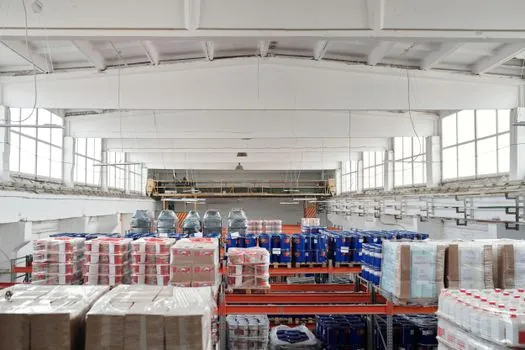
Three supplier channels serve the retail cage market, and they compare on lead time, installation support, and customization depth [S1].
Dedicated material handling distributors (such as regional storage and ergonomic equipment vendors) provide local accountability, layout design assistance, and bundle other warehouse components (shelving, rack protection) into a single shipment; lead time is typically 2-6 weeks for standard cages [S1].
Direct manufacturers handle massive new-build facilities or highly specialized custom fabrications but often lack localized installation support [S1].
General industrial supply retailers fulfill immediate, simple needs from stock catalogs but rarely provide the technical consultation required for seismic anchoring, custom sizing, or integration with existing storage rack infrastructure [S1]. For projects beyond a four-sided box on a flat floor, the catalog approach can lead to costly installation errors.
Code, Sprinkler, and Visibility Constraints
Wire mesh storage cages are defined as secure, mesh-based enclosures used to store valuable, sensitive, or regulated inventory inside a warehouse or distribution facility, and the open mesh structure is what makes them compatible with fire-sprinkler coverage and ventilation [S3].
Open mesh also enables staff to verify occupancy, identify misuse, and check for blocked sprinklers or prohibited contents without opening every unit, a daily management advantage in tenant storage and multi-tenant retail environments [S5].
For retail shelving comparisons, note that more products can be displayed on a shelving unit than with any other storage method, so cages are correctly specified for high-theft and sensitive SKUs rather than for primary merchandising [S7]. Where cages are used in a retail-facing capacity, mesh size determines product visibility: 2 inch x 2 inch openings retain most small boxed goods, while 1 inch x 1 inch mesh is specified for small electronics and pharmaceutical unit-dose items [S5].
Spec Checklist for a Retail Distribution Cage Order

Before issuing an RFQ, lock down the following six parameters: wire gauge (6 vs 10), mesh type (woven vs welded), frame profile and wall thickness, finish (galvanized vs powder-coat vs aluminum), stackability rating, and gate type (swing vs sliding) [S1][S4][S5][S6].
Match these to four operational variables: inventory value and shrink history, aisle width and forklift turning radius, ceiling height and sprinkler head clearance, and whether the cage is stationary or relocatable as the floor plan changes [S3][S6].
A correctly specified cage acts as part of the broader storage handling and storage cage ecosystem, integrating with storage rack systems and pallet enclosures rather than sitting as a standalone purchase, and that integration is what separates a working retail backroom from a catalog order that misses on day one [S1][S7].
Trackable signals for the next procurement cycle: regional distributors are bundling cage orders with rack-protection and shelving shipments to compress lead times to the 2-4 week band, and stackable 4-high welded configurations are replacing 2-high static units in new retail DC builds as floor costs rise [S1][S2][S6].
Background reading: Truck Crane vs Tower Crane: Spec-Driven Selection for 2026 Job Sites.