
Chemical shippers in 2026 are specifying net-weight filling scales that pair platform capacities from 150 kg floor units up to 5,000 kg pallet scales with load cells rated for corrosive product contact, most commonly 304 or 316 stainless steel [S1]. Selection is no longer about capacity alone: equipment lists for chemical packagers now lead with material compatibility, operator safety, fill accuracy, production rate, automation, and long-term scalability [S2].
For drum and pail lines, the practical decision node is whether to run a filling machine timed by level/overflow, volumetric (pump or piston), or net-weight with a closed-loop checkweigher. Each path trades accuracy, changeover time, and CIP/SIP friendliness differently, and the wrong pairing shows up fast as off-weight drums, foaming overflow, or seal failure on corrosive chemistries [S5][S7].
Capacity and Platform Sizing for Drums, Pails, and IBCs
Drum and pail filling lines typically need 25-gallon to 55-gallon drum capability, while net-weight and pail fillers handle 5-gallon pails in the same cell, and servo positive-displacement fillers can span both thin and thick chemistries on one frame [S5]. Platform scales for shipping parcels and pallets are commonly compared on platform size, capacity, data connections, and handling requirements [S6], and chemical scales should be chosen based on their capacity to handle the heaviest items in the operation, the materials' properties, and required accuracy [S1].
Trade-approved (NTEP/legal-for-trade) indicators are required whenever the filled container is sold by weight; for in-house batch or shipping verification, non-trade indicators cut cost without affecting internal accuracy [S1]. A standard 150 kg to 1,000 kg bench/floor platform is the workhorse range for drum and tote filling cells, while pallet scales above 2,500 kg are reserved for IBC/tote and bulk-drum dispatch verification [S6].
Product-Contact Materials: 304 vs 316 SS, HDPE, PP, PTFE
Material compatibility drives product-wetted component selection: 304 stainless steel is acceptable for many non-aggressive chemistries, while 316 stainless steel is required for chloride exposure and most acidic or saline chemicals, with HDPE, polypropylene (PP), PVC, and PTFE/elastomer alternatives used where stainless is overkill or incompatible [S2]. The 316 vs 304 difference is the single most common spec gap on retrofits, and getting it wrong produces equipment corrosion, product contamination, premature component failure, increased maintenance, and operator-safety incidents, all of which appear together rather than as a single failure mode [S2].
Elastomer choice (EPDM, FKM/Viton, PTFE) is matched to the specific reagent, not to a generic chemical category, so the cut-sheet must list the full product-contact set, not just the wetted metal. Load cell bodies and mounting hardware outside the wetted path are usually 304 or zinc-plated steel, but any exposed hardware in washdown or spillage zones should be upgraded to 316 or encapsulated to match the rest of the cell [S1][S2].
Matching Fill Technology to Viscosity and Foam Behavior

Time/gravity fillers are the right pick for thin, non-temperature-sensitive, often corrosive liquids, while piston fillers are simple, cost-effective, and handle semi-paste, paste, or chunky products with large particulates; pump fillers sit in the middle for medium-viscosity and specialty formulations [S2][S5]. Overflow fillers are the standard answer for foaming chemistries because they form a seal around the container opening and return overflowed product to a holding tank, eliminating the spillage and waste that a timed fill would produce on surfactants and similar foaming products [S5].
Peristaltic fillers are the high-accuracy small-volume option, used when the product is high-value and the package is small, because the tubing is the only product-contact part and changeover between SKUs is just a tubing and adjustment swap [S5]. For chemicals, the comparison that matters is fill technology against viscosity band and foam tendency, not against raw throughput, because chemical lines are almost never rate-limited by the filler; they are rate-limited by drum handling, torque-controlled closures, and tare weighing cycle time [S2].
Net-Weight vs Level/Overflow Control on Chemical Lines
Net-weight filling with closed-loop load cell feedback is the higher-accuracy path and is required for trade-sale-by-weight applications, where it typically hits ±0.1-0.2% of target on free-flowing liquids and ±0.3-0.5% on viscous products when paired with proper vibration damping and tare-zero control [S7]. Level/overflow filling is faster, mechanically simpler, and avoids load cell drift, but it controls only fill height, not mass, so density variation between batches will produce off-weight drums even when the visible level is consistent [S7].
The practical rule of thumb in 2026 specifications: choose net-weight where each drum is sold by weight, where product value justifies the load cell cost, or where density varies batch to batch; choose level/overflow for high-volume commodity chemicals in transparent containers where visual consistency matters more than legal-for-trade accuracy [S7]. Many lines run overflow for the bulk fill and a net-weight trim stage, combining the cycle-time benefit of overflow with the accuracy of a final checkweigher pass [S5][S7].
Operator Safety, Automation, and Hazardous-Area Footprint
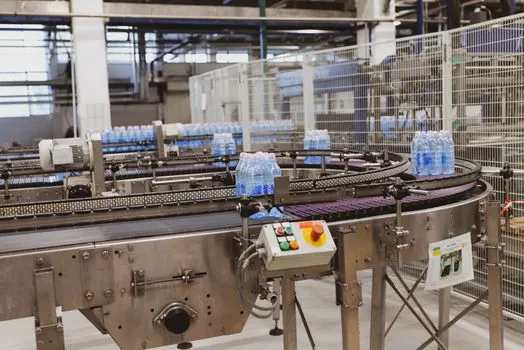
Operator-safety features are no longer optional on chemical lines: closed transfer, vapor recovery, drum-locator interlocks, and fume extraction are now part of the equipment spec sheet, and automated cells reduce operator exposure to repeated manual handling of corrosive or solvent drums [S2]. For flammable chemistries, drives, indicators, and load cell junction boxes must be selected for the hazardous-area classification (ATEX/IECEx zones for EU/global, NEC Class/Div for North America), which the equipment supplier should be asked to confirm in writing, not assumed.
Automation ranges from semi-automatic (operator places drum, machine fills) up to fully autonomous drum filling systems that weigh, lid, package, and convey with no operator at the cell; the higher the automation level, the more critical the upstream batch-tracking and data interfaces become for traceability [S1][S2]. A useful guardrail: a manual or semi-auto cell is fine below ~10 drums per hour, but above 20 drums per hour the labor cost of a human placing every drum typically justifies at minimum a powered roller conveyor and automatic drum indexing [S2].
Data Integration, Traceability, and Lot-Level Records
Connectivity, software integration, and digital readouts are now baseline spec items rather than optional extras, and modern bench-scale indicators expose Ethernet/IP, PROFINET, Modbus TCP, or OPC-UA for direct line-side handoff to MES and ERP systems [S1]. Lot-level traceability requires timestamped weight records, operator or batch ID, and a tamper-evident log; without these, recall traceability on a chemical line is essentially non-existent, regardless of how accurate the scale is [S2].
When a chemical reagent or chemical material has a regulated shelf life or a custody-transfer requirement, the indicator should support e-signature events and 21 CFR Part 11-style audit trails (or local equivalents), and any cloud connectivity should be reviewed against the plant's OT/IT segmentation policy before commissioning [S2]. For multi-product lines, recipe storage in the indicator with per-product setpoints (target weight, two-stage cutoffs, vibration-damping profile) cuts changeover time and is the single highest-ROI software feature on retrofit projects [S3].
Decision Criteria: Five Checks Before You Order
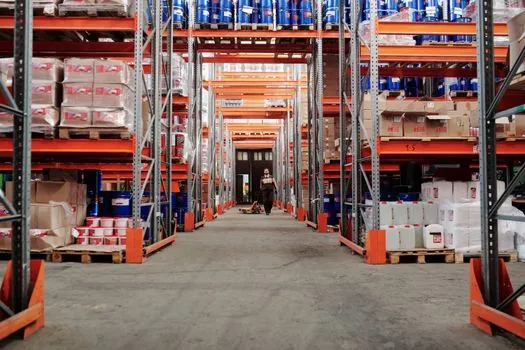
Each of these is a documented drop-out in chemical-scale projects and each is verifiable from the vendor's data sheet before delivery, not after installation.
Signals to watch in the next 12 months: continued migration of chemical packagers from level/overflow to net-weight for high-value SKUs, growing adoption of 316 SS as the default over 304 even on less aggressive chemistries, and tighter MES/ERP integration requirements driven by traceability rules in major chemical markets. Readers running retrofit projects should weigh the option of a climbing formwork selection guide for plant-shutdown maintenance windows, and procurement teams comparing fill-accuracy claims should benchmark against a TIG welder selection spec map approach, where the data sheet, not the brochure, drives the decision [S2][S3].