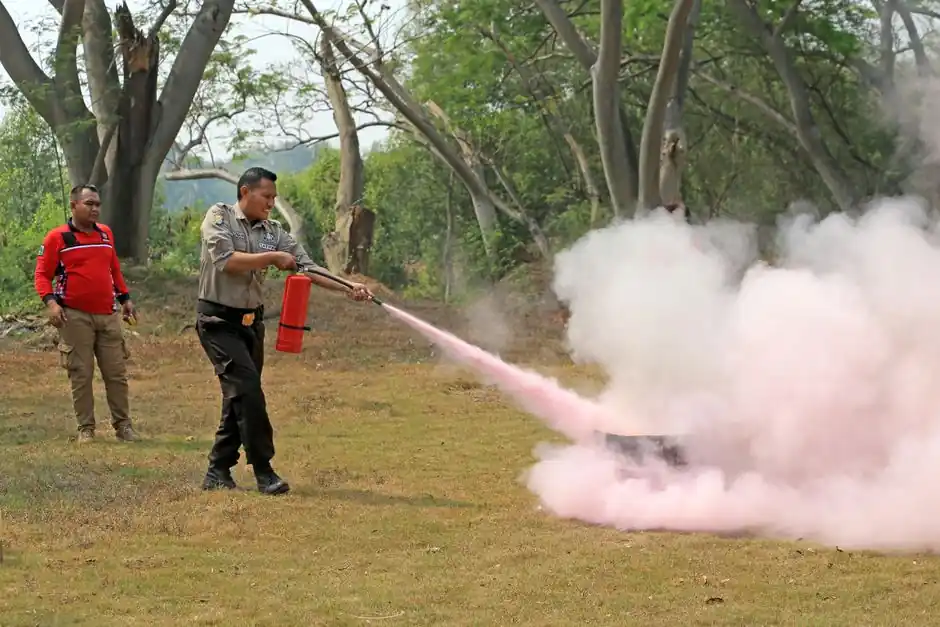
Stored-pressure fire extinguishers keep the agent and propellant in one pressure vessel, allowing immediate discharge with fewer operating steps than cartridge-operated units.
Cartridge-operated extinguishers keep the agent in a non-pressurized cylinder and the propellant in a separate cartridge that must be activated before discharge.
Operating principle and emergency readiness
A stored-pressure extinguisher combines the extinguishing agent and compressed propellant gas in the same sealed container. Nitrogen is a common propellant, and the vessel remains pressurized during service, so activation can proceed directly to aiming, squeezing the handle, and sweeping the discharge stream [S1][S3]. This arrangement supports immediate readiness and fewer operator actions under emergency conditions [S3].
A cartridge-operated extinguisher stores the agent in the main cylinder and the compressed nitrogen in a separate pressure cartridge. The main cylinder is not normally under working pressure; pulling the operating mechanism punctures the cartridge, pressurizes the cylinder, and enables agent discharge [S1][S2][S4]. This separation adds one activation step, but it removes the need to maintain a continuously pressurized agent cylinder and reduces exposure to accidental pressure loss before use [S1][S3].
For fixed vehicle suppression systems, a further difference is powder conditioning. Side-cartridge systems route nitrogen through a perforated gas tube to break up and fluff compacted dry chemical before discharge. Stored-pressure systems instead rely on downward gas pressure to force compacted powder through a siphon tube [S2]. Both designs are affected by vibration-induced settling and compaction in mobile-equipment applications [S2].
Comparison by operating steps, inspection and servicing
Stored-pressure extinguishers have fewer operating steps, while cartridge-operated extinguishers require the pressure cartridge to be activated first.
The cited inspection comparison gives approximately 43 inspection steps for a cartridge-operated extinguisher, varying slightly by manufacturer [S5]. The cited comparison specifies a 12-year hydrostatic test for cartridge-operated extinguishers, which do not require the 6-year internal maintenance because they undergo an annual internal inspection [S5].
A pressure gauge on a stored-pressure extinguisher provides a visible pressure indication, but a gauge alone does not prove that the complete unit or suppression system is ready [S2][S3].
Temperature, exposure and service environment
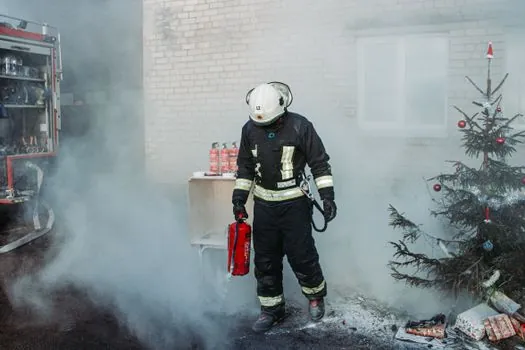
Stored-pressure extinguishers have the shortest operating sequence because cartridge-operated extinguishers require the pressure cartridge to be activated first [S1].
In offshore and North Sea service, cartridge-operated extinguishers remain compliant, but inspection expectations, supply pressures, manufacturer phase-outs, tightening supply, and rising service costs are increasing pressure to transition to stored-pressure systems [S4].
Stored-pressure systems remove a key failure point by allowing discharged units to be exchanged for ready spares [S4]. It is an operational selection decision rather than evidence of a new universal compliance requirement, and the cited North Sea guidance does not describe stored pressure as a mandatory replacement standard [S4].
For heavily weathered installations, a fire extinguisher selection should balance vessel material, corrosion protection, agent compatibility, service access, and the environmental temperature rating of the complete assembly. The distinction between stored and cartridge pressure does not remove the need to assess the surrounding fire alarm control panel and suppression arrangement where automatic actuation is part of the design.
Agent delivery, discharge and failure modes
Both designs can deliver dry chemical effectively, but their discharge behavior and failure modes differ under vibration, powder compaction, corrosion, and loss of stored pressure. [S2]
Stored-pressure extinguishers keep the agent and nitrogen in the same vessel, with maintained internal pressure [S3]. Settling and compaction of dry chemical are common to both stored-pressure and side-cartridge-operated systems [S2].
Cartridge-operated designs avoid continuous pressure loss from the main agent container because the propellant remains isolated until use. The separate cartridge still requires correct storage, expiry control, compatible replacement, and a proper recharge process [S3][S4]. During activation, the cylinder changes from nominally no internal pressure to approximately +250 psi, so corrosion, cuts, gouges, dings, and pitting remain important shell-integrity concerns [S5].
One cartridge-system example reports a 14-second discharge time for a 10 lb cylinder [S5]. That figure should not be generalized across agents, ratings, temperatures, or discharge devices because the supplied research does not provide a comparable stored-pressure discharge duration. Larger industrial cartridge units may also deliver more consistent pressure through the discharge cycle, which can benefit agent delivery [S3].
Selection by application and operating responsibility
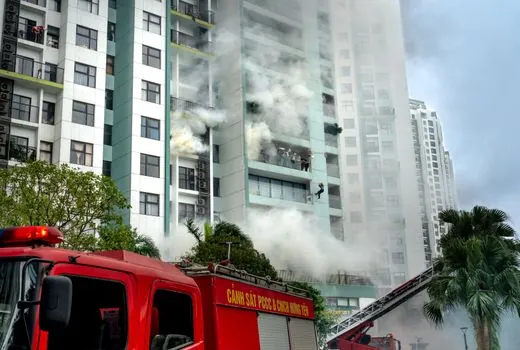
Stored pressure is the stronger choice for offices, public areas, frequent-use sites, and crews with limited training, while cartridge systems fit exposed industrial hazards where cartridge management is already controlled. [S2]
For offices, workshops, retail premises, and public-access locations, choose stored pressure when rapid operation and the shortest activation sequence outweigh the need for cartridge logistics. These units are immediately ready and generally easier for an untrained user to operate [S1][S3]. They are also usually more economical for routine applications [S3].
For chemical, petrochemical, oil and gas, aviation, power, mining, marine, offshore, and vehicle applications, cartridge operation becomes credible where the operating environment includes low temperatures, severe exposure, or vibration and where the owner can manage compatible cartridges, expiry dates, storage, recharge records, and training [S4][S5]. For vehicle systems, evaluate powder conditioning rather than treating the pressure arrangement alone as the deciding factor [S2].
Cartridge operation is not the right default where spare cartridges cannot be controlled, recharge cannot be performed or verified, or users are unlikely to complete the additional activation step correctly. Stored pressure is not the strongest default where continuous vessel pressure retention is unreliable, temperature exposure is severe, or maintaining ready spares and replacement service is already part of the facility program [S1][S4].
Sourcing, compliance and acceptance criteria
Specify the pressure arrangement only after fixing the agent, hazard class, required capacity, temperature range, corrosion exposure, test interval, and service model; the source data support structural differences, not a universal preference. [S1]
NFPA 10 and the manufacturer’s maintenance and recharge manual are identified in the cartridge-extinguisher maintenance guidance [S5]. The cited guidance states that a fire extinguisher must be condemned where local or general corrosion, cuts, gouges, or dings remove more than 10 percent of minimum cylinder wall thickness, and it also calls out pitting beneath a removable nameplate or name band [S5].
For an industrial purchase, require the supplier to declare the operating concept, agent, agent quantity, rated capacity, discharge duration, operating temperature range, cylinder material, corrosion protection, gauge and indicator arrangement, hydrostatic-test interval, internal-maintenance requirements, cartridge part number and expiry control, recharge procedure, and documentation of applicable listing or approval. These acceptance points prevent a stored-pressure cylinder and a cartridge-operated cylinder from being compared only by purchase price.
For agent selection, compare Purple K vs ABC dry chemical separately from vessel architecture: the correct agent depends on the fuel and hazard class, while stored versus cartridge pressure determines readiness, activation sequence, inspection workload, and environmental suitability. The supplier should also document any automatic actuation interface with the gas fire suppression arrangement, including verification of sensors, control circuitry, actuation line or cartridge, and discharge path.
The closest operational signal is not a change in extinguisher popularity, but serviceability: measure monthly inspection findings, gauge failures or pressure loss, cartridge expiry exposure, recharge turnaround time, and the availability of ready replacement units. These records reveal whether the selected design matches the facility’s temperature, corrosion exposure, workload, and maintenance capacity.