
For a static palletized load, the strap-per-strap target is (Pallet Weight × 1.5) ÷ Number of Straps: a 1,100 lb pallet on 3 straps needs a minimum 550 lb tensile per strap [S5], and the same math on a 1,200 lb / 3-strap load lands at 600 lb per strap [S3].
Width then maps to that target: 12–16 mm PP suits medium-weight warehouse pallets, 16–19 mm PP/PET covers heavy industrial and export loads, and steel (regular- or high-tensile) is specified where temperatures, sharp edges, or rail securement rules apply [S8][S5].
Break-strength math: the 1.5× rule and when to raise it
The static palletized industry default is a 1.5× safety multiplier on total load weight, then divided across the strap count [S3][S4]. The same factor appears in FMCSA cargo-securement guidance, which requires the aggregate working load limit of all securement devices to be at least one-half the article weight [S2].
Multipliers step up for real transit risk: 2× or higher for flatbed transport, vibrating or shifting loads, and irregular bundles; 3× for carton reinforcement where the strap itself becomes part of the package; and up to 5× for unitizing and bundling where the strap carries the package [S3]. Dynamic impact is what kills undersized straps, not static weight, which is why the OSHA 201353620 report flagged a 2,205 lb bag stack on two 0.5-inch plastic bands as the failure mode in a fatal collapse [S1].
PP, PET, steel, and textile: where each strap class fits
Polypropylene (PP) is the economical choice, available in 1/4" through 3/4" widths, with break strength typically 120–600 lb (Signode Empax data) and elongation of 14–20% standard, up to 40% in high-elongation grades, but it loses more than 50% of applied tension within the first 24 hours [S1][S2]. Machine-grade PP at 1/4" starts around 200 lb nominal break, and 1/2" hand-grade PP reaches up to 750 lb nominal break [S2].
Polyester (PET) has largely replaced steel for heavy palletized loads because it holds tension over time and welds quickly with battery tools or a strapping machine: low tension relaxation, high flexibility, and high impact resistance on a size-for-size basis versus steel and PP [S4][S5]. Steel remains required for hot, sharp-edged, or pointed goods in construction and metalworking, and high-tensile (heat-treated) steel is specified for compressed fiber bales, heavy steel coils, and open-top railcar or trailer loading [S5][S4].
Woven or composite textile strapping adds a reusable, weather-resistant option for irregular heavy loads and is common in mechanical-engineering and forestry securement, where low tension relaxation and re-tensioning matter [S4].
Width and thickness ranges by load class
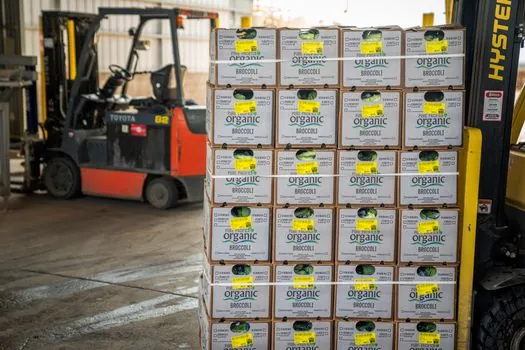
A practical width ladder reads: 12–16 mm for medium-weight pallets and warehouse shipments, 16–19 mm for heavy-duty industrial packaging and export shipments, and larger steel widths for the heaviest applications [S8]. PET strapping at 1/2" hand-grade hitting 750 lb nominal break is the typical mid-industrial spec, while 1/2" or 5/8" PET is the default crossing into heavy-pallet territory [S2].
Steel strapping comes in two tensile grades: regular duty (RD) low-carbon steel for low- to medium-duty bundling, palletizing, and box closure, and high tensile (HT) heat-treated high-carbon steel for shock-loading, unitizing, and rail/truck securement of dense loads [S5]. Steel widths in 13 mm and up define the breaking-strain ceiling for the most demanding securement, with HT delivering more footage per coil than heavy duty sizes of comparable break strength [S9][S5].
Comparison: PP vs PET vs steel on selection criteria
On a size-for-size cross-section basis, steel ranks highest on cost and break strength but lowest on elongation, tension retention, impact resistance, and moisture resistance; PET scores high on impact resistance and low on tension relaxation; PP sits in the middle on cost and lowest on long-term tension retention [S5]. Translating to pallet ops: PP is correct for light-to-medium, short-haul, carton-reinforcement duty; PET is the default for medium-to-heavy palletized loads that sit in inventory or travel long-haul; steel is reserved for sharp edges, high heat, and rail-grade securement [S1][S4][S5].
Cost per secured load usually drops when operations move from PP to PET at the 600–1,000 lb pallet range, because fewer PET straps hit the same break-strength target and tension loss over 24+ hours is far lower than PP's 50%+ drop [S1]. A practical worked example: 2,200 lb pallet × 1.5 = 3,300 lb total break strength, divided by 4 straps = 825 lb per strap, which falls in the 5/8" PET and 1/2" high-tensile steel range depending on whether edges are sharp [S3][S5].
Who this spec is for, and where it falls short
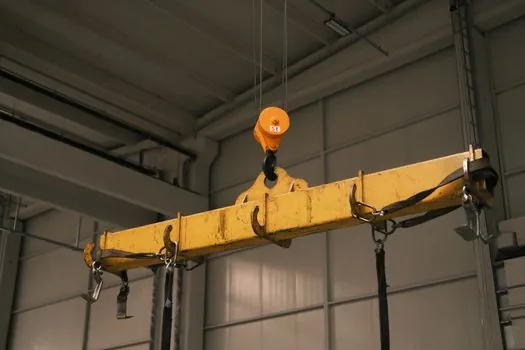
The 1.5× / 2× rule fits palletized consumer goods, building products, bagged commodities, and standard GMA 48×40 pallet formats, which is the bulk of industrial shipping. It is NOT a substitute for engineered load-securment calculations on rail, on heavy machinery, or on loads that change configuration mid-transit, where DOT/FMCSA and AAR rules govern beyond the simple break-strength formula [S1][S2].
For high-value or fragile equipment, woven/composite strapping with edge protection is the standard approach, and pairing it with stretch wrap, edge protectors, and dunnage turns strapping into one component of a complete load-securment system rather than the entire system [S2][S7]. Procurement teams that treat strap selection as a line item rather than a load-engineering decision are the population most likely to file the freight claims that this spec is built to prevent [S2].
Worked examples and the FMCSA linkage
Three reference calculations cover most operations: 1,200 lb × 1.5 ÷ 3 straps = 600 lb per strap (PET 1/2" or 5/8" PP) [S3]; 1,100 lb × 1.5 ÷ 3 straps = 550 lb per strap (PET 1/2" or heavy PP) [S5]; 2,200 lb × 1.5 ÷ 4 straps = 825 lb per strap (PET 5/8" or steel RD/HT at 13 mm or wider) [S3][S5]. FMCSA's working-load-limit rule is a regulatory floor, not a sizing tool, so the break-strength target must still clear it independently [S2].
Yield per kilogram is the second decision lever once material and width are locked: PP vs PET strapping yield on a meters-per-kilogram basis is the comparison to run before locking a supplier, because PET's higher density per meter changes spool changeover frequency on a strapping band line. For plants running bagged commodities, the OSHA 201353620 case (2,205 lb bags, two 0.5-inch plastic bands, three-pallet stack) is the canonical reminder that "two straps" is rarely enough on heavy unit loads [S1].
Trackable signals for the next spec review: AAR and FMCSA securement-rule amendments (watch for any multiplier change on flatbed and rail), PET recycle-content specifications from large retailers, and supplier published 1.5× / 2× test data sheets that confirm strap break strength at the actual width being ordered.
The underlying component specifications are covered under electronic load.