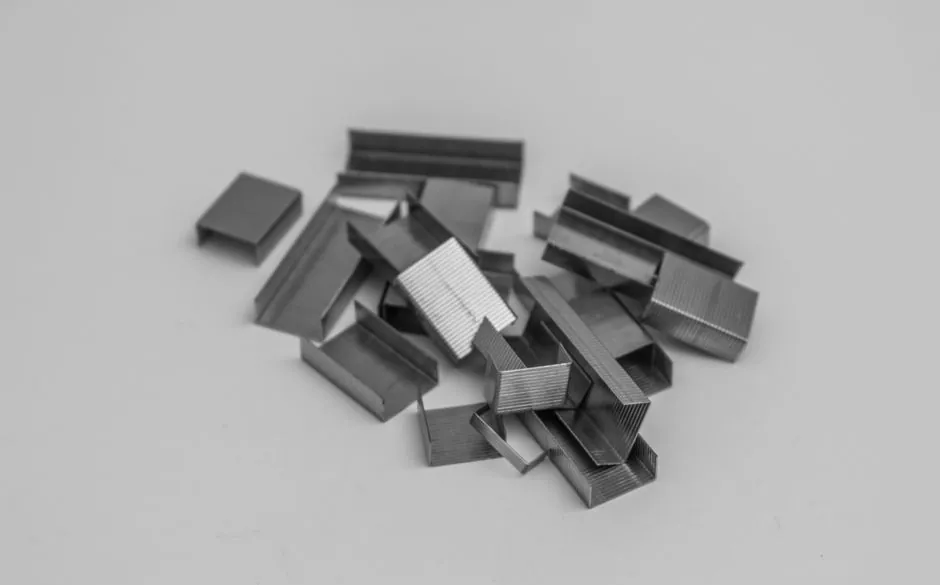
Industrial strapping falls into four material families, steel, polyester (PET), polypropylene (PP), and woven or cord composite, and the choice is governed by load weight, edge geometry, settling behavior, and corrosion risk rather than by strap price alone [S2][S4].
Steel strapping is the oldest industrial format, specified where very high tensile strength and minimal elongation are required, including hot environments, sharp-edged coils, and outdoor storage where UV is irrelevant but rust is acceptable on the strap itself [S2][S4]. Polyester has grown as a direct substitute for steel in many heavy-duty applications because it elongates and recovers to keep tension on settling loads, while cord composite and woven variants add cut resistance and operator safety on irregular shapes [S2][S4].
Steel Strapping: Grades, Widths and Where It Still Wins
Steel strapping is offered in stainless Type 200 to Type 300 grades, plus high-tensile and galvanized variants, with widths and thicknesses selected to match the load's break-strength requirement rather than its weight alone [S1][S8]. Within the steel family, mill duty, regular duty, high tensile, and stainless differentiate primarily by carbon content and heat treatment, which drives both break strength and recoil energy on strap failure [S8].
Steel dominates when loads have sharp corners that would cut into PET or PP, when ambient temperatures exceed the softening range of common plastics, or when the bundle must hold rigid dimensions with near-zero elongation during transit [S2][S3]. Trade-offs are equally concrete: steel is heavy, sharp at cut edges, prone to rust in wet storage, and stores as a bulky coil that takes more warehouse space than an equivalent-strength composite reel [S2][S4]. For a deeper break-strength and width reference covering the 12.7–31.75 mm range, see the steel strapping size chart.
Polyester (PET) and Polypropylene (PP): The Plastic Workhorses
Polyester strapping is used as a steel substitute for heavy loads such as timber packs, brick cubes, and concrete block bundles because it elongates under shock load and then recovers, keeping tension on products that settle in transit [S2][S4]. It will not rust, will not stain finished goods, and is softer against product surfaces than steel, which prevents the edge-digging damage seen on softer bundles [S4].
Polypropylene is the economical plastic, typically chosen for carton closing, light bundling, and in-plant unitizing where elongation and recovery matter but break strength per dollar is the deciding factor [S2][S4]. PP degrades under prolonged UV exposure and can neck-down or split on very sharp corners, so it is rarely used for outdoor long-haul loads of dense material [S4]. PET, by contrast, retains tension over months of storage and is the standard replacement for steel on unitized lumber, plate glass in racks, and baled fiber [S2][S4].
Cord Strap and Woven Composite: Cut Resistance With Lower Recoil
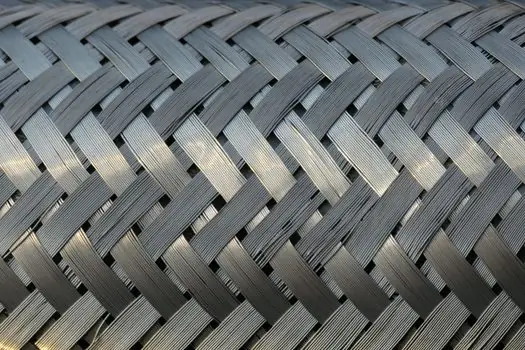
Cord composite strapping is built from vertically oriented polyester fibers coated with polypropylene, which gives high wear resistance and cut resistance while remaining much lighter per meter than steel of equivalent break strength [S2][S6]. The construction is non-abrasive and non-staining, so it is widely specified for finished metal, coated coils, and delicate exports where surface marking is a reject criterion [S2][S6].
Woven strapping uses a woven fiber matrix to spread load across many filaments, which handles extremely heavy and irregular shapes including machinery, and maintains shape in harsh weather without rusting or rotting [S4][S5]. Compared with steel, both cord and woven composite have dramatically lower recoil energy on strap failure, which is the single largest contributor to packaging-line laceration injuries when steel is broken under tension [S2][S3]. For tooling context across both material families, the strapping machine encyclopedia entry covers tensioners, sealers, and battery-powered combination tools used on these materials.
Selection Criteria: Load, Edge, Elongation, Environment
The four decision drivers line up cleanly across the material families. On very heavy, sharp-edged, hot, or zero-stretch loads, steel (including stainless and galvanized) remains the default because PET and PP would either be cut, soften, or stretch past spec [S2][S3][S8]. On heavy loads that settle in transit, PET is the workhorse because its 1–3% working elongation plus recovery keeps tension where steel would either stay tight and crush the load or fail [S2][S4].
On light-to-medium unitizing, carton closing, and bundling, PP is the lowest-cost option and is paired with buckles, clips, or heat welds depending on the tension required [S2][S3]. On irregular, heavy, or finished-surface loads that must not recoil on failure, cord and woven composite replace steel to cut operator injury risk and eliminate rust staining on outdoor storage [S2][S4][S6]. Environmentally, all three plastic families resist moisture and most chemicals, while only stainless and galvanized steel tolerate long-term outdoor exposure without corrosion [S1][S2][S8].
Tooling Differences: Steel Seals vs. Plastic Welds
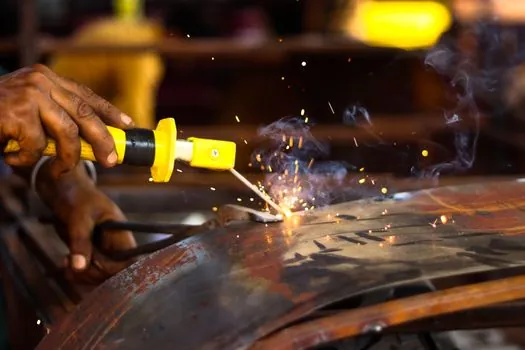
Steel strapping is sealed with metal clips or with a notch (crimped joint) made by a manual all-in-one tool, while plastic strapping is sealed with clips, buckles (light duty only), or a friction weld made by a pneumatic or battery-powered tool [S3]. The practical difference is that a steel banding line typically needs a separate tensioner, sealer, and shear, whereas a modern plastic line runs on a single battery combination tool that tensions, welds, and cuts in one trigger pull [S3].
Battery tools are the key mobility enabler on the plastic side and are not available for steel, because steel's notch joints and clip forces exceed what a portable battery tool can deliver at production rates [S3]. Pneumatic tools exist for both materials but require clean, dry, oil-free compressed air, which limits them to fixed stations and shapes the layout of any strapping band cell designed around them [S3][S7].
Comparison Table: Material vs. Decision Criteria
Against four selection criteria (break strength per dollar, elongation/recovery, cut/UV resistance, operator injury risk), the four families score distinctly. Steel rates high on break strength and cut resistance, but low on elongation, corrosion resistance, and injury risk on recoil; PET rates high on break strength, elongation, and corrosion resistance, but degrades under UV; PP rates high on cost and elongation but low on break strength and UV resistance; cord and woven composite rate high on cut resistance and injury risk reduction, with break strength approaching steel at significantly lower weight per coil [S2][S3][S4][S5][S6].
The dominant failure mode is mismatched material to load, not the strap itself: steel on a settling load crushes the product, PET on a razor-edged coil parts under point loading, PP outdoors necks down in weeks, and any strap with a notch or weld run backward through a rough edge will fail at the seal long before the strap's rated break [S2][S3][S4]. For inspection and quality control of joint integrity and break load on incoming coils, the checking and testing apparatus encyclopedia entry is the relevant cross-reference.
Safety, Standards and Failure-Mode Notes

Steel strap failure under tension stores enough elastic energy to cause serious laceration, which is why cord and woven composite have been adopted wherever the load allows, to lower recoil energy on the operator [S2][S3]. Stainless and galvanized finishes address the rust issue but do not change the recoil hazard, so eye protection and glove discipline remain mandatory on any steel banding station [S1][S8].
Plastic strap welds (friction or heat) are sensitive to temperature, dwell time, and battery state, and a weak weld typically fails at 30–50% of the parent strap's rated break, so joint quality must be checked periodically with a pull test rather than assumed from cycle count [S3]. Material handling and packaging standards governing strap application, joint efficiency, and operator safety should be cross-checked against the latest editions of ASTM D3953 (strapping, steel), ASTM D4675 (strapping, plastic), and the relevant AAR/AAK cargo securement rules for the transport mode, none of which has been superseded within the past six months in publicly available updates [S2][S3].
Trackable next signals for 2026 procurement planning: monitor PET resin spot price versus hot-rolled steel coil price, as the crossover point drives the volume conversion of steel-spec lines to PET; and watch battery tool cycle-life ratings, since cord and woven composite adoption is gated as much by tool ergonomics as by strap price per meter. Sourcing reference pages on construction machinery and equipment and lamps and light fittings sit adjacent in the catalog for facilities planning around the strapping cell.