
Industrial strapping band is broadly classified into three material families — PP (polypropylene), PET (polyester), and steel — with narrower sub-grades inside each, and the choice is driven by break strength, retained tension, and joint method rather than by colour or roll width [S1][S3].
The 2026 export price index on Made-in-China.com shows a representative PP strapping band roll at US$ 14.00–20.00 per roll FOB at 1-roll MOQ from suppliers such as TIGER (XIAMEN)X-M, with SGS-audited factories appearing as a visible buyer filter on category pages [S3].
PP Strapping: Light-Duty Workhorse for Carton and Parcel Lines
Polypropylene strapping is the most-shipped commodity grade and dominates the carton-closing, newspaper, light pallet, and parcel-handling tiers because it is the lowest-cost extruded plastic band per metre [S1][S3]. PP is made on dedicated PP strapping band extrusion lines, with downstream winder equipment offered in both semi-automatic and full-automatic touchscreen-controlled variants for converting coil stock to saleable rolls [S2].
Typical operating envelopes for PP band put the working range below the heavy-pallet tier — it has the highest elongation of the three families under load, which means it absorbs shock but loses retained tension over days, so it is rarely specified where the strap must hold compression for long storage cycles. Jointing is almost always done with a heat-seal weld (friction or hot-blade) or a metal wire buckle, both of which are well within the duty envelope of low-cost semi-automatic carton strapping machines covered in the strapping machine category.
PET Strapping: The Polyester Substitute for Steel in the Mid-Heavy Tier
Polyester (PET) strapping is the dominant plastic alternative to steel for the medium-to-heavy pallet tier because it carries roughly the break strength of steel at near-identical widths, while adding elongation recovery that steel cannot match [S1][S2]. Production lines are sold explicitly as "Heavy Model PET Strapping Band Production Line with CE Certification" and "Eco-model PET strapping extrusion line", confirming that the same vendor market now spans both a heavy and an economy PET platform [S2].
PET keeps its working tension through repeated shocks and long storage — a property that makes it the default for compressed bales, brick stacks, timber bundles, and export pallet loads that travel by container. Jointing is by heat-seal (notching the band and re-fusing with a serrated die) or by a heavy-gauge wire buckle, and the higher line speeds of PET extrusion — fed by crystalliser-dryer trains, viscosity and moisture testers, and a high-efficiency crystallising system — put the upstream strapping band line squarely in the same factory footprint as a small plastics-compounding plant [S2].
Steel Strapping: Maximum Break Load for Rail, Timber, and Heavy Plate
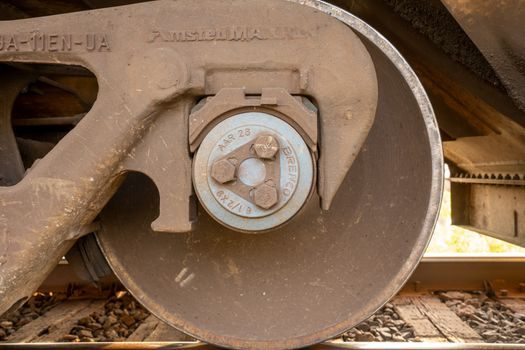
Steel strapping is the third commercial family and remains specified where the highest break strength, the lowest creep, and the highest temperature tolerance are required: rail coil, structural steel bundles, heavy timber packs, and containerised metal shipments. Compared with PET it has near-zero elongation and near-zero retained-tension loss, which is the engineering reason it is still chosen for cargo that must not relax across long sea voyages. [S1]
Joining steel strap is done almost exclusively with a crimped metal seal and a manual or pneumatic crimper, since heat sealing is not an option for a metallic band — a difference that defines the tool and consumable selection on any steel-grade line. Steel is also the family most exposed to corrosion risk on outdoor storage, which is why galvanized, painted, and wax-coated ribbon sub-grades exist; rust staining on the load is a routine commercial claim when the wrong sub-grade is shipped.
Classification Drivers: Material, Width, Thickness, Break Strength, and Joint
Across all three families the engineering classification is governed by the same five axes, which is what lets a buyer compare PP, PET, and steel on one worksheet rather than as three separate markets: (1) base material, (2) ribbon width, (3) ribbon thickness (or gauge for steel), (4) declared break strength in N or kgf, and (5) joint method (heat-seal, buckle, or crimp) [S1][S2].
The commercial surface that buyers actually meet — for example the 2026 strapping band production price page on Made-in-China.com — exposes the first axis (material family) and the second (ribbon width) directly, while the third and fourth appear on individual product datasheets and the fifth is dictated by the strapping machine that will be deployed on the line [S3]. Practical reading: do not specify break strength without also specifying the joint that has to reach that strength, because a heat-seal joint on PP and a crimped seal on steel are rated against different test methods and are not interchangeable in failure load.
Selection Criteria: Load Weight, Storage Time, Surface, and Environment
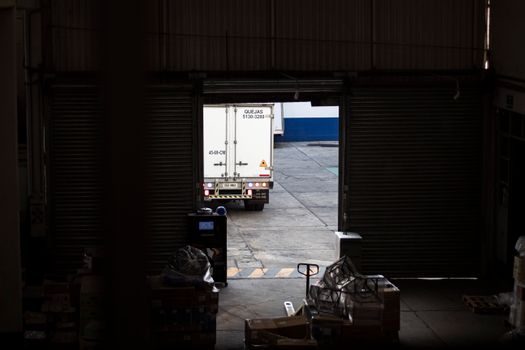
PP is the right answer for unit loads under roughly the light-pallet tier with short storage cycles, where cost per metre dominates and shock absorption matters more than retained tension. PET is the right answer for medium-to-heavy pallet and bale loads with multi-week storage, where the load must not relax and the operator wants a plastic band that runs through the same heat-seal tooling as PP. Steel remains the right answer for the highest break-load tier, very long storage, very high in-service temperature, and any load where plastic elongation cannot be tolerated. [S1]
Surface, abrasion, and UV exposure also route the decision: rough timber or sharp-edged metal scores PP quickly and limits it to the lightest packs, while PET and steel tolerate the same surfaces for longer. Outdoor storage pushes the call toward PET or galvanized steel and away from standard PP, because PP loses tensile strength faster under UV and standard steel corrodes without a coating.
Comparison Table: PP vs PET vs Steel on the Five Decision Axes
Side-by-side on the same five axes the families line up as follows. Break strength per unit width is lowest for PP, mid-to-high for PET, and highest for steel, while elongation under load is highest for PP, lower for PET, and effectively zero for steel. Joint method is heat-seal or wire buckle for PP, heat-seal or wire buckle for PET, and crimped metal seal for steel. Cost per metre is lowest for PP, mid for PET, and highest for steel. UV and temperature tolerance is lowest for PP, mid for PET, and highest for steel [S1][S2][S3].
The supplier catalogue reinforces the break-strength and cost ranking: PP rolls at US$ 14.00–20.00 per roll FOB sit at the bottom of the price index on the 2026 production-price page, while the same factory footprint that runs a PP extrusion line also sells a Heavy Model PET line and an Eco-model PET line — confirming that PET and PP share upstream process equipment, which is why PET has compressed the price gap with PP over the last decade [S2][S3].
Limits, Failure Modes, and Sourcing Signals

The three families fail in different ways and the failure mode dictates the inspection routine. PP fails by elongation and tension loss — a strapped pack loosens visibly before the band actually breaks, so the inspection cue is gap, not rupture. PET fails by split-tear across the embossed or smooth surface, often starting at a nick from a rough load corner, so the inspection cue is a propagating crack. Steel fails by snap at the crimped seal or by corrosion-driven section loss, so the inspection cue is rust staining and a deformed seal. [S1]
Two trackable signals on the supply side: the export category continues to surface SGS-audited PP suppliers at a 1-roll MOQ on the 2026 price page, which keeps small-volume importing viable; and the equipment tier now offers both full-automatic and semi-automatic winders for PP and PET, so a plant can scale coil-to-roll conversion in step with extruder throughput without retooling the line [S1][S2][S3]. For a broader view of how strapping band sit alongside other packaging consumables such as stretch film, the stretch film TCO reference gives the comparable hand-vs-machine wrap cost stack.
Spec-level background on the components involved: pressure transmitter.