A new industrial strapping machine sourced from a Chinese OEM listed on Made-in-China.com in May–June 2026 spans roughly US$800 to US$8,500 FOB per unit, with semi-automatic tabletop units clustered near the floor and full-automatic pallet/portal lines running 2× or more above semi-auto baselines [S3][S5]. Across 137,884 SKUs in the same Made-in-China strapping category, audited-supplier ISO 9001 and ISO 14001 certificates, MOQ floors, and strap-material compatibility (PP / PET / steel) are the visible price axes buyers should price against [S5].
Directindustry indexes 33 products from 15 manufacturers under the "strapping machine with press" sub-category as of June 2026, including Dongguan Xutian Machine and Humboldt, confirming that mid- and lower-tier Chinese strapping OEMs remain the densest supply pool for export buyers [S1]. Indian channel partner V-Pack Automations, active on the same 2026-06 timeline, supplies a cost-effective bridge for South-Asian buyers looking for V-Pack-facilitated installations of global packaging lines [S2].
Price Bands by Automation Tier (June 2026 data)
Semi-automatic tabletop strappers on Made-in-China.com in May 2026 start at roughly US$10 reference FOB for one-piece MOQ lots on entry wrap-style units, but functional industrial semi-auto bands (head tension + heat-seal) sit in the US$800–2,500 range with MOQs of 1 piece [S5][S6]. The fully automatic tier — required for carton, pallet and corrugated-line throughput — runs 2× the price of semi-auto units on average, consistent with the 2:1 ratio reported in the Chinese-language strapper reference compiled in December 2024 and still observed in 2026 listings [S3].
For buyers comparing pallet-load capacity, the practical rule on 2026 listings is: a manual or battery-fed strapping tool for under-US$200 covers field/break-bulk work, semi-auto tabletop units cover carton sealing in the US$800–2,500 band, and full-automatic lines (with conveyor pass-through, arch, and press) start near US$4,000 and reach US$8,500+ for high-throughput pallet systems [S3][S5]. A second useful rule is that a full-automatic strapper is generally specified when line throughput exceeds what one operator can feed by hand — typically above ~6–8 cycles/min sustained.
Strap-Material Compatibility: PP, PET and Steel
Strap-material compatibility is the single most expensive spec lever on 2026 quote sheets: a machine wound for 9–19 mm PP tape is the cheapest configuration, a 12–19 mm PET configuration adds roughly 10–20% for the heavier weld head and re-feed, and a steel-strap configuration (19–32 mm) typically doubles the head cost because of the seal/cutter metallurgy [S3][S5]. The 2026 Made-in-China catalog shows OEM/ODM branding, CE marking, and ISO 9001 documentation bundled on most PP/PET units in the sub-US$3,000 band, while steel-rated heads carry separate certification paperwork [S5].
Buyers specifying corrosion-resistant strap paths for chemical or marine applications should confirm the head's seal mechanism (friction-weld for PET/PP vs. notch-and-crimp for steel) before accepting a low quote — a friction-weld head on steel strap is a hard incompatibility, not a cost question [S3]. For mixed-line operations running both PET and PP, a quick-change head or a dual-spec machine from a single OEM typically costs less than buying two dedicated units.
Form Factor: Table-Top vs Pallet/Portal vs With-Press
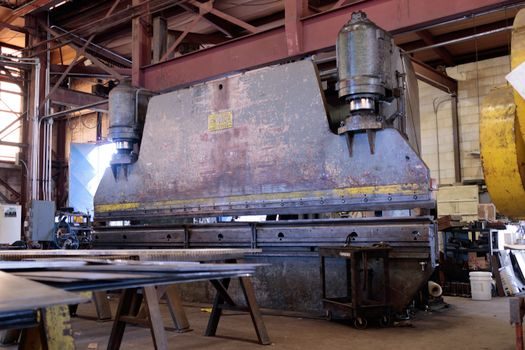
Form factor drives both machine cost and floor-space cost. Table-top semi-automatic units (≈ 0.5 m² footprint) are the price floor, while pallet-portal arch machines with through-conveyor integration occupy 2–4 m² and add conveyor controls to the bill [S3][S5]. The "with press" sub-category indexed on Directindustry in June 2026 — 33 products from 15 manufacturers — captures the integration of a compression ram with the strapping head, used where load compression (corrugated bundles, bales, press-formed packs) must occur before the strap is applied [S1].
For a packaging engineer sizing a 2026 line: a 1.5 m × 1.5 m floor tile typically fits a table-top semi-auto, an arch machine needs a 2.5 m × 1.5 m cell plus operator reach, and a with-press configuration is a 3 m × 2 m cell minimum. If the buyer is also weighing a wrapping machine alternative for inbound protection, the wrapping machine vs case packer cut is a useful adjacent read for trade-offs between stretch-wrap throughput and strap-seal integrity.
MOQ, Lead Time and Sourcing Levers
MOQ on Made-in-China in May 2026 is "1 Piece OK" across most audited-supplier strapper listings, but price breaks begin at 5–10 units for OEM/ODM orders, and at 50+ units for buyers willing to accept private-label branding [S5]. FOB reference prices in the catalog are quoted "1 Piece" basis, so a single-unit RFQ is realistic but lands at the top of the price band; expect 8–15% off on a 5-unit buy and 15–25% off at 50 units for a standard PP/PET semi-auto configuration [S5][S6].
Lead time from a Chinese OEM in the 2026-06 sourcing window is typically 15–25 days for catalog semi-auto units and 30–45 days for full-automatic or with-press configurations, plus ocean transit of 25–40 days to most major ports; V-Pack Automations in India positions itself as a regional partner that can shorten that last leg for South-Asian buyers [S2][S3]. Payment terms observed across 2026 listings are dominated by T/T 30/70 and L/C at sight, with a smaller share of Trade Assurance-style escrow offered on Made-in-China transactions [S5].
Standards, Documentation and Total Cost of Ownership
CE marking and ISO 9001 are the most common certifications bundled on 2026 Chinese strapper SKUs; ISO 14001 appears on a narrower set of audited suppliers, and UL/CSA listings for North American end-users are usually obtained by the importer rather than the OEM [S5]. Buyers targeting European chemical or food lines should confirm the machine's electrical cabinet rating (IP54 minimum for wash-down environments) and the strap-tension calibration certificate per shipment, because retrofitting certification after delivery is more expensive than specifying it on the RFQ [S3][S5].
Total cost of ownership over a 7–10 year life is dominated by strap consumption, wear parts (weld plate, blade, feed roller) and energy — not the headline machine price.
Who Should Buy What in 2026
For low-volume workshops bundling under 50 straps/day, a sub-US$1,000 PP-only semi-auto table-top unit from a Made-in-China audited supplier is the correct spec — full-automatic is over-spec and the press option is wasted [S3][S5]. For mid-volume lines at 200–600 straps/day across mixed carton sizes, a US$2,500–4,500 PET/PET+PP full-automatic with arch delivers the lowest cost-per-strap on a 5-year horizon. For pallet-line or baling operations needing compression, a with-press unit from one of the 15 manufacturers indexed by Directindustry is the right starting point, and the strapping machine 2026 buying guide lays out the same PP/PET/steel gate in spec-checklist form [S1].
Trackable signals through Q3 2026: any new CE-RED or IEC 60204-1 alignment from major Chinese OEMs on arch-machine safety circuits, and any movement on US-dollar FOB reference prices after the May 2026 catalog snapshot — both will be visible on Made-in-China supplier audits and on Directindustry manufacturer-page updates within the next 30–60 days [S1][S3][S5].
For component-level specifications, see linear guide.