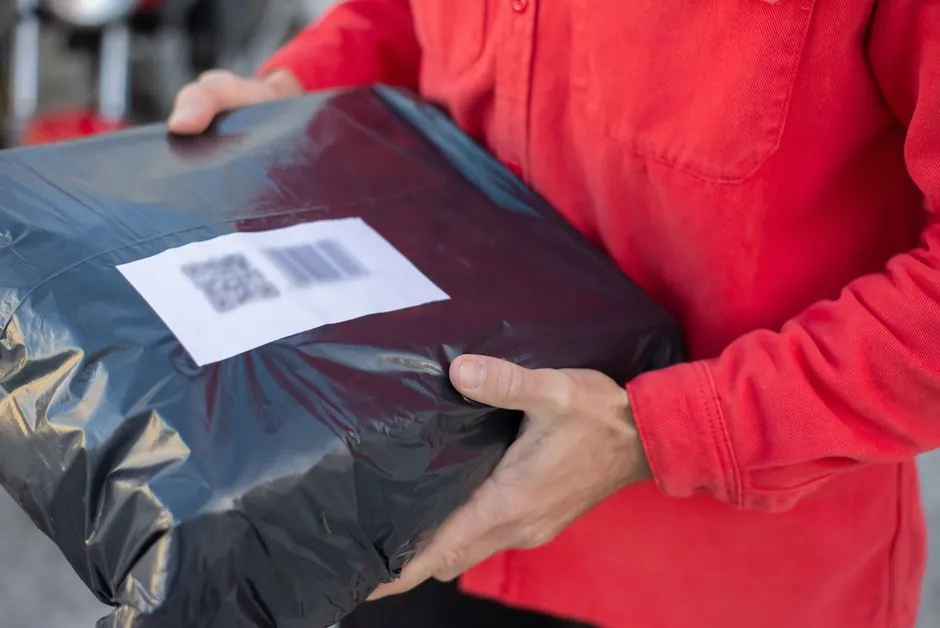
E-commerce fulfillment operations select strapping equipment by aligning daily package volume, carton size range, and integration depth to one of three machine classes: tabletop semi-automatic, fully automatic inline, or battery-powered portable tools.
The global strapping machine market was valued at $5.5 billion in 2025 and is projected to grow from $5.7 billion in 2026 to $8.1 billion by 2033, with e-commerce fulfillment and warehouse logistics cited as primary demand drivers alongside general manufacturing [S2]. Operators specifying equipment today must match machine class to throughput target, not to capital budget alone.
Match Machine Class to Throughput and Package Profile
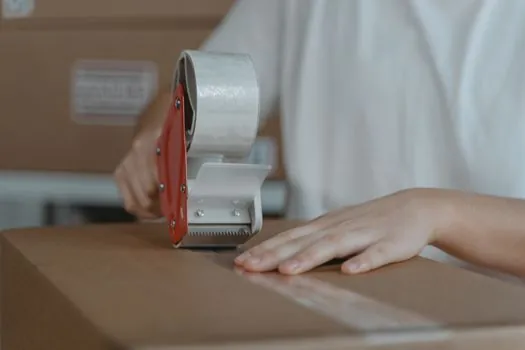
Tabletop semi-automatic strapping machines strap one package per push-button cycle and fit below most packing stations, suiting operations under roughly 30 packages per shift where operator loading and cycle initiation remain practical [S1]. The same source describes these compact units as the standard choice for growing manufacturers and warehouse packing cells, where the goal is removing manual strap-feeding fatigue without the cost of full inline integration [S1]. For a basic spec overview of what these machines do, see the strapping machine reference page.
Automatic inline strapping machines integrate with conveyor systems and packaging lines, delivering consistent strap tension and heat-seal joints with minimal operator intervention, and are positioned for high-volume distribution centers [S1]. On the material side, polypropylene (PP) is the dominant band for carton and light-pallet duty, while polyester (PET) is the standard upgrade for heavier or longer-storage pallet loads, as covered on the strapping band reference page. The 9–12 mm PP band range is the typical fulfillment specification, with break strengths commonly rated in the 100–350 kgf band depending on thickness and resin grade.
Selection Criteria: Volume, Footprint, Power, Labor
Four decision criteria separate the three machine classes in practice: target throughput, available footprint, power/air utilities, and operator labor. Tabletop units typically require only a 230 V single-phase outlet and a small bench footprint; automatic inline machines add compressed-air supplies (usually 6 bar) and demand a fixed conveyor interface, while battery tools need only a charging station and operator mobility [S1][S4].
For comparison, the three classes line up against the four criteria as follows. (1) Throughput: tabletop under 30 cycles/shift, automatic 50+ cycles/min, battery tools matched to pallet rate per operator. (2) Footprint: tabletop ~0.5 m² bench, automatic inline 2–4 m line section including conveyor, battery tools zero floor space. (3) Utilities: tabletop single-phase power, automatic inline power plus compressed air, battery tools only charging. (4) Labor: tabletop 1 operator per machine, automatic inline 1 operator per line, battery tools 1 operator mobile. Operations running 8+ hours/day on a single carton size usually recover the automatic-class capex within 12–18 months on labor alone, while seasonal peaks below 200 packages/day stay on tabletop or rental.
Rental as a Capacity-Buffer Strategy
Strapping machine rental programs offered by regional packaging suppliers target the seasonal and ramp-up phase of e-commerce operations, providing tabletop and semi-automatic units on monthly terms with maintenance and technical support bundled [S1]. The same source restricts delivery to a defined metro area, which is worth confirming before assuming a rental solution is available in-region [S1].
Rental is a sensible bridge when daily volume is forecast to grow but has not yet stabilized: it converts capex into opex during the ramp, and it lets the operations team benchmark an automatic inline class before committing to purchase. Once sustained throughput crosses the threshold where the automatic inline machine's labor savings dominate, the rental-to-purchase conversion typically becomes the lower total-cost path. Operators should still budget for strap consumables, seal-element wear, and tension-spring replacement as recurring operating cost regardless of whether the machine is rented or owned.
PP Strap Routing, Tension, and Sealing Parameters
Polypropylene strapping machines apply strap by feeding PP band from a roll through guide rollers, tension wheels, a heat-seal element, and a cutting blade, with operator adjustments on strap tension, sealing temperature, and cycle time controlling finished-package quality [S4]. The same source notes that correct strap orientation (matching the roll's unwind direction to the machine's indicated rotation) is the first failure mode to eliminate when a cycle misfires, before any tension or temperature diagnosis [S4].
PP strap is normally specified for carton bundling, package reinforcement, and light pallet stabilization; the same source rates it as flexible but only strong enough for moderate loads, which sets an effective ceiling on bundle weight before the spec should shift toward PET or composite [S4]. For operations still defaulting to PP on heavier pallet loads, the typical symptom is strap elongation creep during storage, visible as loose banding after 24–48 hours in a warm warehouse. A useful operational rule is to switch to PET when the pallet exceeds roughly 500 kg gross or when storage cycles exceed 30 days, which keeps creep within acceptable limits.
Integration with Adjacent Packaging Cells
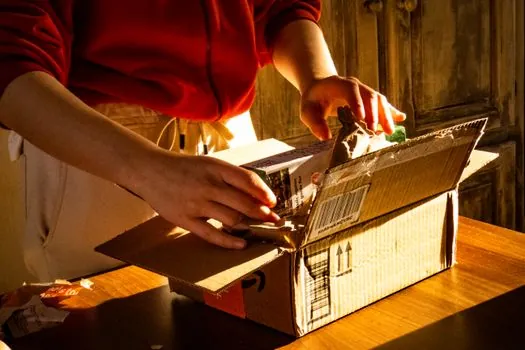
Automatic strapping machines are typically specified to integrate with upstream bagging, labeling, and conveyor cells rather than as standalone units, with the design intent of removing operator handoffs between bag seal, label apply, and strap apply [S3]. The same source frames automatic strapping as part of pallet-handling-line load stabilization, where strap timing is synchronized with pallet discharge to avoid empty-cycle waste [S3].
For fulfillment centers running auto-bagging upstream, the relevant integration point is the bag-seal-to-strap handoff, where inline speeds in the 50+ bags per minute band are common, as documented for Sharp Max 12/20 platforms in the adjacent bagging-equipment spec sheet [S5]. Operators building a coordinated cell should confirm cycle-time parity between bagger exit and strapper infeed, and verify that the strapper's conveyor height matches the bagger's discharge height within ±50 mm to avoid tipping or jam faults. Where cycle times do not match, a small accumulation conveyor between cells is the standard fix.
Who This Equipment Is For, and Who It Is Not
Tabletop semi-automatic strapping is the right fit for e-commerce fulfillment cells under 30 packages per shift, growing manufacturers bundling cartons at a single packing station, and any operation that needs to remove manual strap-feeding fatigue without re-engineering the line [S1]. Automatic inline strapping is for distribution centers and high-volume warehouses running 8+ hours/day on a stable carton size range, where consistent tension and labor reduction justify the capex [S1][S3]. Battery-powered tools are for operations strapping pallets and oversized shipments in different warehouse zones where station-bound machines are impractical [S1].
Strapping machines are NOT a substitute for stretch wrapping when load containment requires film-to-pallet adhesion, and they are not the right tool for heavy-duty metal or timber bundling where steel banding remains the standard. Operators should also avoid specifying automatic inline class for SKUs that change carton size more than 4–6 times per shift, because the changeover time can erase the labor savings the machine was purchased to capture.
Verifiable Trackable Signals
Two signals are worth tracking through the rest of 2026. The strapping machine market was valued at $5.5 billion in 2025 and is projected to grow from $5.7 billion in 2026 to $8.1 billion by 2033 [S2], supporting demand for automatic strapping machines that integrate with conveyor systems and pallet handling lines [S3] and rental programs offered by regional suppliers such as Packstrap USA, which currently serves Miami-Dade and Broward County [S1]. Second, the consolidation of strap-plus-bag integration offerings from packaging suppliers serving ecommerce teams and fulfillment operations [S5], which will likely push more turnkey cell quotes into the 50+ bags/min band during the 2026 peak season. For related downstream coverage, see this wrapping machine selection spec map for retail distribution, which covers the complementary stretch-wrapping cell on the outbound dock.
Component reference pages worth checking: coding machine.