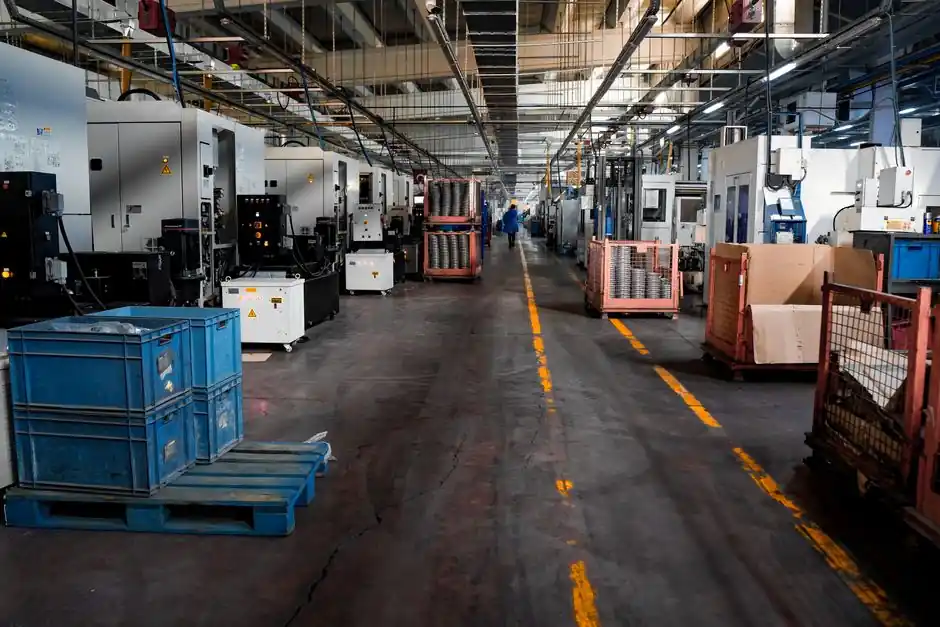
Retail distribution runs on three distinct wrapping platforms: side-seal shrink wrapping machines for tamper-evident single-SKU retail packs, horizontal flow wrappers for high-count confectionery and bakery lines, and turntable or robot wrapping machines for pallet-level load containment [S1][S2][S3].
Published 2026 vendor data places semi-automatic turntable stretch wrappers at a 4,400 lb maximum stable load, while continuous-motion side sealers are documented to "handle hundreds of shrink-wrapped books per hour" on print lines, and semi-automatic portable wrappers can be commissioned in under 30 minutes by a certified dealer [S1][S3].
Three Platforms, Three Jobs
Side-seal shrink systems target the unit-pack level: hardcover, paperback, magazine, or box set, with shrink film providing dust, moisture, and scratch protection plus a tamper-evident retail finish [S1]. Continuous-motion side sealers are documented as the throughput choice for large paperback or textbook runs because the film feed and seal cycle never stops between units [S1].
Horizontal flow wrappers (HFFS) address high-SKU, individually wrapped SKUs in confectionery, baked goods, and similar retail categories, and are positioned in 2026 packaging literature as the mainstream high-speed retail wrapper [S2]. They differ from shrink side sealers in that the film is sealed around the product without heat-shrink recovery, which suits heat-sensitive coatings and chocolate-covered SKUs.
Stretch wrappers sit at the pallet end: turntable models handle stable loads under 4,400 lb with a small footprint, while portable robot wrappers travel to the pallet and claim up to 25% productivity gain over fixed wrappers in operations with rotating product lines [S3]. The Compatta series and Spiror HP series extend stretch wrapping to long, awkward retail SKUs such as carpets, doors, copper piping, and corrugated tubing that turntables cannot rotate [S3].
Selection Criteria Mapped to Throughput Bands
For operations under roughly 10,000 unit packs per shift on a limited SKU range, semi-automatic side sealers paired with a separate heat shrink tunnel keep capex low and changeover simple [S1]. The Kallfass book-line literature lists side sealers as "ideal for retail packaging operations requiring clean, consistent wraps" and shrink tunnels as the way to "uniformly shrink the film" after sealing [S1].
For 10,000 to 50,000 retail units per shift on stable SKU dimensions, continuous-motion side sealers and horizontal flow wrappers are the two real candidates, and the decision turns on product geometry: flow wrappers suit uniform cuboid or cylindrical SKUs running on a single in-feed, while continuous side sealers handle taller, thinner, or multi-pack bundles more cleanly [S1][S2].
For pallet-level operations, the published 2026 split is: turntable stretch wrappers for stable loads under 4,400 lb, low-speed horizontal rotating ring wrappers for doors, lumber, and textiles, and portable robot wrappers for low-throughput or rotating-SKU facilities [S3]. The Robopac Robot S7 is documented as deployable in "less than 30 minutes when installed by a certified Robopac dealer" and to wrap "any length, width, and weight pallet load" [S3].
Comparing the Three Options Side by Side
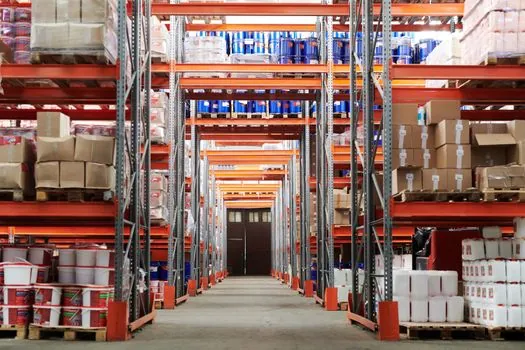
On four retail-distribution decision criteria, the three platforms rank distinctly:
Unit-pack integrity: side-seal shrink gives the strongest tamper-evident retail finish because the film is heat-shrunk tight around each unit [S1]. Flow wrapping produces a clean pillow-pack seal but no shrink recovery. Stretch wrapping operates at pallet level and offers no retail-unit tamper evidence.
SKU flexibility: side-seal and flow wrappers both accommodate hardcover, paperback, and box-set geometry, with shrink systems also documented to handle "bundled printed materials" and multi-pack sleeves [S1]. Flow wrappers are less tolerant of tall or unstable products. Stretch wrappers are SKU-agnostic at the pallet level but cannot address individual retail units.
Footprint and install time: turntable stretch wrappers are described as having "a minimal footprint," which is "a definite asset when space is at a premium" [S3]. Portable robot wrappers can be commissioned in under 30 minutes, removing the need for a fixed installation bay [S3]. Side-seal and flow lines typically require dedicated conveyor, tunnel, and control panel space.
Load capacity: only stretch wrappers carry published load limits, with the Robopac turntable line capped at 4,400 lb for stable loads [S3]. Side-seal and flow wrappers are throughput-bound, not weight-bound, and their published rate is "hundreds of units per hour" on shrink systems [S1].
Who Each Platform Is For, and Who It Is Not
Side-seal shrink is built for publishing houses, commercial printers, book distributors, and retail or mail-order fulfillment where each unit needs a clean, retail-shelf appearance plus tamper evidence [S1]. It is the wrong tool for heat-sensitive SKUs such as chocolate, where shrink-tunnel heat would damage the product, and for very high-SKU grocery lines where changeover time dominates.
Horizontal flow wrapping fits contract packagers, baked-goods lines, and confectionery operations where throughput beats tamper evidence, and where product geometry is predictable [S2]. It is unsuitable for tall, unstable, or multi-format retail bundles, and for any retail buyer who specifically requires a see-through shrink-tight finish.
Stretch wrapping is the only option for pallet-level containment at the retail distribution center, with turntable models for stable loads, robot wrappers for low-throughput or rotating product lines, and horizontal rotating ring machines for non-palletizable retail goods like carpets, doors, and piping [S3]. It is the wrong choice for any application that demands retail-unit-level tamper evidence.
Constraints, Failure Modes, and Operating Limits
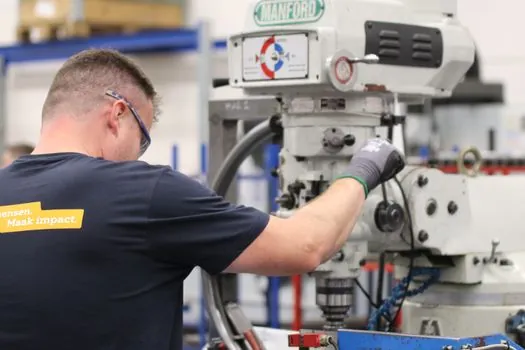
Side-seal shrink systems require controlled heat distribution through the shrink tunnel to avoid "blemishes" on the finished wrap, which the source material flags as a direct consequence of uneven tunnel heat [S1]. For books and printed media, the operating range is constrained by paper and ink heat tolerance, typically below the temperatures used for rigid plastic retail packs.
Horizontal flow wrappers are sensitive to film registration and seal-bar alignment, and 2026 packaging literature treats them as a category that rewards "reliable information" and OEM-grade maintenance, especially for high-speed production [S2]. The same source notes that "Shanklin packaging equipment remains one of the most recognized names in industrial packaging" specifically because of long service-life support and spare-parts availability for these flow and shrink lines [S2].
Stretch wrappers cap out at 4,400 lb on the standard turntable range, and unstable or unevenly distributed loads are explicitly excluded from the turntable specification [S3]. Battery-powered robot wrappers depend on certified-dealer commissioning to hit the under-30-minute install target, and stainless-steel variants (for washdown retail-food environments) are sold as a separate model line [S3].
Use Cases Drawn from 2026 Vendor Material
For book and print retail distribution, the documented use cases are publishing houses, commercial printers, book distributors, and retail and mail-order fulfillment, with applications spanning hardcover, paperback, magazine, and bundled-catalog formats [S1]. Bundling and multi-pack wrapping is handled by sleeve wrappers and bundlers added to the same shrink line [S1].
For pallet-level retail distribution, the documented 2026 use cases for the Robopac turntable line are "stable loads that weigh under 4,400 lb," and for the Compatta and Spiror HP lines, the named SKUs are cabinets, lumber, doors, windows, carpets, textiles, copper piping, and corrugated tubing, plus a dedicated tire-wrapper variant [S3].
For high-SKU contract packaging, horizontal flow wrapping is positioned as the general-purpose solution, with used, refurbished, and new Shanklin equipment as a recurring specification reference in 2026 dealer literature [S2].
Standards, Sourcing, and Trackable Signals
No universal ISO or ASTM standard governs retail wrapping-machine selection; the relevant engineering references are OEM performance specifications (throughput in units per hour, load in pounds, footprint in square feet, install time in minutes) and material-specific film datasheets [S1][S2][S3]. The Kallfass book-line documentation, the AmFlex 2026 blog archive, and the Robopac USA equipment pages are the three primary 2026 public sources for retail wrapping selection [S1][S2][S3].
Two related 2026 reference articles pair naturally with this spec map: Wrapping Machine Selection for Pharmaceutical Distribution: 2026 Spec Map covers tamper-evident and sanitary-stainless requirements, while Wrapping Machine Selection for Warehouse Automation: 2026 Spec Map addresses the conveyor and robotic-palletizer integration side of retail DC throughput.
Trackable signals going forward: the 4,400 lb turntable ceiling, the under-30-minute robot-wrapper install, and the "hundreds of units per hour" shrink-line throughput are all published as 2026 vendor numbers and are likely to shift as next-generation continuous-motion and robot platforms land. A reader auditing this spec map against newer 2026 vendor releases should watch for upward revisions to the per-hour shrink rate, new stainless turntable SKUs, and any portable-wrapper entry below the Robot S7 price point [S1][S2][S3].
The underlying component specifications are covered under distribution cabinet.