
Food and beverage lines should default to polypropylene (PP) or polyester (PET) strapping on stainless, washdown-rated machines, with steel strapping excluded wherever the strap contacts the product, the case, or the cold chain [S5].
Direct recall costs in the food sector averaged $10 million per event in 2024, and label errors drove 45.5% of all food recalls that year, which is why FSMA Section 204 traceability rules are now treated as a strap-and-wrap constraint, not a paperwork afterthought [S5]. For buyers mapping a 2026 capex, this means the strapping machine selection is governed by material choice, hygienic frame rating, and seal-cycle throughput before price.
Material Selection: PP, PET, and the Steel Exclusion
PP and PET are the only strapping materials routinely specified in food and beverage plants, with PP used for lightweight cartons and case-packing up to roughly 40 kg, and PET used for pallet unit loads and beverage can/bottle packs where retained tension matters after temperature cycling [S5]. Steel strapping is excluded in food environments because it rusts, sheds metal fragments into the washdown zone, and can contaminate product lines if a seal fails near an open case [S5]. The practical material map for 2026 reads as: PP strap 5-12 mm for case and tray packs; PET strap 12-16 mm for pallet unit loads in beverage and dairy; PET cord strapping for heavy PET-only pallet retention above 250 kg where elastic recovery is needed; no steel above the receiving floor.
Operating temperature is the silent driver here: standard PP loses a significant share of its tensile strength in frozen storage, so plants with cold-chain or frozen-goods sections should drop down one strap cross-section (for example, 12 mm PP replaced with 9 mm PET) rather than over-tensioning a weakened strap [S5]. PET's elastic recovery also makes it the safer default for high-stacking pallets where FSMA 18-inch sprinkler clearance rules push stacks above 1.8 m [S5].
Frame, Seal Head, and Washdown Ratings
Stainless steel strapping machines with sealed seal heads are positioned for seafood and washdown-heavy beverage plants where daily sanitisation cycles are routine, with consistent, durable seals cited as the procurement driver in supplier literature [S1]. The relevant build spec for a food-grade machine in 2026 is: 304 or 316 stainless frame, IP65 seal head, food-grade grease on cam and heater surfaces, and a strap path that can be fully uncovered for cleaning without tool disassembly [S1].
Buyers should also treat the strapping band path geometry as a hygienic design feature, not just a feeding detail: open arch or side-seal configurations are easier to wash down than enclosed tunnel heads, and side-seal heads are generally preferred for fish, poultry, and dairy lines where drip and splash exposure is constant. Heater-blade temperature control matters as well, because PET seals at roughly 280-320 deg C versus friction-welded PP at 200-260 deg C, and a machine spec'd for one band type cannot safely run the other without reconfiguration.
Throughput, Automation, and Line Integration
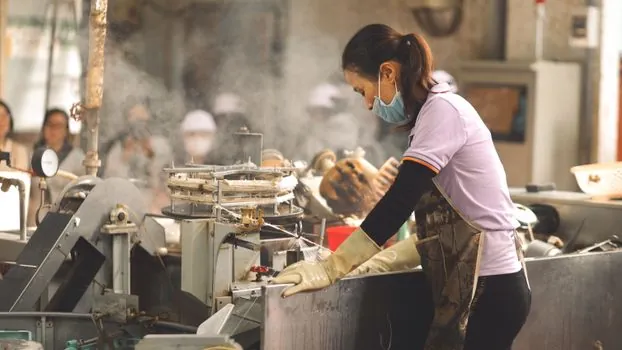
Semi-automatic machines suit low- to mid-volume case packing, while fully automatic machines target production lines, warehouses, and logistics centres running repetitive cycles at high throughput [S3]. For a 2026 beverage line, the practical throughput bands are: semi-automatic bench units at 15-25 cycles/min for operator-fed case packing; automatic side-seal machines at 25-45 cycles/min for inline can/bottle packs; automatic pallet machines with conveyor integration at 50-70 cycles/min for pallet unit loads.
Strapping speed must be matched to upstream and downstream conveyors, because a slow seal head on a fast line creates a bottleneck and forces operators to bypass the strap, which is the most common FSMA traceability failure mode. Plants running SQF, BRC, or AIB audits should also confirm the machine's control system logs seal temperature, tension, and cycle count, since third-party auditors increasingly look for electronic batch records rather than operator logs.
Compliance Stack: OSHA, FDA FSMA, and Audit Bodies
Food and beverage warehouses operate under dual regulatory exposure, with OSHA 29 CFR 1910.176 governing materials handling stability and FDA 21 CFR Part 117 (Current Good Manufacturing Practice) governing contamination control, and a 2024 MOU between the two agencies formalising cross-referrals when one inspector sees the other's violation [S5]. A 2024 Memorandum of Understanding between FDA and OSHA means an OSHA finding on a collapsed pallet can now generate an FDA referral, and vice versa, so the strapping station is on both agencies' checklists at once [S5].
FSMA Section 204 traceability adds a second hard constraint: strapping and stretch wrap cannot obscure lot codes, traceability labels, or product date marks [S5]. This rules out opaque coloured straps over the label face, opaque stretch hoods, and high-tension PET applied across the label panel. Practical mitigation: route PET straps along the pallet's load-bearing edges (stringer or block pattern), keep the label panel clear, and use clear or light-tint PP for case-level straps over printed cases.
Comparison Map: Machine Type vs Application Fit
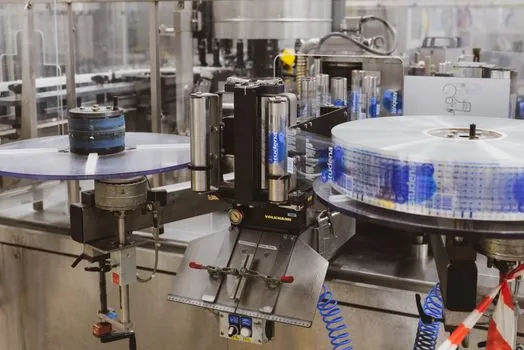
The 2026 fit map for food and beverage buyers is: manual strapping tools for low-volume, irregular loads where portability matters more than cycle time; semi-automatic bench machines for case packing in dairies, bakeries, and beverage secondary pack; automatic side-seal machines for inline can, bottle, and tray pack at 25-45 cycles/min; automatic pallet machines for high-throughput beverage and brewery palletising at 50-70 cycles/min [S3]. For seafood and fish specifically, stainless construction with sealed electronics is the published supplier recommendation, reflecting the corrosion load of brine, blood, and chlorinated washdown [S1].
Decision criteria line up as follows: cycle throughput (cycles/min), strap material supported (PP only, PET only, or both), hygienic frame rating (stainless vs painted mild steel), seal type (heat-weld for PP, friction-weld or ultrasonic for PET), and FSMA compatibility (clear strap path over label panel, no metal fragment shedding). Plants running cold-chain storage should weight hygienic frame rating and PET capability above raw cycle speed, because a faster machine that fails in a -25 deg C freezer is a net loss.
Market Context and Capex Sizing
The global strapping machine market was valued at $5.5 billion in 2025, with food and beverage identified as one of the leading end-use segments, and projections point from $5.7 billion in 2026 to $8.1 billion by 2033 [S2]. That trajectory is relevant for procurement timing because PP and PET strap pricing has historically moved with polypropylene resin and PET bottle-grade flake markets, both of which have been volatile through 2024-2026.
For capex planning, the safer 2026 stance is to lock strap contracts at 12-month terms rather than spot-buy, and to specify machines that can run both PP and PET on the same seal head with a changeover under 15 minutes. The latter requirement eliminates the single-material captive machines that dominated pre-2024 catalogues, and it shows up in supplier literature as "flexible platform" or "dual-mode seal head" rather than as a hard model number [S4].
Limits, Failure Modes, and What to Watch
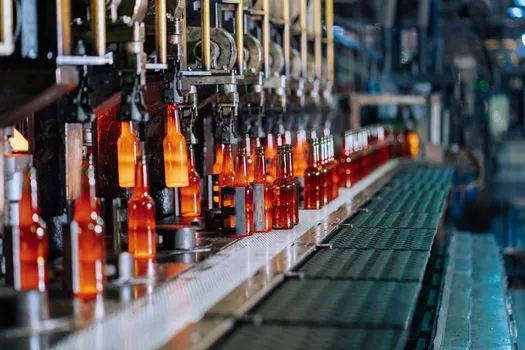
The hard limits in food-grade strapping are: no steel strapping in any zone above the receiving dock floor, no opaque strapping across FSMA-mandated label panels, and no painted mild-steel frames in washdown or seafood zones [S5]. Failure modes to flag during commissioning are: heat-weld temperature drift on PP seal heads after 50,000 cycles (typical blade-replacement interval), PET strap splitting at the seal node when tension exceeds roughly 60% of break strength, and tensioner slip on oil-contaminated strap from overhead conveyors.
Plants that have moved to all-PET pallet strapping report fewer tension-loss complaints in cold chain but more seal-node failures on older friction-weld heads, so the upgrade path is usually a new seal head rather than a new machine. The signal to track through 2026 is whether major retail and food-service buyers start mandating electronic seal-cycle logging as part of SQF Edition 9 and BRCGS Issue 9 audits, which would shift machine specs from "stainless + IP65" to "stainless + IP65 + logged cycle data" by 2027.
For facilities standardising across multiple lines, the lowest-risk 2026 specification set is a 304 stainless side-seal machine with IP65 seal head, PP and PET dual-mode operation, clear PET or light-tint PP over the label panel, and a control system that exports seal temperature and tension per cycle to the plant historian. Plants running seafood, dairy, or brewery lines should step up to 316 stainless, and any line shipping into the US should confirm FSMA Section 204 traceability coverage with their coding machine supplier before the strap spec is frozen, since label placement and strap path have to be co-designed. The next trackable signal is the Q1 2027 SQF and BRCGS audit cycle, which will show how aggressively third-party auditors are grading the strapping-and-label interaction under FSMA Section 204.
For related coverage, see Port Logistics Wrapping Machine Spec Map 2026.