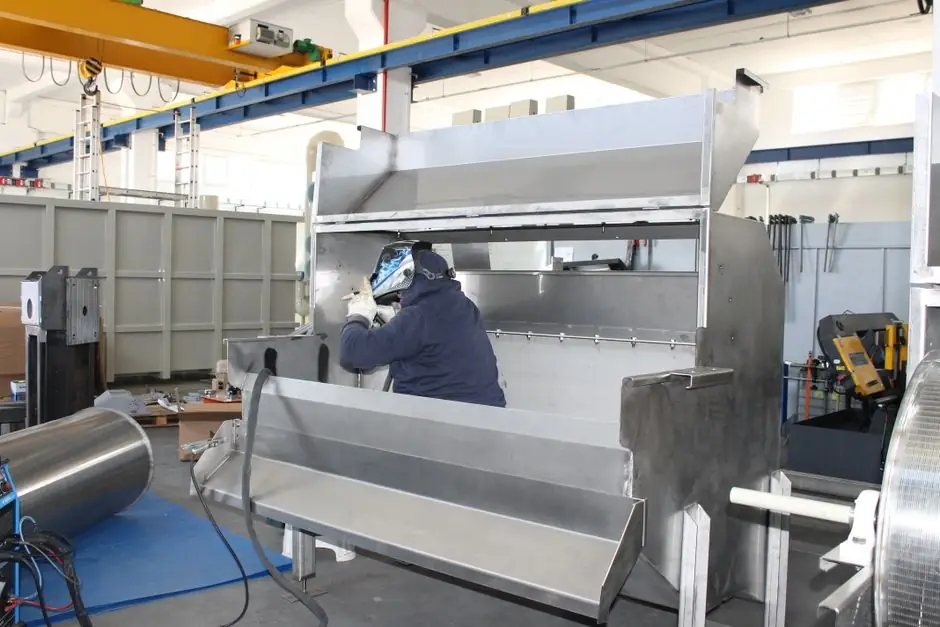
Structural adhesive bonding replaces spot welding on most dissimilar-metal sub-assemblies under 2.0 mm gauge, where the heat-affected zone from resistance welding drives distortion and the galvanic potential difference between the two substrates drives accelerated corrosion [S2][S4].
Lab data on structural methacrylates shows 20-30 N/mm² tensile shear on steel, 25 MPa peel strength, and full cure at 20°C within 24 hours, with continuous service capability to 120°C, putting adhesive performance inside the same envelope as a light-gauge spot weld while removing the localised fusion nugget that concentrates stress [S2].
Galvanic Isolation and the Dissimilar-Metal Problem
Bonding aluminum to steel, or galvanized steel to cold-rolled steel, without an insulating layer between the two faces creates a galvanic cell the moment electrolyte is present, and the result is the classic edge-creep corrosion seen on welded mixed-metal vehicle bodies and HVAC cabinets [S2][S4]. A cured structural adhesive layer acts as a dielectric between the two metals: it is an isolator that blocks the electrochemical path that would otherwise drive corrosion when dissimilar metals such as aluminum and steel are in direct contact [S4]. The same isolation principle is why a continuous methacrylate or epoxy bond line is preferred over a row of resistance spot welds on aluminum hoods, battery enclosures, and sign panels, where every weld nugget is a corrosion initiation site [S5]. Bond Rite's 2026 evaluation of adhesive bonding vs spot welding for industrial metalwork notes that bonding dissimilar metals is a primary advantage of adhesive bonding vs spot welding specifically because it prevents galvanic corrosion [S2]. For shop-floor engineers selecting a chemistry, the practical rule is: if the galvanic potential difference between the two substrates is more than a few hundred millivolts in the operating electrolyte, default to adhesive as the joining layer rather than the metallurgical bond.
Heat-Affected Zone, Distortion, and Thin-Gauge Limits
Spot welding and MIG/GTAW welding all dump heat into a small volume, and on cold-rolled steel below 1.5 mm, that heat shows up as visible distortion, burn marks, and post-weld grinding cost. 3M's structural-adhesives white paper notes that structural adhesive bonding does not require drilling holes and does not cause the thermal distortions that damage thin-gauge metals [S8]. Bond Rite's 2026 data ties the same point to production economics: spot-weld heat-affected zone distortion on sub-2.0 mm sheet often forces expensive post-weld finishing, and the move to industrial adhesives eliminates that thermal input while providing a continuous bond line across the entire substrate [S2]. For thin-gauge (1 mm) HVAC and appliance panels, the elimination of weld-burn and grinding steps is the single largest labour saving in the conversion, with one specialist HVAC manufacturer reporting a 40% assembly-time reduction after moving to heavy-duty bonding agents with 25 MPa peel strength [S2]. ITW Performance Polymers makes the same point at the design level: adhesives distribute stress across a continuous bond line and maintain substrate integrity without thermal input or hole drilling, and they improve strength-to-weight efficiency while reducing stress concentrations [S5]. Engineers in industrial adhesive selection should treat heat input as a separate design variable, not a side effect: any joint where distortion exceeds the flatness tolerance of the downstream assembly (paint, gasket seal, mating flange) is a candidate for adhesive conversion.
Stress Distribution: Continuous Bond Line vs Point Load
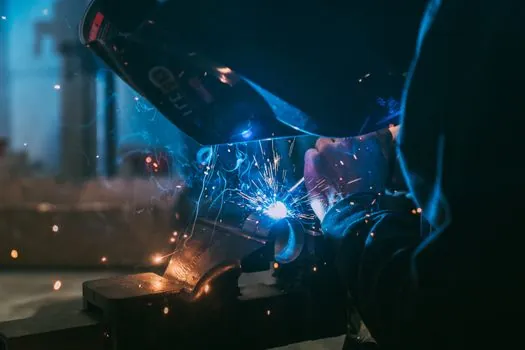
A resistance spot weld is, mechanically, a small-diameter pin in double shear carrying the entire joint load, which is why fatigue cracks in spot-welded assemblies almost always start at the nugget edge. Adhesive bonding is a surface-area joining technique that uses structural methacrylates to unite substrates across the entire interface, so load is spread continuously rather than concentrated on a series of points [S2]. Machine Design's 2018 reference on structural adhesives notes that when stresses are spread over a broad surface, adhesives offer stronger bonds than welding, rivets, and threaded assemblies [S6]. Kohesi Bond's 2024 metal-bonding overview lists uniform stress distribution and reduced stress from vibrations as two of the primary engineering reasons to switch from fusion joining to adhesive joining, and adds that the polymer matrix of an adhesive absorbs energy, reducing noise and fatigue failure in dynamic environments [S3][S4]. The quantitative envelope is well established: structural acrylics at 25-30 N/mm² tensile shear on steel, with 100% elongation grades available for vibration-loaded joints, give the designer a single bonded interface that handles static, dynamic, and peel loads simultaneously instead of designing around a row of pin-loaded points [S2].
Chemistry Selection: Epoxy vs MMA vs Anaerobic
Three adhesive families dominate metal-to-metal structural work, and the right pick depends on substrate, service temperature, and line speed rather than brand loyalty. Epoxy adhesives remain the standard for heavy-duty structural metal bonding, with typical tensile and shear strength on steel often reported in the 3,000-6,000 psi (roughly 21-42 N/mm²) range, plus strong chemical, moisture, and heat resistance for load-bearing assemblies and engine components [S4]. Methyl methacrylate (MMA) adhesives are toughened acrylics that balance speed and strength: MMAs can often cut through light oils and surface oxidation, requiring minimal surface preparation, and their fast fixture times (often just minutes) make them the default for high-speed assembly lines such as sign fabrication, automotive body panels, and galvanized-steel bonding [S4]. Anaerobic adhesives and cyanoacrylates serve smaller, close-fitting parts where instant results matter, with anaerobics curing in the absence of air and the presence of metal, ideal for threadlocking and cylindrical retaining [S4]. For thermal-cycling service on dissimilar metals, the ITW guidance is to match the adhesive's coefficient of thermal expansion to the substrates, since mismatched expansion rates between dissimilar metals are a leading cause of long-term bond failure, and toughened epoxies with rubber modifiers are typically specified where cyclic thermal stress dominates [S5]. Incure's engineering comparison of industrial adhesive chemistries recommends running substrate, environmental, and process integration as three sequential filters rather than picking a brand first [S4].
Comparison Table: Joining Methods for Dissimilar Metals

The four most common joining routes for mixed-metal sub-assemblies line up as follows on the criteria that drive engineering selection [S1][S2][S4][S5]:
Process Economics, Welder Cost, and Throughput
Welding labour cost is no longer a small line item in the UK and EU: Bond Rite's 2026 industry figures put the average cost of a certified welder at roughly £30 per hour, and every spot-weld burn mark that needs grinding is additional non-value-added time on top of that [S2]. The economic case for adhesive conversion is not the adhesive price per kilo, it is the elimination of the weld-burn and grinding phases that follow the fusion step, plus the elimination of fixture and post-weld straightening on thin panels [S2][S8]. For industrial adhesive selection, the specifier should also weigh cure time against jig footprint: 20°C full-cure-in-24-hour methacrylates are the most common choice for HVAC and enclosure builders, while heat-accelerated epoxies (typically 60-80°C for an hour) are used where jig inventory must be turned inside one shift [S2]. Permabond's 2026 industry note adds a softer but real factor: adhesive application requires no formal training or qualifications, while welders need certification, so on lower-tier assemblies the bottleneck of certified-welder availability can drive the design decision even before the mechanical case is made [S1].
When Welding Still Wins
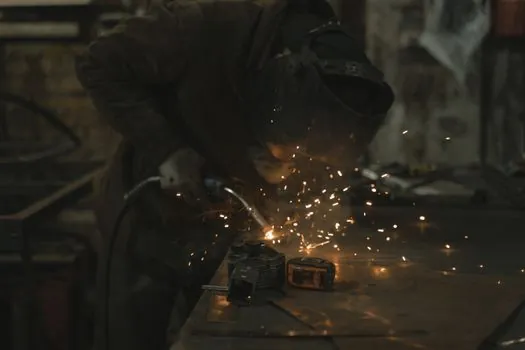
Adhesive is not the default for every joint, and the engineer should default to welding where the following conditions stack up: the joint is on thick-section structural steel where distortion is not a flatness problem; the service temperature exceeds the adhesive's thermal ceiling (above 120°C for standard methacrylates, above roughly 200°C for high-temp epoxies); the joint must carry a code-stamped load such as a pressure-vessel or structural-steel connection where the applicable design code (ASME, EN 1090, AWS D1.1) still mandates a qualified weld; or the production environment lacks the surface-preparation discipline that adhesive bonding demands [S1][S2]. Permabond's comparison piece is explicit that the question is when to choose each method, not whether one replaces the other, and TIG and laser welding remain the right call for clean, low-distortion joints on stainless and aluminum in aerospace, medical, and food-grade equipment [S1].
Standards, Surface Prep, and Specification Discipline
Surface preparation is the single most common root cause of adhesive-bond failure on metal, and the standard remediation is mechanical abrasion followed by solvent degreasing, with specific solvent and grit choices matched to the substrate (stainless 304 vs alodined aluminum, for example) [S4]. Incure's selection roadmap treats substrate-and-surface analysis as the first filter, environmental stress profiling (thermal ceiling, CTE mismatch, chemical exposure) as the second, and process integration (cure time, dispensing method, fixturing) as the third, which is a useful template for any specifier building a controlled internal bonding procedure [S4]. For dissimilar-metal joints in transport and EV battery enclosures, ITW highlights the insulating layer between stainless steel and aluminum or between galvanized and cold-rolled steel as the corrosion-control feature, and notes that a continuous bond line may also support sheet-metal downgauging without compromising stiffness, a direct weight and cost win [S5]. Engineers can cross-reference related joining and joining-adjacent processes, including the cutting-tool selection in welding and cutting tool work and the surface-prep tooling used before bonding, when writing the internal work instruction.
Trackable Signals and Next Specifications
Two engineering signals are worth watching through the rest of 2026: OEM disclosures on EV battery-enclosure joining (whether the dominant mixed-metal stack is aluminum-to-steel adhesive with structural acrylics, or a multi-material combination that also brings composites into the bond line), and any revision to the EN 1090 / AWS D1.1 execution-class language covering adhesively bonded structural connections, which would directly affect whether a designer can specify adhesive in place of a weld on a code-stamped assembly. For internal specification work, the immediate next step is a controlled lap-shear comparison on the actual production substrates at the actual service temperature, with surface prep locked to the three-step substrate-environment-process filter, before any brand or product is locked into a drawing [S4][S5].
Spec-level background on the components involved: pressure transmitter.
Background reading: ASME B89.1.9 Grade AS-1 Gauge Block Specs, Tolerance Bands, and Wrung Stack Sizing.