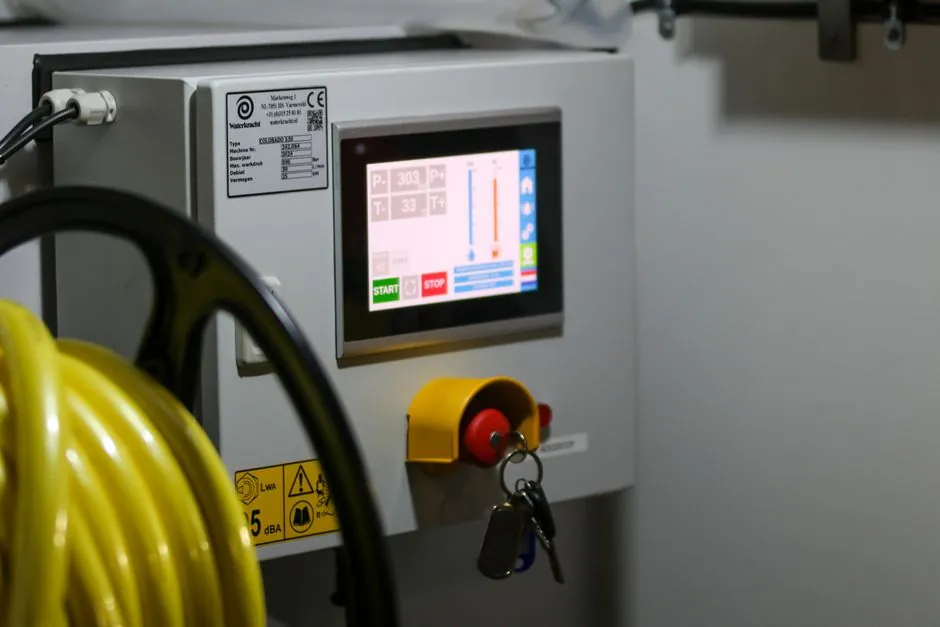
A sub-surface drum filling scale lowers a lance to the bottom of the container before filling, reducing foam in soaps, detergents and chemical concentrates while targeting a net-weight accuracy of 0.5%.
The approach fits drum formats from 5 to 55 gallons, with semi-automatic and fully automatic systems reaching 40 to 120 drums per hour, depending on container size and machine configuration [S1][S2][S3].
How Sub-Surface Filling Controls Foam
Sub-surface drum fillers place the discharge opening beneath the existing liquid level instead of pouring product from above, limiting the surface disturbance that entrains air into foaming liquids [S1]. The lance is lowered before flow begins, and product is delivered below the surface of the accumulating liquid [S2][S3].
This configuration addresses three practical filling failures: excessive foam can consume container capacity, push product above the target level and cause spills, and increase the measured weight of entrained air. Semi-automatic systems can select top or sub-surface filling for a mixed product schedule, while automatic systems can program the lance position and product-level behavior [S2][S5][S6].
Foaming control does not remove the need for vessel preparation. A lance-cleaning station, leak collector, drip reduction and programmed product-level tracking are available options because contaminated or poorly drained equipment can reintroduce contamination or leave residual product after a fill [S2][S5].
Scale Accuracy, Container Range and Throughput
Crandall sub-surface machines lower a filling lance to the bottom of the drum so product enters below the surface, preventing foam on soaps, detergents, chemical concentrates and other foaming products. The same product group covers drums from 5 to 55 gallons, while the FLEXEO-D specifies 5- to 55-gallon drums and adjustable machine height for multiple formats [S2].
The FLEXEO-D publishes a maximum output of 120 drums per hour for 5-gallon drums and 40 drums per hour for 55-gallon drums [S2].
Not every machine uses the same weight and accuracy specification. The Data Scale 5501 is configurable for pail and drum filling, but its published application range spans containers from 1 gallon upward rather than defining one universal drum capacity [S4]. These differences matter when comparing a drum filling scale: evaluate the stated container size, rated throughput, target-weight accuracy and number of fill heads as one package.
Manual, Semi-Automatic and Automatic Architectures
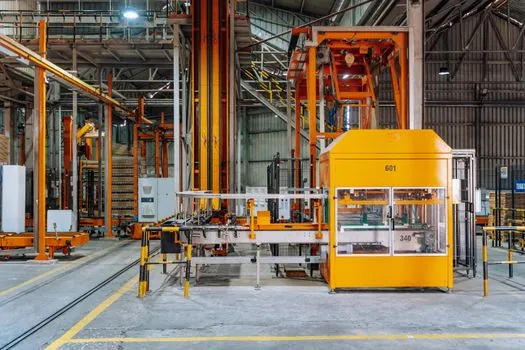
A manual or semi-automatic drum filler gives the operator control over drum positioning and the fill cycle. The LSB machine fills one drum at a time, covers 30 to 250 litres by weight and rotates the drum on free rollers until the bung hole is positioned beneath a fixed nozzle [S7]. Atlantic Scale offers top or sub-surface filling for foaming and non-foaming materials, with semi-automatic systems able to fill several container sizes [S6].
A fully automatic system integrates drum handling, filling, bung removal and replacement, and capping. The ADF-5510 is a floor-mounted system for 55-gallon tight-head steel drums, with 316 stainless-steel wetted parts and optional plastic or steel drums [S3]. The ADF-5540 palletized filler likewise specifies 316 stainless-steel wetted parts and uses two full-port ball valves to control product hammering [S8].
The choice is operational rather than cosmetic. A semi-automatic filling machine suits a controlled line where an operator positions each drum, while an automatic system suits a fixed sequence with conveyor transfer, bung handling and repeatable cycle times. Neither architecture proves better by itself; throughput, drum presentation and labor allocation decide the fit.
Materials, Valves and Hazardous-Area Execution
Sub-surface filling exposes the lance, valve and seals to the product for longer than a short top-fill discharge, so wetted-material selection must follow the chemical compatibility assessment.
The ADF-5510 uses carbon-steel construction with 316 stainless-steel wetted parts and specifies a product-temperature entry below 250, without supplying a temperature unit that should be guessed [S3]. Velcon palletized systems use 304 stainless-steel or powder-coated carbon-steel structures with 316 stainless-steel wetted parts, and the S-TOTE is offered with a lance up to 3 inches for faster delivery [S5].
Flammable or solvent-bearing products require a documented area classification before selecting electrical hardware. The FLEXEO-D is offered in ExProof, ATEX, IECEx, UL and EC designs. Those designations describe manufacturer configurations, not permission to install an uncertified machine in a classified area.
Product Level Tracking and Valve Control
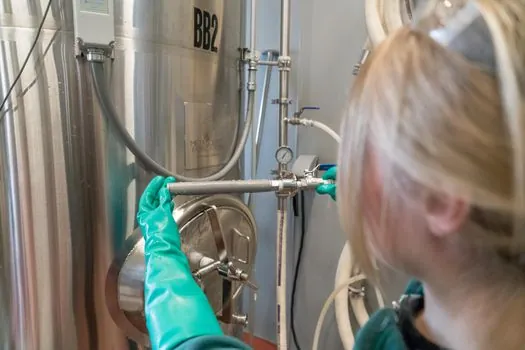
Programmable product-level tracking is the main process-control addition beyond simple net-weight cutoff. Velcon identifies level tracking as a means of minimizing foam, reducing drips and keeping the lance clean, and its 4S-55 and S-TOTE systems use an Allen Bradley PLC with a KSS5069 HMI-based control system [S5].
Automatic valve sequencing can limit the initial impact of product entering the vessel. In sub-surface mode, the ADF-5510 keeps one of its two valves partially closed until the liquid reaches the required level, reducing the early flow condition before the full valve arrangement takes over [S3]. The ADF-5540 uses two full-port ball valves for product-hammering control [S8].
Net weight remains the final process target even when level tracking assists foam control. The FLEXEO-D uses net-weight filling technology with programmable recipes, maintenance indicators and traceability functions, while the Velcon systems use the same level-tracking concept alongside weight-based filling objectives [S2][S5]. For production auditability, recipe selection and filling records matter as much as the nominal fill accuracy.
Selection Criteria for Foaming Products
Sub-surface filling is justified when the liquid entrains air during top discharge, when foam can displace the apparent fill level or when free-surface pouring creates splashing and drips. The approach remains usable for non-foaming liquids, so one sub-surface system can cover a mixed line when recipe management and lance positioning are adequate [S1][S6].
Format and capacity remain the first mechanical filters. Check whether the machine covers the intended drum range, such as 30 to 250 litres for the LSB, 5 to 55 gallons for the FLEXEO-D, or 275- to 550-gallon totes for the Velcon S-TOTE [S2][S5][S7]. Then compare published drum rates, fill-head count, target accuracy, valve arrangement and lance diameter [S1][S2][S3][S5].
The final checks are product compatibility and operating environment. Confirm the lance and wetted-part material against the formulation, define how the lance will be cleaned and drained, establish the required hazardous-area classification, and verify that the container handling sequence includes bung removal and replacement. If net-weight certification is part of the acceptance test, treat it as a separate procurement item rather than assuming that a filling scale includes it.
Limits, Failure Modes and Production Controls

Sub-surface filling controls the entry point, not the complete foam behavior of the product. A formulation that foams strongly, a contaminated vessel, an improperly positioned lance or excessive line pressure can still cause overflow, unstable weight, residual foam and inaccurate net weight [S1][S5]. Product trials should therefore verify the actual formulation at the intended drum size and fill rate rather than relying on a generic liquid classification.
Three failure modes deserve dedicated controls: air entrainment, container overfill and product loss around the lance. Level tracking addresses the first, net-weight cutoff provides the final quantity check, and drip control plus lance cleaning address the third. Leak collection under the scale provides a secondary indication of leakage, while a cleaning station reduces carryover between products [S2][S5].
Recipe control is particularly important on mixed lines. The FLEXEO-D offers programmable recipes, multiple lance types for viscous, foamy or corrosive liquids, and three filling positions: sub-surface, above the product and below the bung hole [S2]. A changeover should link drum size, lance position, flow profile, valve sequence and target weight to one recipe so that an operator does not combine settings from different products.
For procurement traceability, record the machine model, container range, rated output, stated fill-head configuration, wetted materials, lance diameter, hazardous-area design and published accuracy. These are the values that distinguish a configured filling system from a generic drum-handling machine and provide a defensible basis for an acceptance test.
Two trackable signals define whether the installation is performing: net-weight variation across repeated fills of one product, and the amount of foam or product loss observed at the lance and bung area. Both should be tested at the intended container size and throughput before the system is accepted.