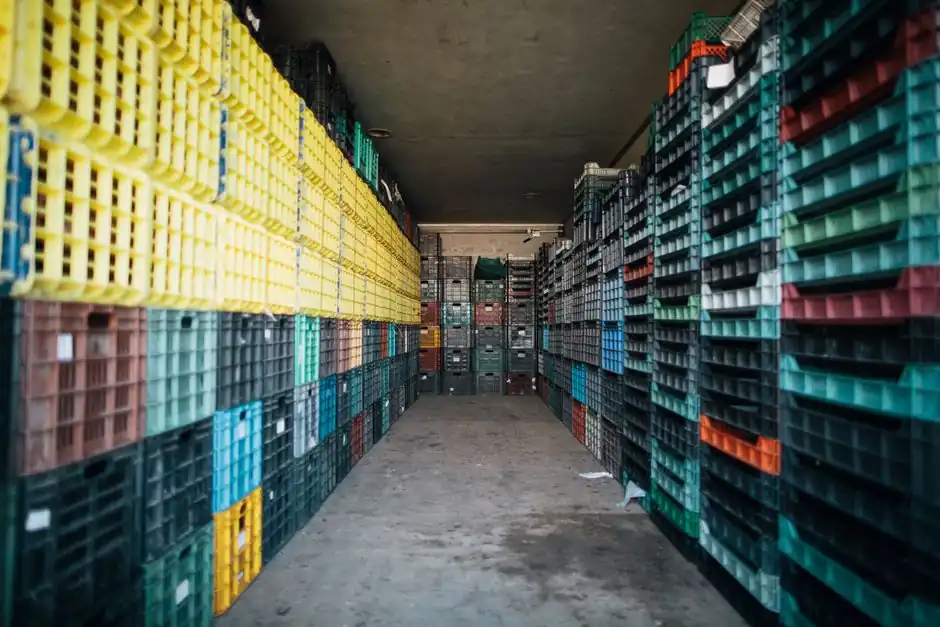
A four-drum plastic spill pallet with a nesting deck must provide a stable platform for four 200 L drums, while retaining sufficient containment capacity for the intended spill risk and handling load.
The supplied product data covers several configurations: 48 x 48 in nestable solid-deck pallets, 62.5 x 62.5 in heavy-duty containment decks, and lower-profile spill decks with 66-gallon sumps [S1][S2][S7].
Define the drum-handling and containment duty
A 200 L drum requires a deck that physically supports a four-drum arrangement, not simply a flat pallet sized for smaller containers. The PIG Heavy-Duty 4-Drum Poly Spill Containment Pallet holds four 55-gallon plastic or steel drums, measures 62.5 x 62.5 x 8.75 in and provides a 75-gallon sump capacity [S1].
For comparison, the Crystal Clean 4 Drum Containment Pallet provides a 66-gallon molded sump, a 6000 lb uniformly distributed load capacity and a 10-inch overall height for easier loading [S7]. Eagle also lists a 4-drum plastic containment pallet with a 66-gallon sump [S6].
These figures establish the selection baseline: footprint, containment volume, drum interface and rated load must be checked together. A 75-gallon sump is larger than the 66-gallon alternatives, but the higher sump figure does not by itself establish chemical compatibility, forklift access or suitability for a specific handling system.
Compare the principal pallet formats
Oneway Solutions offers plastic drum pallets, while Reusable Transport Packaging offers a category of drum pallets [S2][S4].
Questar offers drum spill pallets [S5].
For storage density, the nesting deck is the clear option. For a spill-response platform, the molded containment deck has the stronger published basis: a defined sump volume, a stated load rating and, in one case, an optional drain plug [S1][S7].
Use nesting only where the geometry supports it

A 48 x 48 in nestable plastic pallet can reduce the empty-deck footprint during transport and storage, but nesting does not make a four-drum unit suitable for unrestricted warehouse stacking.
The geometry confirms that nesting height and containment height are separate design variables. A low nesting profile can improve empty-pallet logistics, while a taller molded deck provides containment volume and a stable drum platform.
For a consolidated plastic pallet specification, record the nest ratio or nesting height, gross deck dimensions, unloaded weight, allowable load and whether the deck is intended to carry drums, personnel or both. These values must come from the selected model rather than from the broader pallet category.
Match access equipment to the deck geometry
Fork-entry dimensions and clearance are decisive because a containment deck with a raised perimeter or molded sump may not accept the same tines as a low solid-deck pallet. The 48 x 48 in solid-deck model [S2] and the 48 x 45 in six-runner open-deck model illustrate two different fork-engagement arrangements [S4].
ENGELS offers stackable drum spill containment [S3]. That range demonstrates that even within one containment family, capacity varies materially by model. A full load of four 200 L drums can exceed the lower end of that range, so the published UDL rating must cover the intended load rather than relying on the drum count alone.
Before ordering, measure the usable fork pockets, check tine thickness and confirm forklift or pallet stacker compatibility. Also establish whether the unit will be moved with a standard forklift, powered industrial truck or manual handling system. Deck height, perimeter shape and fork openings should be compared with the handling equipment, not with a generic 48 x 48 in footprint.
Apply containment limits and failure controls
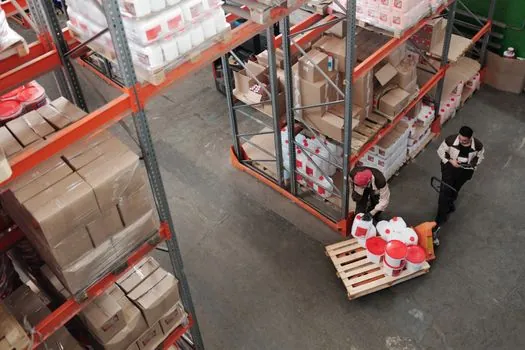
The published sump range for four-drum containment pallets is 66 to 75 gallons, compared with a 40 lb, 52 x 25.9 x 5.8 in configuration for a two-drum deck [S1][S5][S7]. The containment volume must match the largest credible release associated with the stored inventory, including leakage from valves, damaged closures or damaged drum bodies.
Four-drum containment is not a substitute for preventing releases. Inspect the deck for cracks, seam deformation, blocked drain passages and incompatible residues before placing drums on it. The optional drain plug on the Crystal Clean deck requires an operating procedure that prevents the sump from being left open when containment is required [S7].
For indoor storage, confirm that the deck fits the available bay and remains stable on the specified floor. For outdoor or mobile applications, evaluate ultraviolet exposure, temperature, chemical contact and contamination because these conditions affect plastic decks and stored drums. The available research supports model dimensions, capacities and materials, but it does not establish a universal chemical-compatibility table or a universal stacking limit for a four-drum nesting deck.
Specify the four drum positions and operating sequence
Arrange four 200 L drums in a stable square or rectangular footprint only after confirming the deck's individual bearing areas, rim or ring support, and deck openings. The four-drum PIG platform measures 62.5 x 62.5 in and accepts 55-gallon plastic or steel drums [S1], while the Crystal Clean product explicitly offers a low 10-inch profile for easier loading [S7].
A 200 L drum is nominally close to a 55-gallon drum, but dimensional verification is still essential because actual drum diameter, base footprint, height and fitting geometry vary by supplier. Confirm that each drum sits fully on its support and that valves, bungs and forklift tine paths remain accessible. If drums are accessed through the deck, the openings must not create a trip or puncture hazard.
Define the operating sequence before installation: fill and close the drums, inspect them, move the loaded pallet in one movement where practical, and return empty or partly empty units for cleaning without destabilizing the remaining drums. Use the published product documentation to identify whether the pallet is intended for four drums only or can also be configured for smaller quantities [S1][S3][S7].
Require a traceable model-level data sheet

The procurement record should identify the exact pallet model, dimensions, unloaded weight, UDL capacity, sump capacity, deck material, nestability and approved drum sizes. Model codes distinguish materially different products: CTC 4848-CTC-C, PP-S-48-N2, SP4848I105-C13, N4848T108-D and SP5151I76 cover different footprints or constructions [S2][S4].
Capacity documentation is equally important. The Crystal Clean unit has a stated 6000 lb UDL capacity, whereas the 4-drum PIG unit has a 75-gallon sump, while the broader ENGELS range extends from 100 to 1500 kg [S1][S3][S7]. These figures cannot be transferred between products without manufacturer confirmation.
Ask the supplier for test or certification documents applicable to the selected model and site, including chemical-resistance information, load-test evidence and confirmation of the maximum stacking configuration. Do not infer a certification, drain procedure or nesting ratio from a product family name. The purchasing file should contain the model code, measured data and operating limits together so that an incoming pallet can be checked against the approved specification.
A four-drum plastic pallet with a nesting deck should be released for procurement only after the 200 L drum footprint, fork access, rated load and spill-control objective are confirmed. Track the model-level UDL rating, sump capacity, nesting height and number of approved stacking positions as the four verification points for supplier approval.