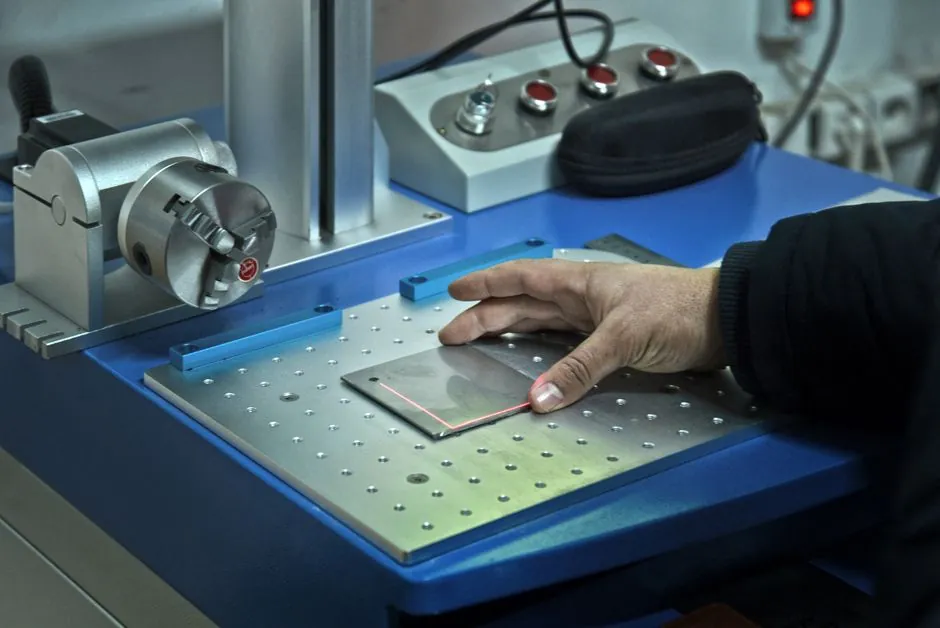
Mitutoyo, Taylor Hobson (Ametek), Starrett, and Mahr Federal continue to anchor the premium end of the surface roughness tester market, with Surftest SJ-220-class portable units, Formtracer series, and Surtronic S-100/DUO II shop-floor profilometers cited as benchmark instruments on OEM literature [S5][S7].
At the other end of the same market, handheld digital profilometers from Chinese OEMs such as GOYOJO (GSR750) list at $629 on Amazon US with a 5 μm diamond stylus and inductive sensor, while Mitutoyo 178-390 standard detectors for Surftest SJ-201/SJ-301/SJ-210/SJ-310 retail at $389.84, and BAOSHISHAN 0–50 μm ISO-compliant grindometer fineness gauges list at $85.49 [S4].
Premium-tier OEM roster and product lines
Mitutoyo's product taxonomy puts surface roughness under its Form Measurement family, alongside Contracer, Roundness, and Formtracer lines, and the company distributes dedicated educational PDFs on ISO-compliant surface roughness measurement rather than ANSI/ASME B46-only practice [S5]. Surftest portable units and Contracer contour instruments share a common detector ecosystem, which simplifies stylus and probe spares across shop-floor and lab [S5].
Taylor Hobson markets the Surtronic S-100 and DUO II as shop-floor roughness testers, with the DUO II explicitly positioned for flooring safety assessment and incoming/outgoing QC at flooring manufacturers, a niche that pairs a stylus-skid profilometer form factor with non-metallic substrates [S7]. Starrett complements the field with a dedicated Surface Roughness Gage family, advertised with user-friendly software for direct readout of Ra and related 2D profile parameters [S8]. Mahr Federal and Tesa/Brown & Sharpe typically appear in distributor SPC data-collection cables and Federal-style gage blocks alongside these three, which is why US industrial distributors like MSC stock the same Mitutoyo/Mahr/Tesa data-cable SKUs [S1][S6].
Mid-tier and budget supplier layer
Distributors shape the mid-tier more than the makers do. Judge Tool & Gage lists a Surface Roughness Testing category with separate sub-entries for the instrument, styli/accessories, surface defect scribers, GAR surface roughness comparators, and Mitutoyo surface roughness calibration specimens, with category entry-level pricing starting at $3,069 [S1]. MSC Industrial lists surface roughness gages at web prices of $3,144.61, $3,239.50, and $5,020.00 across in-stock SKUs, so the mid-tier US street price floor for a portable digital profilometer sits roughly in the $3,000–$5,000 band [S6].
The budget tier is dominated by direct-from-China handheld brands, with Qualitest USA LC and SISCO both running broad surface roughness tester categories that mix benchtop, portable, and stylus-instrument SKUs with global shipping [S2][S3]. Amazon's Best Sellers list surfaces GOYOJO GSR750 as the #1 roughness gauge by sales, ahead of BAOSHISHAN 0–50 μm fineness gauges (#2) and Mitutoyo 178-390 standard detectors (#3), with 30-specimen Healthible surface roughness comparator sets (Ra 0.05–12.5) at $129.99 rounding out the top four [S4].
Parameter framework buyers should anchor to
ISO 4287/4288 defines the 2D Ra/Rz/Rq family used across these instruments, and any supplier datasheet quoting Ra in μm or μin is implicitly working in that framework; comparators in the Healthible 30-specimen set explicitly cover Ra 0.05–12.5 μm, a span that brackets most machined, ground, and honed surfaces [S4][S5]. The Mitutoyo 178-390 standard detector for Surftest SJ-201/SJ-301 is a 90°-angle pickup, and the SJ-210/SJ-310 share the same standard/retractable drive unit footprint, so stylus interchangeability is a real selection criterion, not just a brochure talking point [S4].
Spec-led selection across the major options lines up cleanly: Mitutoyo Surftest SJ-220-class portables (premium, ISO 4287 traceable, broad parameter set), Taylor Hobson Surtronic S-100/DUO II (premium, shop-floor hardened, flooring-safety variant), Starrett SR-series gages (premium mid, Ra-focused with PC software), Mahr Federal MarSurf (premium, Mahr PC readout), and Chinese GOYOJO/BAOSHISHAN/SISCO handhelds (budget, Ra + a few extra parameters, 5 μm diamond stylus as a common spec point) [S4][S5][S7][S8]. For a deeper parameter-by-parameter walk-through, the in-depth selection map at Surface Roughness Tester Selection: Parameters, Stylus, and Geometry lays out the same Ra/Rz/Rq/Sk family against stylus radius and skid geometry.
Where each supplier wins and loses
Japanese and German OEMs win on traceability, ISO 4287 conformance, detector interchangeability, and a global service network; they lose on price, with even portable Surtronic-class units sitting in the low four figures USD before options [S5][S7]. Starrett and Mitutoyo share a US distribution footprint that makes same-week delivery of common styli and calibration specimens realistic through Judge Tool & Gage, MSC, and equivalent stocking distributors [S1][S6].
Chinese handheld brands win on price and lead time at the cost of traceability paperwork, scan-to-PC software depth, and long-term detector support; the GOYOJO GSR750 at $629 with a 5 μm diamond stylus and inductive sensor is a typical price/perf compromise unit for shop-floor and lab use, not for ISO 17025-accredited witness testing [S4]. For pharmaceutical-floor applications where Ra control on stainless is part of the validation chain, the spec-first selection at Best Surface Roughness Tester for Pharmaceutical: Spec-First Selection gives a tighter filter on traceability and 316L coupon compatibility than the general market view.
Procurement signals worth tracking
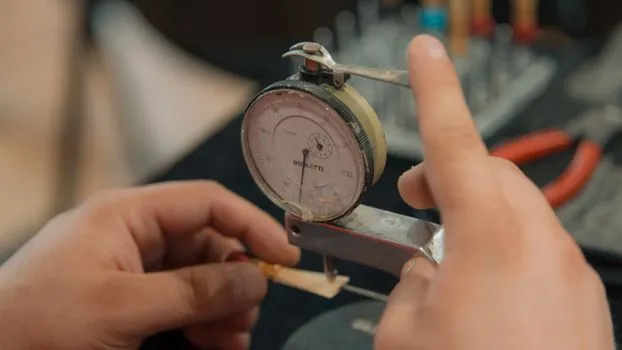
Watch three markers: the Mitutoyo SJ-220 promotion cycle, the Surtronic DUO II variant stocking at Taylor Hobson distributors, and the price/feature creep of Chinese handhelds in the $500–$900 band on Amazon Best Sellers, which is where US and EU buyers first feel mid-tier price compression [S4][S5][S7]. A second signal is comparator-set pricing, since Healthible 30-specimen Ra 0.05–12.5 sets moving above or below the $130 mark typically reflect upstream calibration-specimen costs from Mitutoyo and Mahr [S1][S4]. For adjacent metrology buys in the same QA room, optical comparator sizing tracks closely with surface roughness tester selection on software and stage geometry, and the map at Optical Comparator Sizing and Selection: A Spec-First Buyer's Map covers that overlap.
For the relevant spec sheets and selection criteria, see surface roughness tester, construction machinery and equipment, and lamps and light fittings.
