
Buying a Surge Protective Device in 2026 comes down to matching three numbers to the installation: system voltage class, In (nominal discharge current the device survives repeatedly) and Imax (single-shot max). ABB's US surge portfolio treats the SPD as transient-only protection, sized to absorb large single events like lightning rather than sustained overvoltage [S1].
The buying decision spans power SPDs (AC mains Type 1/2/3), DC PV SPDs, and signal/control SPDs for data lines — each governed by a different standard cluster (UL 1449 in North America, IEC 61643-11/-21/-31/-41 family for AC/DC/signal lines). THOR Electric's catalog separates signal SPDs from power SPDs and certifies them to IEC for networking, control and monitoring circuits [S2].
Voltage Class: AC Mains, DC PV, and Signal Lines Are Not Interchangeable
AC mains SPDs are typically selected to match L-N / L-L system voltage (120/240 V single-phase, 277/480 V three-phase Wye, 480 V Delta) with a Maximum Continuous Operating Voltage (MCOV/Uc) of at least 1.1× the nominal system voltage. ABB's US SPD line is built around common North American low-voltage classes rather than generic 230 V European ratings [S1].
DC photovoltaic SPDs are a separate topology: typical Din-rail Class II MOV SPDs for 1000 V DC strings with 40 kA discharge capacity are listed as a standard SKU on Chinese trade platforms, with MOQ as low as 10 pieces and unit price band US$7.00–14.00 per piece [S5]. PV string voltage is open-circuit up to ~1500 V DC in modern arrays, and an AC-rated SPD is wrong for that application.
Signal and data-line SPDs protect Ethernet, RS-485, 4-20 mA loops, and instrument busses; THOR explicitly markets signal SPDs for "networking, control, and monitoring systems" with IEC certification, not as AC power devices [S2]. For instrumentation loops like pressure transmitters on long cable runs, the SPD topology must match loop impedance and bandwidth, not just voltage.
In, Imax, and Uoc: The Three Current Numbers You Must Match
Nominal discharge current (In) is the repeatable 8/20 µs impulse the SPD survives without degrading; Imax is the one-shot maximum discharge capacity the device can clamp. ABB frames its US products around large single-event transients such as lightning, which sits in the Imax domain, and a separate spec is needed for repetitive switching transients covered by In [S1].
For Type 2 AC SPDs, In values of 5 kA, 10 kA, 20 kA and Imax from 20 kA up to 50 kA or higher are the working bands. Chinese OEM listings show 40 kA Class II MOV DC surge arresters on Din-rail as a standard catalog item at US$7.00–14.00 per piece [S5]; a 20 kA In version is roughly half the discharge capacity of a 40 kA model and should be specified to match the site's keraunic level and exposure.
Signal-line SPDs use Uoc (open-circuit voltage of the test generator, typically 1 kV or higher) rather than In/Imax, because signal lines are characterized by source impedance and waveform rather than short-circuit current. For gas-tube signal protectors, the relevant test method family is ANSI IEEE C62.31-2006, "Test Methods for Low-Voltage Gas-Tube Surge-Protective Device Components" — a 28-page document covering DC breakdown, impulse life, and insulation resistance of GDT-based SPDs [S3].
Type 1 / Type 2 / Type 3: Topology Dictated by Installation Point
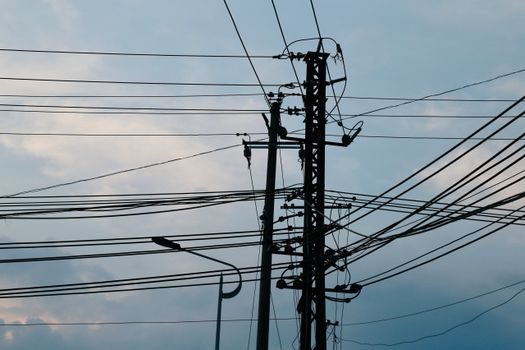
Per common low-voltage SPD practice, Type 1 is installed at the service entrance to handle direct lightning current (10/350 µs waveform), Type 2 sits in sub-distribution panels for indirect lightning and switching transients (8/20 µs), and Type 3 is a point-of-use device close to sensitive loads. ABB's US low-voltage surge product line is positioned around these building-entry and sub-panel points [S1].
Type 1 devices carry an Iimp rating (impulse current, 10/350 µs) typically 12.5 kA or 25 kA per pole; Type 2 devices are characterized by In and Imax at 8/20 µs. Mixing them — installing a Type 2 at the service entrance — leaves the panel exposed to direct lightning, and installing a Type 1 downstream of a Type 2 wastes the discharge headroom the Type 1 was built to absorb.
For DC PV strings, Class II (per IEC 61643-31) MOV-based Din-rail SPDs at 1000 V DC / 40 kA are a common spec line in Asian OEM catalogs, including the 2-pole units listed on Made-in-China for ~US$7–14 per piece at MOQ 10 [S5]. A PV combiner box or inverter DC input is the typical mounting point.
Standards Map: UL 1449 in the US, IEC 61643 Family in EU/Asia
In the US, UL 1449 (latest published edition) is the governing standard for AC power SPDs; in Europe, IEC 61643-11 covers power SPDs, IEC 61643-21 covers signal/control SPDs, IEC 61643-31 covers PV DC SPDs, and IEC 61643-41 covers telecom SPDs. THOR Electric explicitly markets IEC-certified SPDs for signal-line protection on control and monitoring circuits [S2].
For gas-tube signal protectors, ANSI IEEE C62.31-2006 is the component-level test specification, distinct from the application-level standard IEEE C62.41 that defines test waveforms and installation categories — these are referenced as separate documents in the C62 family, and the C62.31-2006 PDF is 28 pages covering GDT electrical and life tests [S3].
Compliance scope also drives the BOM: Bourns publishes a PFOS/PFOA compliance position specifically for its Surge Protective Devices line, separate from the general RoHS declaration, because the flame retardants and potting compounds in SPD modules can contain PFAS chemistries that fall under the EU PFAS restriction — buyers specifying into Europe should request the PFOS/PFOA declaration for the exact part number, not a generic RoHS line [S4].
SPD Sourcing: Tier 1 OEM vs Asian Trade-Platform Stock

Tier 1 SPD OEMs (ABB, Bourns, Siemens, Schneider, Eaton) supply the US and EU channels with full UL/IEC certification, lot traceability, and published In/Imax curves. ABB's US low-voltage surge product line is sold through authorized distribution with full datasheet PDFs and UL 1449 listing numbers per SKU [S1].
Trade-platform sourcing from Chinese suppliers (Made-in-China, Alibaba) shows catalog pricing around US$3.00–22.34 per piece for generic MOV/Class II AC SPDs, US$5.60–22.34 for charging-pile SPDs, and US$7.00–14.00 for 1000 V DC / 40 kA Class II PV SPDs at MOQ 10 pieces [S5]. These are typically sold without brand-name certification, so the buyer's incoming-inspection burden is higher.
For panel builders that already use a terminal block catalog from a major supplier, the matching SPD series from the same vendor is usually the lowest-friction spec — it shares DIN-rail footprint, marking system, and agency file. The reference guide on Surge Protective Device Selection: Voltage Class, In/Imax, Standard and Topology walks the same In/Imax logic against the panel's exposure class, and the side-by-side on Terminal Block vs Surge Protective Device: Spec-Driven Selection for Panel Builders covers the panel-layout tradeoff between a row of terminals and a row of SPD cartridges.
Selection Trade-offs: Class, Spec Band, and Failure Mode
The main buying decision is best laid out as a comparison: [S1]
AC Type 1 vs Type 2: Type 1 carries 10/350 µs Iimp (12.5–25 kA/pole), installed at the service entrance to discharge direct lightning; Type 2 uses 8/20 µs In/Imax (typical 5/20 kA up to 20/50 kA), installed in sub-distribution. Type 1 costs more per pole and has a higher let-through voltage; Type 2 has tighter clamping but cannot survive a direct strike.
Power MOV vs Signal GDT: AC/PV power SPDs use MOV (metal-oxide varistor) technology for high-energy, low-voltage clamping and are typically Din-rail modules like the 2P 1000 V DC 40 kA Class II units on Made-in-China at US$7–14 [S5]. Signal/data SPDs use GDT (gas discharge tube) or a GDT + TVS hybrid for low-capacitance, high-isolation protection on Ethernet and 4-20 mA loops; THOR's signal SPDs are IEC-certified for these circuits [S2], and the component test method for GDTs is ANSI IEEE C62.31-2006 [S3].
Top-tier brand vs Asian catalog: ABB's US low-voltage surge line is sold with full datasheet and UL 1449 listing for the US low-voltage market [S1]. Chinese trade-platform SPDs at US$3–22 are typically cheaper, but the buyer carries the lot-test, agency-cert, and chemical-compliance risk — including PFOS/PFOA declaration burden that named-brand suppliers like Bourns publish as a separate compliance document [S4].
Failure Modes and Spec Pitfalls
Most SPD failures in service are one of three modes: (1) end-of-life from repeated In-class transients exhausting the MOV/GDT, (2) sustained overvoltage (e.g., lost neutral, N-PE fault) exceeding MCOV/Uc, which causes thermal runaway unless the SPD has a thermal disconnect, and (3) mechanical/connection failure at the DIN-rail or lug termination. ABB's US SPD portfolio is described as a transient-only device; it does not replace overcurrent protection or correct for sustained overvoltage events [S1].
Spec pitfalls: (a) buying a Type 2 where Type 1 is required for a service entrance with overhead service drop; (b) matching MCOV too tightly to nominal voltage — for 277/480 V Wye, the L-N MCOV must be at least 320 V, not 277 V; (c) using an AC SPD on a DC PV string, where the operating voltage polarity reversal degrades MOVs not rated for DC bias; (d) using a power SPD on a signal/data line, where the high capacitance of an MOV SPD shunts the high-frequency data signal — relevant for flow meter and pressure transmitter loops with HART or Foundation Fieldbus overlays.
ABB's product page is updated 2026-06-11 [S1], THOR's signal SPD catalog 2026-07-03 [S2], and the C62.31-2006 GDT test spec remains the component-level reference for gas-tube devices [S3].