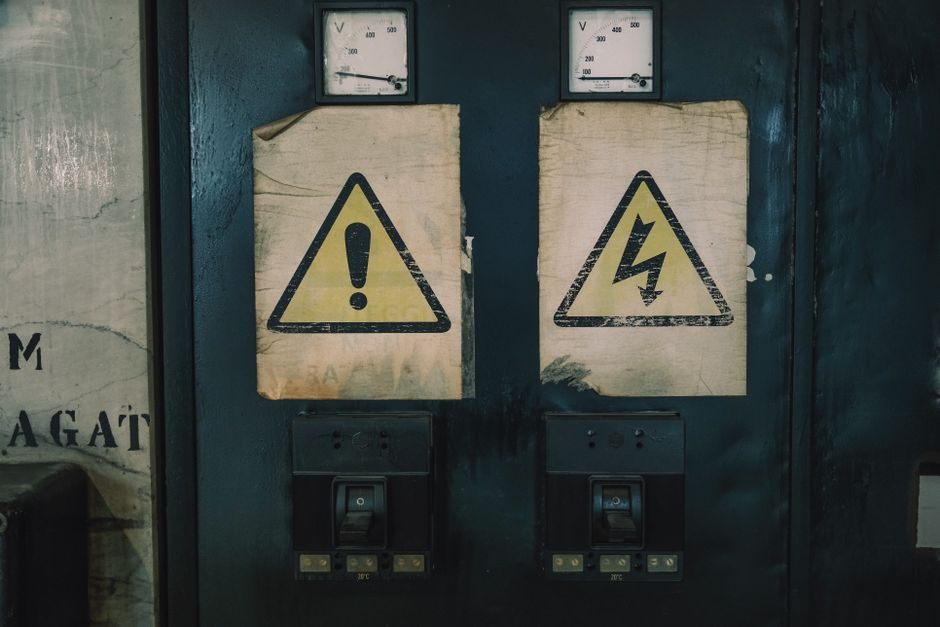
Surge Protective Devices (SPDs) — covered in the broader surge protector component family — clamp transient overvoltage and divert surge current to ground; the ABB product page for SPDs in the US low-voltage catalog states that lightning and utility anomalies cause roughly 20% of transient surges, while the remaining 80% originate inside the facility from switching of inductive loads, capacitor banks, and variable-frequency drives [S1].
Selection is driven by four parameters before any brand comparison: the system voltage class (230/400 V AC, 48 V DC, PoE, RS-485, PV string up to 1500 V DC), nominal discharge current In (8/20 µs), maximum discharge current Imax, and the applicable product standard — GB/T 18802.12-2024 for AC ≤ 1000 V r.m.s. 50/60 Hz power SPDs, or IEC 61643-22:2015 for telecom and signal-line SPDs rated up to 1000 V AC / 1500 V DC [S5][S6].
Three Internal Topologies and Where Each One Fits
SPDs are built around one or more non-linear elements. The Chinese-language ZVD technical brief lists the core components — spark gap, gas discharge tube (GDT), metal-oxide varistor (MOV), transient voltage suppression (TVS) diode, choke, and 1/4-wave shorting stub — and groups the resulting devices into voltage-switching (high Imax, high let-through), voltage-limiting (tight clamping, lower Imax), and combination types [S4].
Voltage-switching SPDs (spark gap / GDT based) keep a high impedance at rest and collapse to a low impedance once the spark fires; they handle the highest Imax but leave a higher residual voltage. Voltage-limiting SPDs (MOV- or TVS-based) start at high impedance and their resistance drops continuously as the surge rises, producing a lower residual voltage (Up) at the cost of lower surge-handling capacity. Combination SPDs — sometimes called Type 1+2 — pair a GDT stage for high current with an MOV stage for tight clamping, and are the common answer for service-entrance positions on commercial and industrial switchboards.
Selection Criteria Mapped to Standard and Location
GB/T 18802.12-2024 (identical in scope to IEC 61643-11 selection principles) is the document Chinese plant engineers cite when justifying LV power SPD choice: it covers AC SPDs at ≤ 1000 V r.m.s. 50/60 Hz, defines selection, operation, installation position, and coordination rules, and explicitly excludes Surge Protection Components (SPCs) integrated inside equipment [S5].
For signal and telecom lines, IEC 61643-22:2015 applies — it covers SPDs connected to telecom/signalling networks at ≤ 1000 V r.m.s. AC and ≤ 1500 V DC, and also covers multi-service SPDs (MSPD) that combine power and signal protection in one enclosure [S6]. The 2015 revision is 134 pages and remains the active reference; it is not superseded by a newer dated edition in the materials reviewed [S6].
Location classes are typically mapped to discharge current: Type 1 / Class I at the service entrance (10/350 µs waveform, Iimp 12.5–25 kA per phase to handle direct lightning exposure), Type 2 / Class II at sub-distribution (8/20 µs, In 20 kA, Imax 40–65 kA), Type 3 / Class III at the equipment terminal (8/20 µs combined with 1.2/50 µs voltage waveform, In 3–10 kA). Coordination — i.e. decoupling inductance or cable length between stages — is what keeps the upstream Type 1 from saturating the downstream Type 3.
Comparison Across the Three Common Options
Engineers usually weigh three product families for LV power applications: pure GDT-based Type 1, MOV-based Type 2, and combination Type 1+2. The decisive comparison criteria are let-through voltage (Up), maximum discharge current (Imax or Iimp), response time, and end-of-life behaviour. [S1]
GDT-only: Imax is highest, Up is also highest, response is in the microsecond range because the gap must ionise. MOV-only: Up is the lowest of the three and response is sub-microsecond, but MOVs degrade with each significant surge and require thermal disconnects. Combination: Up is intermediate, Imax is close to GDT-only, and response is dominated by the MOV stage; cost is the highest. For DC photovoltaic strings the THOR Electric product page lists DC SPDs intended for the DC side of PV installations rated up to 1500 V DC — a voltage class that rules out standard AC MOVs without explicit DC rating.
Voltage Class, Use Cases, and Why "80% Internal" Changes the Specification
Because 80% of transients are internally generated, an SPD specification that only addresses the service entrance is incomplete. Common applications stack protection: Type 1+2 at the main LV switchboard, Type 2 at sub-panels feeding PLCs and VFDs, Type 3 (or outlet-strip form factor) at the cabinet door for control electronics, and dedicated signal-line SPDs on RS-485, 4-20 mA loops to pressure transmitters and flow meters, Ethernet/PoE, and fieldbus segments per IEC 61643-22 [S1][S6].
For the internal-80% case, the design focus is repetitive low-magnitude switching transients from contactors, relays, VFDs, and the industrial valves they actuate — protection is more about repeated In (8/20 µs) endurance and tight Up than a single high Iimp number. For the lightning-20% case on a tall structure or exposed rooftop array, Type 1 with 10/350 µs rating and equipotential bonding takes priority.
Specifiers buying Chinese OEM supply should also expect the GB/T 18802.12-2024 framework to govern documentation: a 2024-12-07 product knowledge post from ZVD explicitly maps the standard's "selection, operation, installation position, and coordination principles" wording to the Chinese supply chain [S4][S5]. Zhejiang Leitai Electric, listed on the ECVV supplier index, quotes a 50,000-piece/month supply ability for SPDs/Surge Protector/Lightning Arrester, with MOQ 100 pieces and T/T or L/C terms — useful as a sourcing baseline rather than a product endorsement [S3].
Failure Modes, Limitations, and Sourcing Constraints

MOV-based SPDs fail open via thermal disconnect when the MOV is pushed past its cumulative energy limit; GDT-based SPDs fail short, which is why fuses or backup breakers are required upstream. Combination SPDs can exhibit both modes depending on which element ages first. Bourns maintains a PFOS/PFOA compliance position page for its Surge Protective Devices range, a reminder that European environmental directives now touch SPD component materials as well [S2].
Coordinate, do not parallel: placing a Type 2 directly downstream of a Type 1 with less than the standard-mandated cable length (typically 10 m, or equivalent decoupling inductance) lets the Type 2 saturate and defeats the staged approach. This is the single most common field installation error in retrofits.
Related Selection Topics for Panel Builders
SPDs are rarely the only protection decision on a control panel — engineers selecting surge protectors typically also revisit relay and terminal-block choices on the same drawing. A practical walkthrough of contact-and-coil ratings versus clamp voltage is given in the industrial relay buying guide, while the terminal block buying guide covers the pitch/current/standard levers that pair with SPD selection on a DIN-rail layout. For higher-power cabinet work, relay-versus-terminal-block decisions are framed against the same Up and coordination logic in this relay vs terminal block comparison. [S2]
Trackable signals for the next review: (1) IEC 61643-22:2015 is the active edition in the materials reviewed [S6]; (2) GB/T 18802.12-2024 is the current national reference for LV power SPDs connected to AC circuits with rated voltage not exceeding 1000 V (r.m.s.), 50/60 Hz [S5].