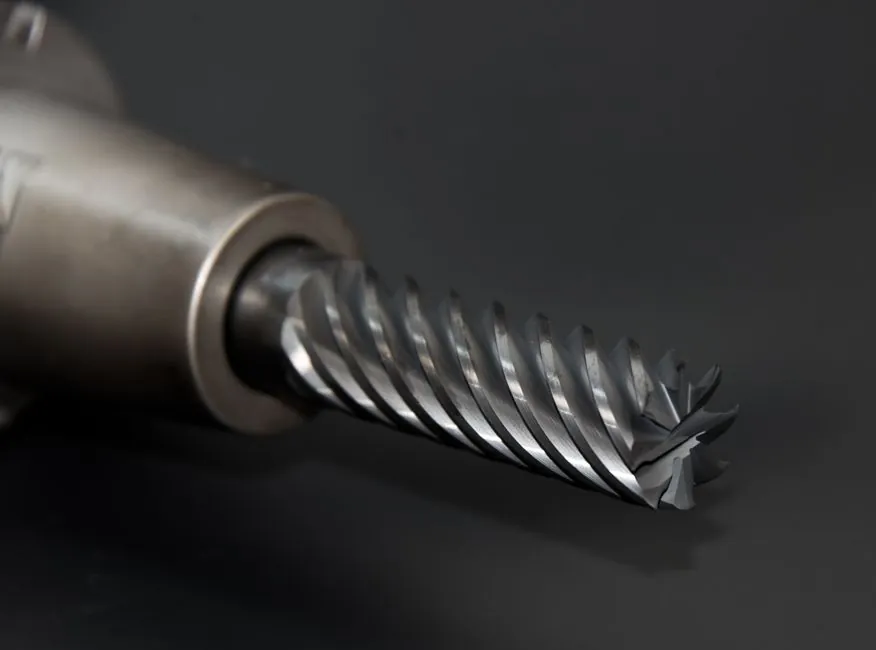
Taper Lock bushes have a nominal 8-degree taper angle, 1 11/16" per foot or 14.06% taper, split through the entire bushing, and are used for the attachment of power transmission components to drive and driven shafts, as well as shafts into pulleys, sprockets, rollers and gears.
Selection is governed by four engineering decisions: shaft bore and tolerance, the torque envelope of the driven member, the hub style that mates the bush to the pulley or sprocket, and the corrosion profile of the surrounding atmosphere [S1][S3].
Taper Angle, Materials, and Where the Family Fits
The 8° taper is the defining geometry of the Taper Lock family, used because it gives enough wedge action to lock without splitting the hub and is shallow enough to release cleanly with controlled screw torque [S5]. For a baseline on what the bush actually is in catalog form, the taper bush page lists the standard 1008 to 120100 size run and the matching hub bore data used by most power-transmission catalogs.
Standard Taper Lock four-hole bushes are machined from close-grain GG25 cast iron, with larger sizes (typically 3535 and above in imperial, or equivalent metric codes) moving to Spheroidal Graphite (S.G.) iron to lift maximum allowable bore and torque capacity [S3]. Fenner's Taper Lock four-hole bush has been "tried and tested in over 60 million applications," with both metric and imperial bores stocked and a published standard range that fits shafts up to 125 mm (5") [S3].
For washdown, food-grade, or chemical-exposure lines, the same Taper Lock geometry is available in stainless steel, with non-corroding material being a must for the food and beverage sector where cleaning agents attack standard carbon-steel fixings [S5]. Reference standard for general dimensions and tolerances is MPTA-B9i-2013 [S5].
Three Families on the Floor: Taper Lock, QD, and Double Split Taper
The Taper Lock bushing uses blind hex socket-head screws driven into the tapered outside diameter; tightening those screws pulls the bush into the mating hub bore, which collapses the inner diameter onto a keyed shaft and delivers a higher clamping force than a bored-to-size hub with a keyway and setscrew [S4][S5]. Reference data for the bushing-installation screw sizes per bushing number is tabulated in the Translink catalog, ranging from 1/4-20NC × 1/2" on a 1008 bush up to 1 1/2-6NC × 4" on the 120100 [S5].
The three families most material handling buyers will cross-reference are Taper Lock, QD (Quick Disconnect), and Double Split Taper (ST). Each has a different mounting method and a different alignment tolerance, so swapping families without re-checking hub face geometry and screw circle is a common cause of field failures [S4]. Where the application reverses frequently or carries shock, the split design's clamping action is the deciding factor, not the catalog bore range.
For light-duty hubs and shaft collars that still need axial security, a separate locking assembly or shaft collar on the back side of the bush prevents axial drift if the taper ever walks; the taper itself is a radial clamp, not an axial stop.
Selection Criteria: Bore, Torque, Hub Style, and Environment

Step 1 is matching the bushing's published bore window to the actual shaft diameter. The standard range covers bores from roughly 9 mm (1008) up to 254 mm (120100), with the metric and imperial tables running in parallel rather than mixing [S3][S5]. Going outside the catalog bore window is the single most common reason a bush is returned, because the screw-clamp force drops off rapidly when the bush is over-bored for a light shaft.
Step 2 is the torque envelope. As a working rule, a Taper Lock four-hole bush on a uniform load application is rated equivalent to a shrink-on fit and eliminates the cost of a separate key [S3]. High-cyclic conveyors and bucket elevators with peak start-up torque usually step up one or two bushing sizes (for example 2517 → 3020) before changing the hub, because the larger bolt circle and longer clamp length share the load across more threads.
Step 3 is hub style. Weld-on hubs (steel, for fan rotors, plate sprockets, steel pulleys and impellers) are taper-bored for bushes 1210 to 5040. Bolt-on hubs cover the same envelope minus the welding step and are stocked for 1210 to 3040. Hub adaptors accept a parallel-bore component and taper-bore it to the bush, ranging 1008 to 4040 with keyed versions for heavy duty [S3]. A fuller comparison of how the same bush behaves in a jaw-coupling hub versus a conveyor-pulley hub is covered in the Taper Bushing Hubs on Industrial Jaw Couplings reference.
Step 4 is environment. Dry, ambient indoor conveyors accept the standard GG25 cast iron. Outdoor or washdown duty takes the stainless variant; high-impact or reversing duty (for example a bucket-elevator head pulley) is where S.G. iron and the larger 4-hole pattern of the 3535/4040/4545 family start to earn their premium [S3][S5].
Comparison of the Three Main Bush Types
The table below lines the three families most often offered for material handling drives against the criteria that drive the spec. [S4]
Taper Lock: nominal 8° taper, no external key, split full length, installed with blind hex socket-head screws, standard range 1008 to 120100, materials GG25 iron, S.G. iron on larger sizes, stainless option available; typical use: conveyors, bucket elevators, V-belt pulleys, chain sprockets, weld-on / bolt-on hubs [S3][S5].
QD (Quick Disconnect): same general principle with a flanged, multi-screw front face that is removed by loosening the front screws; typical use: applications where the driven member is changed frequently, because the front-access design removes without pressing the shaft end [S4].
Double Split Taper (ST): two-piece split through the body and flange, used where the shaft must be slid into place from the side rather than fed through an open bore; typical use: large crown pulleys and through-shaft gear mounts where a one-piece Taper Lock cannot be slid on [S4].
Installation Discipline and the Failure Modes It Prevents
Correct installation is the difference between a shrink-fit-equivalent clamp and a slip. The screws must be tightened progressively in a star pattern to the torque called out in the catalog for that bushing number, then re-checked after a short run-in period; under-torque leaves the bush loose and over-torque strips the blind threads in the cast iron body [S5][S3].
Common failure modes on material handling lines are shaft scoring from a missing or undersized key, fretting corrosion between the bush OD and the hub bore when the hub is not cleaned of paint or rust, and axial walk when the Taper Lock is being asked to take a thrust load it was never designed for [S1][S3]. Where backstopping or reversing is in the drivetrain, the bush should be paired with a lock nut on the shaft shoulder or a retaining ring in an adjacent groove, sized so the ring is the axial stop and the taper stays radial.
One specimen quote from manufacturer guidance worth keeping on the shop floor: "equivalent to a shrink-on fit on uniform load applications and thus eliminating the cost of a key" [S3]. On shock-loaded or reversing service that single sentence does not hold, and a keyed hub or a step up to the S.G. iron range is the correct reaction.
Standards, Sourcing, and Traceable Specs
The governing standard for Taper Lock general dimensions and tolerances is MPTA-B9i-2013, covering bushing numbers 1008 up to 120100 [S5]. The Taper Lock trademark is owned by Reliance Electric; QD and XT are Emerson Electric marks; ST is the Martin Sprocket & Gear MST mark, and buyers cross-referencing between brands should match MPTA size codes rather than marketing part numbers [S5].
For metric vs imperial traceability, Fenner and most European stockists carry both, with the standard range reaching 125 mm (5") shafts in iron and the 4-hole feature providing a balanced assembly for high-speed pulleys [S3]. For procurement, the practical data sheet per part includes large-end diameter, bolt circle, screw count, screw size, and bushing length; a typical 2517 in imperial is 3.368/3.374" large end, 3.25" BC, 2 × 1/2-13NC × 1" screws, 1.75" length, GG25 iron [S5].
Trackable signals to watch: published catalog revisions from MPTA that would push the next bushing-number extension beyond 120100, and any field bulletins on S.G. iron availability for sizes between 3535 and 4545, since those are the most common material handling upgrade path. If a bushing keeps being returned for "split during install," the cause is almost always a metric/imperial mix-up or a screw that is one size too long bottoming in the blind hole before clamping.