
A taper bush for a food processing line is specified to a tighter envelope than a general industrial bushing: the material must survive daily caustic washdown, the shaft lock must hold under belt or chain load through steam-clean cycles, and the bore ceiling is set by the Taper Lock family at 5 in. while QD systems extend past 12 in. [S1][S3].
The driver is corrosion, not torque. Most food plants run alkaline foam (NaOH 1-3%) and acid sanitizers (peracetic, nitric, phosphoric) on a daily CIP loop, with line temperatures from ambient up to 90 °C during cleaning. Standard carbon-steel taper bushings with a mill finish will pit and gall under that regime, so the selection problem is fundamentally a materials problem before it is a sizing problem [S3][S7].
Material Options: Cast Iron, Steel, and Stainless
Split taper bushings are commonly produced in cast iron for vibration damping and ease of machining, or in steel for high-torque and high-stress service [S3]. Cast iron dampens vibration but corrodes rapidly in washdown, and steel inherits the same surface-failure mode unless it is upgraded. For food and pharma lines, the spec moves to 304 or 316 stainless bushings, or to carbon-steel bushings carrying a food-grade coating (PTFE, nickel, or FDA-compliant epoxy) [S1][S7].
The decision is driven by the cleaning chemistry and the contact risk. A drive above an open product zone, where lubricant drips or bushing fragments could fall into the product, is treated as a food-contact-adjacent risk and is typically moved to 316 stainless or to a fully sealed stainless hub. A dry-side drive, such as a conveyor drive mounted on the return side, can usually accept a coated carbon-steel bushing, with the coating selected for the sanitizer chemistry in use [S1][S3].
Size Ceiling: Taper Lock vs QD in Food Plants
Food processing lines rarely need bores above 5 in., which fits the Taper Lock family ceiling at the 5050 series with a bore range of 1-3/4 in. to 5 in. [S1]. QD systems cover bores from 3/8 in. (SH) up to 12+ in. (P, W, S), so QD is the choice when a mixer shaft, large pump, or drying-drum shaft above 5 in. is being mounted [S1].
For typical conveyors, bucket elevators, and packaging line drives in the 1/2 in. to 3 in. shaft range, the common Taper Lock series 1008 through 3020 covers the bore band 1/2 in. to 3 in. [S1]. The Taper Lock system is also the dominant stocked system for stainless variants in food-grade catalogues, which simplifies spare-parts holding [S1].
Locking Principle and Why It Matters Under Washdown

Both Taper Lock and QD use the same wedge principle: an 8-degree outer taper (1-11/16 in. A bushing with a nominal 8-degree taper angle (1 11/16" per foot, equivalent to 1/10 taper per 1/1000 pull-in) is pulled axially into a matching hub bore by cap screws, generating radial clamping force on the shaft [S5][S6]. The 8-degree angle is intentionally self-locking, so vibration alone does not back the screws out, which is the reason Taper Lock is the default on vibrating screens, bucket elevators, and inclined conveyors common in grain and snack plants [S3][S5].
Under food-plant washdown the practical risk is not vibration loosening but thread corrosion. Standard zinc-plated cap screws seize in the bushing flange after a few cleaning cycles, which is why food-grade Taper Lock kits ship with stainless cap screws and a food-grade anti-seize (typically PTFE-based, not copper) on the screw threads. Split-taper designs also expose the screw heads to direct spray, so specifying a fully enclosed hub or a hub cover is standard practice on washdown conveyors [S3][S4].
Selection Criteria Mapped to the Three Common Food-Plant Busings
The three bushing types encountered on a food line are standard steel Taper Lock, stainless Taper Lock, and QD. The first decision criterion is bore: Taper Lock tops out at 5 in. (5050 series), while QD goes to 12+ in. (P, W, S) [S1]. The second is corrosion: stainless is mandatory for direct food-zone mounting and for any drive above an open product, while coated carbon steel is acceptable on the dry side [S1][S3]. The third is hub availability: most stainless sheaves and sprockets are stocked in Taper Lock pattern, less so in QD, which affects lead time [S1].
For heavy-duty or high-torque applications, steel bushings are preferred over cast iron for their superior strength and load-bearing capacity, and the same rule applies in food service when the drive is a high-torque mixer or a pump above 7.5 kW [S3]. A typical food-plant drive is under 5 kW per conveyor, so the material decision is rarely torque-driven; it is driven by washdown survivability and cleanability around the hub [S2][S3].
Failure Modes Specific to Food-Plant Service
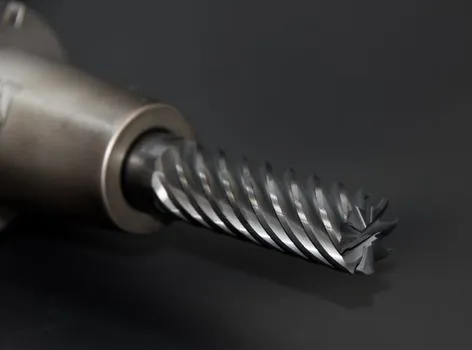
Four failure modes dominate food-plant taper bush returns: (1) crevice corrosion at the split line, where cleaning chemistry wicks into the bushing-hub interface; (2) screw seizure from galling of the cap-screw threads; (3) hub cracking from over-torqued screws, which typically shows as a radial split starting at the jacking-screw hole; and (4) shaft scoring from slip after the bushing backs off, almost always traceable to under-torque or to a contaminated taper surface [S3][S4].
Mitigations are well understood. Match bushing and hub taper surfaces dry unless the manufacturer explicitly allows a lubricant, because oil on the taper converts wedge action into hydrostatic slip [S5]. Use the published torque figure for the screw size on that bushing series and re-torque after the first 8 hours of run-time, which is when the contact surfaces bed in. Specify stainless cap screws with PTFE anti-seize on washdown equipment, and replace any bushing that shows a visible split-line rust line at the next planned maintenance window [S3][S5].
Pairing the Bushing with a Sealed, Cleanable Hub
The bushing only performs as well as the hub around it. A food-grade shaft collar or end cover on the outboard side of the hub blocks direct spray onto the split line, and a stainless backplate on the inboard side keeps product out of the bore. For shaft retention beyond the bushing, a lock nut or retaining ring on the shaft end prevents axial migration during conveyor stop-start cycles, which is the second most common source of slip after under-torque [S1][S3].
For related hygiene-side decisions on the rest of the drive, the V-ribbed belt profile, belt material, and the 2026 hygiene rules for the surrounding drive components are covered separately in the V-ribbed belt selection reference.
Procurement and Spare-Parts Holding
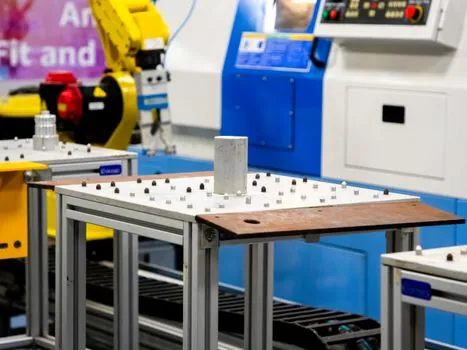
Most food plants hold 10-20% spare bushings by series number, sized to the dominant shaft diameters on the line, because the mean time to replace a tapered bushing on a washdown conveyor is under 30 minutes once the correct series and bore are on the shelf [S1]. Stocking both the Taper Lock 1008-3020 range and the 2517-3525 range covers the bulk of conveyor, elevator, and mixer drives in a 1/2 in. to 3-1/2 in. shaft envelope, and the 5050 series covers the 1-3/4 in. to 5 in. drives on larger mixers and reeler shafts [S1].
Trackable signals for the next planning window: any new belt or sheave change-out on a washdown line should be cross-checked against the bushing series to confirm the new hub accepts a stainless Taper Lock variant, and any new shaft above 5 in. is a flag to switch from Taper Lock to QD, with the corresponding change in spare-parts stock from the 5050 series to the QD M, N, or P letter sizes [S1].