On packaging lines with 1.5-3.0 kW gearmotor drives, single-row metric tapered roller bearings in the 30200, 30300, 32000, 32200 and 32300 ISO series carry the dominant radial+thrust load at conveyor head pulleys, film unwind shafts, and auger feeder screws [S2][S1].
Selection hinges on four numbers: dynamic load rating C in kN, speed limit in r/min, bore in mm, and seal arrangement; the same envelope dimensions, however, can carry very different permissible speeds depending on internal geometry and lubrication [S2].
Load and Speed Envelope in a Typical Packaging Drive
A VFFS (vertical form-fill-seal) line with a 2.2 kW servo-driven film-draw belt typically produces 30-80 packages/min, equivalent to roller-shaft speeds of 10-30 r/min at the draw roller; the radial load from belt tension at 200-400 N combined with a light thrust from the dancer arm is comfortably inside the dynamic load rating of a 32206 or 32208 single-row bearing in the ISO 15:2017 dimension plan [S2][S1].
For higher-speed cartoners running 200+ cycles/min, a 30304 or 30305 (ISO 15:2017 series 30300) is more appropriate, as the series uses a larger contact angle to absorb the higher thrust component from cam-actuated tucking arms while keeping the bore under 25 mm for a compact housing [S2].
Series Comparison: 30200 vs 30300 vs 32000 vs 32200 vs 32300
The 30200 and 30300 families share the same outer-ring cross-section but differ in contact angle: 30200 is roughly 10-14 degrees for radial-leaning applications, 30300 is roughly 28-30 degrees for higher thrust [S2]. The 32000, 32200 and 32300 series are dimensional alternatives (ISO 15:2017 series prefix system) with progressively heavier cross-sections for higher C ratings in the same bore: 32000 = standard, 32200 = medium, 32300 = heavy.
Decision rules used in packaging: a 30200 fits light-belt idler and small sprocket shafts under 1.5 kW drive; a 30300 fits cam- and crank-driven cartons with 1.5-3.0 kW and high thrust; a 32200 fits film-extruder feed screws with steady 5-15 kW motors and 50-200 N.m torque; a 32300 fits the main gearbox input shaft on a flow-wrapper where radial load can exceed 25 kN and intermittent shock is present [S2][S1].
Sealing, Lubrication, and Washdown Reality
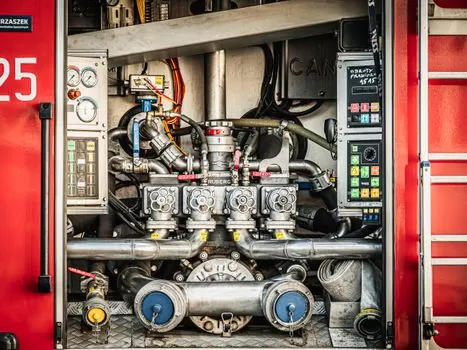
Packaging lines run in mixed environments: dry zones (carton erection, label applicators) tolerate open bearings with a felt or nitrile contact seal, while wet zones (bottle rinsers, dairy fillers, CIP washdown) demand 2RS or 2RZ contact seals on both faces, with food-grade grease (NSF H1 registered) [S1].
Seal friction adds drag and reduces permissible speed; for example, a 32208 2RS at continuous duty typically caps at 4,000-5,000 r/min versus 7,500 r/min for the open variant, so packaging lines almost never run against that ceiling, but the rule is a useful sanity check when retrofitting higher-throughput conveyors [S2].
Arrangement: Single, Back-to-Back, or Paired Stacked
A single-row tapered roller bearing accepts combined radial and axial load in one direction only; for a shaft with thrust from both directions (typical on a packaging-line auger or on a film-dancer pivot), the standard arrangement is two single-row bearings mounted back-to-back (DB) or face-to-face (DF), with the spread or apex of the pressure cones setting the effective moment stiffness [S2].
DB gives a higher moment-carrying capacity and resists tilting better under belt-tension reversal, which is why DB is the default for conveyor head pulleys; DF is preferred when shaft deflection between bearings must be minimised, as in the cantilevered shafts of a horizontal flow-wrapper [S2][S1].
Misapplication Pitfalls on Packaging Lines
Specifying a steel-mill class-four bearing (heavy 32300 series with brass cage) on a packaging line is a common cost trap: the extra C-rating headroom is wasted, the larger envelope forces a heavier housing, and the brass cage is unnecessary at 1.5-3.0 kW loads [S2]. For readers cross-shopping, the tapered roller bearing selection for steel mills map sets out the heavier envelope, while the same bearing type applied to packaging lives one or two series lower in the ISO 15:2017 prefix.
A second pitfall is grease life: tapered roller bearings on packaging lines typically need re-lubrication at 4,000-8,000 hours in dust-free zones, but 2,000-3,000 hours in flour or sugar dust environments where ISO 4406 solid-contamination codes above 21/19/16 will shorten bearing life by a factor of 2-3 versus clean-room lab ratings [S1]. Sealed-for-life 2RS variants are often the correct call in these dusty zones.
Standards, Documentation, and Sourcing Checks
ISO 15:2017 defines boundary dimensions for radial bearings, and ABMA STD-20 governs the inch-series (the 30000, 50000 and 60000 prefixes Timken-style series), so a packaging engineer working from a European metric motor housing must verify that a proposed U.S.-sourced cup/cone pair is dimensionally interchangeable rather than just sharing the bore [S2].
For a general engineering refresher on envelope and load-rating terminology, the roller bearing encyclopedia entry covers the same ISO 15 vocabulary used here. When the packaging line is in fact a VFFS machine with a vacuum sealing station, the vacuum packaging machine page lists the typical draw-belt torque and roller loads to cross-check your bearing C-rating. For the broader conveyor and end-of-line context, the packaging machine and packaging material pages set out the duty-cycle envelope the bearing must survive.
For a deeper read on contamination control and ISO 4406 thresholds in a related heavy-duty context, the tapered roller bearing selection for cement plants brief covers seal and grease-life behaviour that maps directly onto the dusty sugar/flour zones of a packaging line.
Next node: confirm the actual thrust direction and magnitude on the draw-roller shaft of your specific VFFS before locking a series prefix; one measurement on the running machine beats a textbook C-rating. Trackable signal to watch: any move by NSK, Timken, SKF, or JTEKT to release a packaged single-row 30200/32200 with factory-packed food-grade grease and 2RS seals at a published price band will reset the spec-vs-cost decision for greenfield packaging lines.