
Industrial temperature measurement is governed by four sensing technologies whose envelopes rarely overlap, and the wrong choice costs more than the probe. Across published OEM guidance, NTC thermistors cover -55 to +150 °C at high sensitivity, PT100/PT1000 RTDs cover -200 to +850 °C at ±0.15 °C Class A accuracy under IEC 60751, Type K thermocouples reach +1,260 °C, and digital ICs sit at -40 to +125 °C with on-die calibration [S4][S5].
Inside each envelope, the engineering work is mechanical: sheath material, immersion length, lead type, thermowell rating, and output interface. The temperature sensor family page treats these as separate decisions, and a sizing job that ignores any one of them tends to fail at commissioning rather than at order.
Range and Accuracy Envelope by Technology
PT100/PT1000 RTDs follow the IEC 60751 platinum curve with TCR 0.00385 Ω/Ω/°C and are graded Class A (±0.15 °C at 0 °C) or Class B (±0.30 °C at 0 °C) for the 0 to 100 °C band, with the usable envelope extending to -200 to +850 °C [S5][S7]. FlexiTEMP-style industrial assemblies ship as 1x or 2x Pt100 elements or 1x or 2x type J, K, N thermocouples, in 1 to 6 mm sheath diameters with nominal lengths 0.1 to 50 m and accuracy classes A or B per EN 60751, with tolerance classes 1 or 2 per IEC 584-2 [S7].
Thermocouples trade absolute accuracy for range and ruggedness: type K reaches +1,260 °C, type J +800 °C, type N matches type K with improved drift in sulphur-bearing atmospheres [S5][S3]. NTC thermistors sit at the bottom of the range stack but deliver the steepest resistance change, typically 3 to 5 percent per °C, with B25/85 values between 3,435 K and 3,977 K for common automotive and HVAC grades and self-heating errors that stay manageable below 1 mA excitation [S4].
Application-to-Sensor Mapping
Coolant, intake-air and HVAC inlet sensing almost universally uses an NTC thermistor with R25 2.252 kΩ or 2.19 kΩ and B25/85 3977 K, matched to the ECU or controller lookup table [S4]. Pharmaceutical and food-process lines are Pt100 territory, where 316L stainless steel wetted parts with surface roughness at or below 0.8 µm Ra, tri-clamp hygienic fittings, and IANZ-traceable calibration under ISO/IEC 17025 are baseline rather than optional [S3].
Furnace, exhaust, kiln and foundry duty above 400 °C is thermocouple country, with type K, type S or type N selected on upper temperature, atmosphere, and drift tolerance [S4]. Geothermal service in sulphur-rich fields favours type N in Inconel sheaths, while sub-zero cold stores hold accuracy with Class A Pt100 and PTFE leads that stay flexible in negative environments [S3].
Construction and Materials: Sheath, Lead, Well, Housing

SS304 stems with die-cast aluminium IP65 or ABS IP54 heads are typical HVAC duct sensors, with probe dimensions 6 mm diameter by 150 mm length as the stocked geometry, and 50, 100, 150 and 200 mm lengths selectable per order [S1]. Hazardous-area builds escalate the head to FLP-LM6 alloy rather than ABS, and pressurised or sanitary lines route the probe through a stainless thermowell so it can be removed without breaking the process [S1][S3].
Mineral-insulated metal-sheathed (MI) construction is the default for thermocouples and higher-temperature RTDs, with sheath diameter 1 to 6 mm and a cold-end termination version available for installations where the head cannot sit close to the hot zone [S7]. For the wider control enclosure, lighting equipment and electric lamps and the matching lamps and light fittings ecosystem occupy a different procurement lane but share the same IP and corrosion considerations for any panel-mounted indicator.
Output Interface and Wiring Topology
Passive elements drive the analogue channel: 4-20 mA loop-powered, 0-10 V DC, or raw resistance on 2-wire, 3-wire or 4-wire (Kelvin) connections. RTDs shift towards 4-wire Kelvin to eliminate lead resistance; NTCs in voltage-divider circuits tolerate lead resistance because the resistance change per °C is large [S1][S5]. Invotec-style duct transmitters with 24 VDC supply, 3-wire PT100 Class A or B element, and switchable 0-10 V or 4-20 mA output are representative of the HVAC/industrial mid-range; standalone digital ICs such as TMP117 hit ±0.1 °C max over I²C, SPI or 1-Wire, eliminating the external ADC and the linearisation firmware for the controller side [S1][S5].
Buyers sometimes carry the assumption that a single analogue channel can host both a 4-20 mA HART signal and a PROFIBUS PA or Foundation Fieldbus digital stack on the same wires, and that is not how the physical layers divide.
Selection Comparison: NTC vs RTD vs Thermocouple vs Digital IC

The decision reduces to four criteria, and the matrix below summarises the engineering envelope as documented in current OEM selection material [S4][S5][S7].
Range: NTC -55 to +150 °C (some grades to +200 or +250 °C) versus PT100/PT1000 -200 to +850 °C versus Type K thermocouple -200 to +1,260 °C versus digital IC -40 to +125 °C. Accuracy: NTC ±0.5 to ±3 °C uncalibrated, RTD ±0.15 to ±0.35 °C Class A under IEC 60751, thermocouple ±1 to ±2.2 °C or wider depending on type and temperature, digital IC ±0.1 to ±1 °C factory calibrated. Cost and integration: NTC at USD 0.02 to 0.15 in volume with external linearisation, digital IC at USD 0.40 to 2.50 with on-chip ADC, RTD mid-range with 3- or 4-wire termination, thermocouple cheapest at high temperatures but needing cold-junction compensation. Best fit: precision below 200 °C with simple electronics to NTC, sanitary and process lines to Pt100, harsh and high-temperature plant to thermocouple, low-power MCU sensing inside an enclosure to digital IC.
Who Should Not Pick the Default RTD
Specifying a Class A Pt100 for every line item is a common audit-driven reflex, and it is wrong in three cases that the OEM literature flags explicitly. Above 850 °C the platinum element leaves its calibration regime, so a type N, type S or type B thermocouple is the only honest choice, with the thermocouple tolerance class 1 or 2 selected per IEC 584-2 [S5][S7]. Below 0 °C, where sub-millisecond response matters, a fine-wire or bare-chip NTC beats a sheathed Pt100 on time constant.
Specifying a wide temperature range for future-proofing is the documented anti-pattern, because a wider measurement span reduces the resolution the element can deliver inside the band the process actually runs in [S3]. Battery-management, HVAC inlet and appliance temperature channels should therefore be locked to the real operating window plus a small margin, not stretched to the technology maximum. For plant machinery of a different kind, construction machinery and equipment duty cycles carry their own thermal-mapping logic but the same resolution-versus-range rule.
Standards, Calibration and Documentation
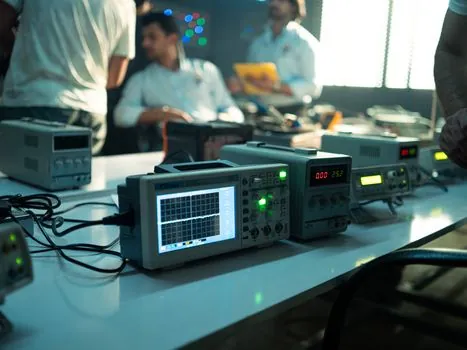
RTD accuracy and interchangeability live in IEC 60751; thermocouple tolerance and colour code live in IEC 60584, with ANSI MC96.1 as the US twin for type tables; thermowell mechanical design falls under ASME PTC 19.3 TW-2016 [S3][S5]. Hygienic and safety frameworks in New Zealand and Australia overlay AS/NZS 4024 and Worksafe NZ guidance on top of the IEC layer, with IANZ-accredited calibration under ISO/IEC 17025 the credible evidence trail for audit and export [S3].
Procurement should request, at minimum, material certificates for wetted parts, wiring diagrams, installation instructions, and a calibration certificate traceable to a national body; a vendor offering on-site calibration is the practical way to avoid a line-down event for a probe swap [S3]. For comparison with adjacent instrumentation decisions, the vacuum gauge sizing and selection guide runs the same criteria-based format for a different physical variable, and the heat detector selection map for construction sites treats fixed fire-detection thermal elements as a sister problem to industrial temperature measurement.
Two trackable signals to monitor over the next procurement cycle: the spread of CIP/SIP-rated hygienic Pt100 assemblies with full IANZ or equivalent ISO/IEC 17025 calibration papers, and the migration of mid-range HVAC transmitters from analogue 0-10 V or 4-20 mA output to IO-Link or I²C digital output as panel PLCs absorb more conditioning on-chip. Both are visible in current OEM datasheets and both will reshape the shortlist for greenfield builds in 2026 and 2027.