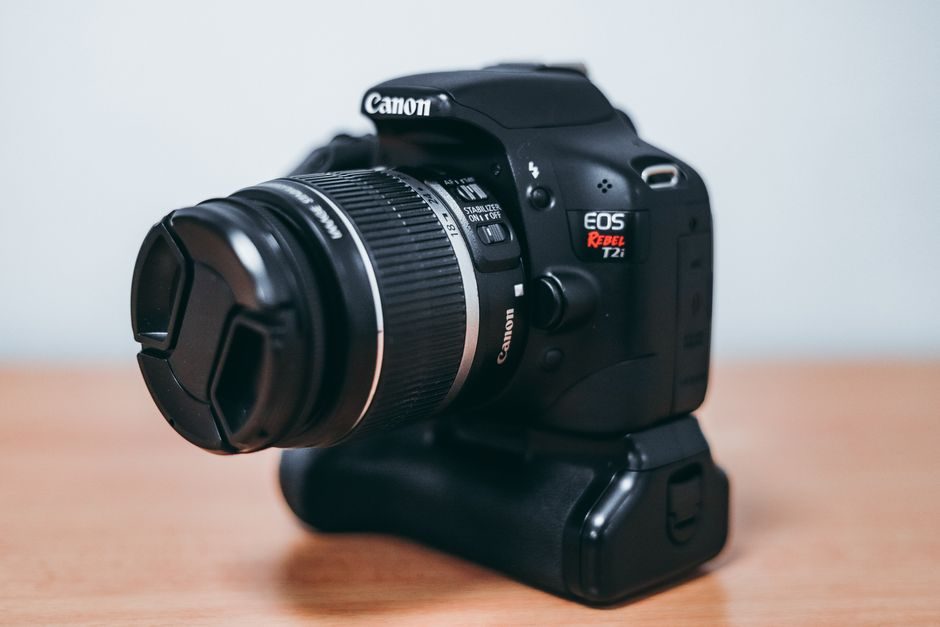
Handheld industrial thermal imaging cameras in 2026 sourcing listings start at US$549.00–599.00 per piece for a 5-piece MOQ at Raythink Technology (Shandong, China), with a wireless/USB portable infrared configuration [S8]. At the upper end, a thermal-vision PTZ outdoor surveillance camera from Shandong Sheenrun Optics & Electronics lists at US$10,000–20,000 per piece for security-grade thermal imaging with alarm functions [S10]. Between those poles, the same 2026 supplier catalog shows a 640×512 handheld thermal binocular from Onick Optics (Wuhan) at negotiable factory price on a 1-piece MOQ, illustrating the mid-resolution industrial tier [S7].
For comparison context, an ADVANCED ENERGY Mikron MC320 monitoring focal-plane-array thermal camera is listed on DirectIndustry as a fixed industrial infrared unit [S1], while Sonel's KT-320 is described on the same B2B platform as a digital, microbolometer-sensor thermal imaging tool with USB and real-time viewing for HVAC and industrial use [S2]. Fluke's own educational material frames thermal imaging as a non-invasive infrared technique that converts IR emissions into a temperature map of a target [S3], which is the same physical principle every priced unit on the market is built around.
What "thermal imaging camera price" actually covers
Thermal imaging camera price is a function of three engineering parameters more than brand: detector resolution (160×120, 384×288, 640×512, 1024×768 and above), thermal sensitivity expressed as NETD (Noise Equivalent Temperature Difference, the smallest temperature delta the sensor can resolve, typically 30–50 mK for industrial handheld units and below 30 mK for premium radiometric cameras), and the lens/optic package (fixed-focus field of view versus interchangeable lenses) [S3]. The Guide Sensmart product tree published in 2026 explicitly groups cameras into Thermography Tools, Firefighting, Acoustic, Gas Detection, and Outdoor Industrial lines, confirming that the vendor market segments by application envelope rather than by pixel count alone [S4]. A buyer comparing 2026 price lists should therefore normalize on resolution + NETD + lens, not on a sticker figure.
2026 sourcing-tier price map
Reviewing the 2026 made-in-China sourcing cards: a 640×512 visible-light/thermal binocular is offered at negotiable price for a 1-piece MOQ [S7]; a wireless handheld infrared unit with WiFi/USB from Raythink is fixed at US$549.00–599.00 with 5-piece MOQ [S8]; a Sheenrun PTZ thermal-vision security camera with alarm I/O is quoted at US$10,000–20,000 with 1-piece MOQ [S10]. A parallel non-thermal "Christmas children's camera" line on the same portal shows US$17.00 as a reference low for fixed-focus digital cameras, useful only as the floor for what a low-resolution visible-light device costs and not as a thermal benchmark [S7]. Across the listings the visible pattern is: resolution tier → ~US$500–600, multi-function portable industrial → US$1,000–3,000, cooled or high-NETD radiometric scientific → US$5,000+, and PTZ/thermal security with continuous-duty mechanics → US$10,000–20,000 [S8][S10].
Side-by-side criteria comparison of the 2026 tiers
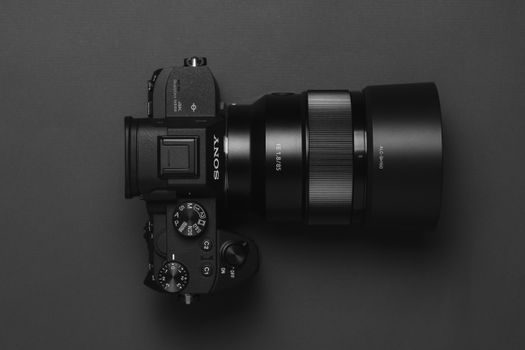
Lining the priced SKUs against decision criteria: the Raythink wireless handheld at US$549–599 targets field electrical and HVAC inspection with low NETD, 5-piece MOQ and WiFi/USB tethering, no continuous-duty optics [S8]; the Onick 640×512 handheld binocular addresses long-range outdoor and perimeter patrol with binocular ergonomics, 1-piece MOQ, negotiable price [S7]; the Sheenrun PTZ thermal security camera at US$10,000–20,000 supplies pan-tilt-zoom mechanics, alarm I/O, and 24/7 outdoor duty cycle for site protection [S10]; and the ADVANCED ENERGY Mikron MC320 is positioned as a fixed industrial process-monitoring focal-plane-array unit for integration, not a portable, so its price discussion belongs to OEM quotes [S1]. Form factor (handheld vs binocular vs PTZ vs fixed/process), resolution class, and duty cycle therefore dominate the cost gap far more than the word "thermal" on the datasheet.
Where a thermal camera earns its premium over a cheaper IR thermometer
A thermal imaging camera shows a 2D temperature distribution across a frame, while a single-point infrared thermometer only reports the average temperature of one spot at the aiming reticle. Fluke's inspection guide states that HVAC energy losses are best shown to building owners by scanning entire systems with thermal imaging rather than spot-checking, because the diagnostic value lies in the spatial pattern of hotspots, not a single number [S9]. This is the engineering reason the price of a 640×512 thermal camera at US$549–599 [S8] is justified against a sub-US$200 handheld IR thermometer — the camera is replacing a manual tour of dozens of spot measurements with one frame. Buyers who only need a single spot temperature, for example verifying a bearing alarm trip point, are usually overspec'd if they buy a camera; the related RTD and Pt100 alarm loop selection guidance covers the lower-cost path for that job.
Standards, certification and IP rating — the hidden cost multipliers

Industrial 2026 SKUs from Raythink are flagged as audited suppliers with documented ISO 9001:2015 quality systems on the same sourcing page as the US$549–599 price [S8], and Sheenrun's profile on the same portal lists the same ISO 9001:2015 certification alongside the US$10,000–20,000 PTZ thermal camera [S10]. ATEX/IECEx explosion-proof enclosures, IP66/IP67 ingress ratings, and MIL-STD-810 shock/vibration testing are the three surcharges that move a portable industrial camera from the US$500–600 tier into the US$3,000–8,000 fixed/process-integration tier; vendors typically quote these on request rather than list them in MOQ price cards, which is why a US$599 wireless handheld cannot be drop-in specified for a Zone 1 refinery [S1][S8]. Where process-pressure measurement certification is the parallel concern, the pressure transmitter buying guide 2026 explains how certification tier moves the same kind of baseline sensor pricing by 3–10× — the same logic applies to thermal cameras.
Who thermal imaging cameras are for, and who should buy something else
A thermal imaging camera at the 2026 US$549–599 price point [S8] fits electrical-panel hotspot scanning, building-envelope heat-loss surveys and HVAC balance checks [S9]; the US$10,000–20,000 PTZ thermal security camera fits perimeter and asset-protection applications that need continuous 24/7 operation in outdoor environments [S10]; the Sonel KT-320 portable digital unit with microbolometer sensor and LCD screen fits daily-trade thermography for HVAC and industrial maintenance crews [S2]. It is the wrong tool for buyers who only need validated process temperature records for steam sterilization lines — that work needs a paper-trail recorder and a calibrated probe, covered in selecting temperature recorders for validated steam sterilization lines. It is also the wrong tool for buyers comparing touch infrared forehead thermometers to industrial IR pyrometers, where a dedicated infrared thermometer pricing 2026 tier comparison is the right reference.
Limitations, failure modes and signals to track
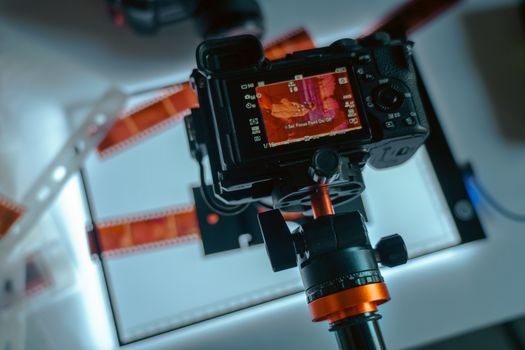
Three 2026 constraints recur across the priced SKUs. First, all sourced units are uncooled microbolometer sensors [S2], which cap NETD around 30–50 mK and frame rate near 9–60 Hz; buyers needing sub-20 mK sensitivity or fast transient capture must step up to cooled MWIR/LWIR detectors, which sit in the US$10,000+ scientific/security bracket. Second, the 5-piece MOQ on the US$549–599 Raythink unit [S8] versus the 1-piece MOQ on the Onick binocular [S7] and Sheenrun PTZ [S10] means a single-unit pilot is not always possible at the lowest price point. Third, fixed-focus optics described in the Sonel KT-320 spec sheet [S2] limit working distance; specifying interchangeable lenses is what moves a unit from building-inspection grade to power-utility substation grade. Trackable signals for the next procurement cycle: NETD specs and radiometric accuracy (±2 °C or ±2 % of reading) on every new 2026 datasheet, and whether 640×512 sensor pricing breaks below the US$500 floor that 384×288 units hit in 2024–2025.
Closing reference: the ADVANCED ENERGY Mikron MC320 remains the cited example of a fixed industrial/process focal-plane-array thermal camera for OEM integration [S1], while the HKTDC sourcing portal continues to list thermal imaging cameras as a separate consumer-electronics sub-category with its own supplier search [S5] — useful for cross-checking unit pricing against the made-in-China and DirectIndustry indices before issuing a PO. For buyers cross-shopping against other industrial imaging categories, the industrial camera and surveillance camera encyclopedia entries cover the visible-light cousins that share form factors and IP ratings with thermal units.