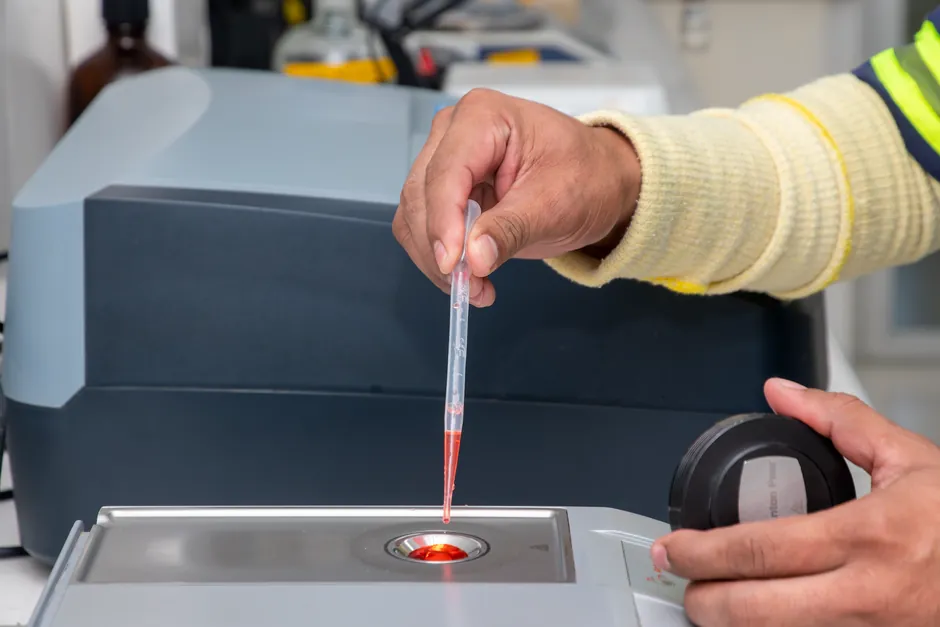
Entry-level insertion-style thermal mass flow meters for compressed air start near 1,007 EUR excluding tax for a stainless-steel RS485/Modbus RTU unit rated -30 to 80 °C [S4].
Inline industrial units from full-line automation suppliers such as Endress+Hauser and ABB carry published list prices that require login, a pattern indicating price is set by configuration, certification, and I/O rather than a flat sticker [S2][S3].
Where the price actually sits in 2026
The most transparent live data point in the current market is the BERG / METPOINT VA 520 at 1,007 EUR excl. tax, IP65, RS485/Modbus RTU, -30 to 80 °C process temperature, sold primarily for compressed-air and gas energy audits [S4]. That figure anchors the floor of the market: small-bore insertion probes for utility gas or compressed air, calibrated for a narrow gas mix, single comms output, no hazardous area rating.
Honeywell's SMARTLINK METER occupies the next tier: flange-mounted, NEMA 4X / IP66 enclosure, dual platinum-RTD constant-ΔT sensing, 4-20 mA plus alarm loops, factory-calibrated per unit, intended for burner air/fuel ratio control rather than low-cost utility metering [S1]. Pricing is on request, consistent with built-to-order industrial flow instrumentation where the calibration gas, line size, and approval package move the quote.
Endress+Hauser's thermal mass flowmeter family (9 products on the public overview page) is presented as "Price on request" with login-gated tier visibility, and ABB's SensyMaster FMT400 follows the same pattern [S2][S3]. Neither publishes a number, which is the standard signal that the configured selling price for an inline process-grade thermal mass flow meter typically lands an order of magnitude above the utility probe. Process-grade inline units with full hazardous-area approval, multivariable output, and high-pressure drop ratings commonly land in the mid four-figure to low five-figure EUR/USD band, and the flow meter reference page confirms this is the structural pattern across the technology class.
What drives the cost
Five variables move the quote, and they are ranked by leverage. First, the sensing architecture: insertion capillary / calorimetric probes for air and natural gas are the cheapest because the sensor body is small and the calibration is on a single gas. Constant-ΔT twin-RTD designs, as in the SMARTLINK METER, add an intelligent bridge circuit and matched platinum elements, raising both BOM and factory-calibration cost [S1]. Inline split-body designs with full bore flow conditioning push the price further because the wetted path must be machined and pressure-tested.
Second, materials of construction: stainless-steel wetted parts (e.g. the VA 520) are now the baseline for industrial gas service, but higher alloys (Hastelloy, Monel) for corrosive or sour gas, or titanium for chlorine service, add direct material cost and often extend lead time [S4]. Third, output and protocol stack: a base 4-20 mA plus HART unit is the cheapest, Foundation Fieldbus or PROFIBUS PA add a comms board, and dual-redundant SIL-rated outputs double the transmitter electronics. Fourth, certifications: ATEX Ex d, IECEx, FM, and SIL 2/3 add third-party audit cost and documentation, and they are non-negotiable for burner management and fuel-gas skids. Fifth, calibration scope: air-only calibration is cheap, multi-gas mixtures (e.g. CO2 / N2 blends for biogas) require gas-specific reference standards and a per-gas calibration certificate.
Volume tier, of course, modulates everything: a single spare unit on a service truck is list price, a 20-unit skid package for an OEM compressor builder can pull 15 to 25 percent off, and a multi-year framework agreement with audit and recalibration is a different commercial structure entirely.
Technology options lined up against the decision
For a specifier, the comparison that matters is between the four practical variants of thermal mass flow technology in the field. Capillary / calorimetric insertion probes, exemplified by the VA 520 class, are the budget choice for compressed-air and biogas lines: 1,000 to 2,500 EUR typical installed cost, IP65, narrow temperature window, single-gas calibration, RS485/Modbus or 4-20 mA only. They are not suitable for dirty, wet, or condensing gas because the sensor fouls. [S4]
Inline constant-ΔT thermal mass flowmeters, like the SMARTLINK METER, are the workhorse for burner air and natural gas: mid four-figure EUR, NEMA 4X / IP66, dual-RTD, 4-20 mA plus alarms, factory-calibrated per unit, supports fuel/air ratio control. Limits: turndown is typically 10:1 to 100:1 depending on model, and they require a known gas mix for stated accuracy. Inline thermal mass flowmeters from the major process suppliers (Endress+Hauser, ABB) add multivariable output, full HART / bus protocol support, and hazardous-area options; the published price is by quote but the band is the upper end of the segment. They suit custody-transfer-adjacent, high-integrity process lines where single-source measurement is acceptable. For a broader thermal mass flowmeter view, the encyclopedia entry covers the sensing principle, the bypass-style variants, and where each fits.
For liquid service, the Bronkhorst LIQUI-FLOW L13V12 line is a through-flow thermal mass meter with controller output, typically applied to low-flow analytical and process liquid streams (water, solvents, low-viscosity reagents) [S6]. The 4+ decades of thermal-sensor experience cited by the manufacturer is the key buying signal here, not the spec sheet, and the unit cost is structurally higher than a gas insertion probe because the wetted path and the heating control loop are more demanding. For gas mass flow control with closed-loop setpoint (rather than just measurement), the gas mass flow controller class is the adjacent product, and the cost premium over a bare meter is the price of the integrated proportional valve and PID loop.
Use cases and where thermal mass is the wrong tool
Thermal mass flow metering is the right answer when the process variable is mass flow (not volume), when the gas mix is known or a single gas, when the line is small to mid-bore and clean, and when low pressure drop matters. It is the wrong answer on dirty flue gas without filtration, on wet or condensing streams, on liquids with entrained gas, on very large trunk lines where the probe is a poor representation of the flow, and on applications needing custody transfer accuracy under varying gas composition. In those cases, a Coriolis or ultrasonic meter is the correct technology, and the flow meter buying guide lays out the spec-first trade-offs across turbine, vortex, and other primary elements. [S4]
For an adjacent cost view on another thermal-based flow technology, the electromagnetic flowmeter price guide is useful because it shares the same "insertion vs inline, single-protocol vs multi-protocol" cost structure. For variable-area rotameters in gas and low-flow liquid service, the variable area flowmeter price guide covers a technology tier that overlaps with low-end thermal mass on small-bore gas.
Total cost of ownership, not just purchase price

Purchase price is roughly 40 to 60 percent of five-year cost of ownership on a thermal mass flow meter in continuous industrial service. The other half is installation (inline flanges, signal wiring, purging fittings for Ex units), commissioning (gas-specific calibration verification, configuration of the HART / bus map), and recurring cost (sensor cleaning in dirty service, periodic re-calibration every 12 to 24 months for ISO 17025-traceable work, and replacement probes after fouling or thermal-shock failure). A correctly sized insertion probe on clean compressed air can run maintenance-free for 5+ years, while the same probe on unfiltered biogas can need quarterly cleaning. [S2]
Energy cost is essentially zero for the measurement itself, but the meter pays back via the energy it enables you to measure: a 1 percent accuracy gain on a 100 kW compressed-air line identifies leaks worth several thousand EUR per year, which is the commercial argument suppliers like BERG make for their METPOINT line [S4]. Sulfur-bearing or wet gas services, by contrast, will eat probes; in that case, specifying a higher-grade wetted material at purchase is a cheaper five-year outcome than a budget probe and a stack of spares.
Sourcing signals and what to verify before paying
Two practical checks before signing a PO. First, confirm the calibration gas and the stated accuracy at your operating turndown, not at the lab reference point: a thermal mass flowmeter specified at 1 percent of full scale on air can degrade to 3 to 5 percent at 10:1 turndown or on a mixed gas, and the only number that matters is the in-service number. Second, verify the hazardous-area certification matches the panel-mounting zone, including the cable glands, and that the documentation set includes the Ex control drawing. [S2]
For a sensing-class cross-reference that also picks up ultrasonic, radar, and other non-contact options, the thermal mass flowmeter encyclopedia entry is the right starting point, and the broader flow meter page is the umbrella for cross-technology selection. The next trackable signals to watch are the quarterly published list-price updates from Endress+Hauser and ABB on their thermal mass flow lines, and any change in 2026 lead times on factory-calibrated units, which is the binding constraint for project schedules more often than the unit price itself.