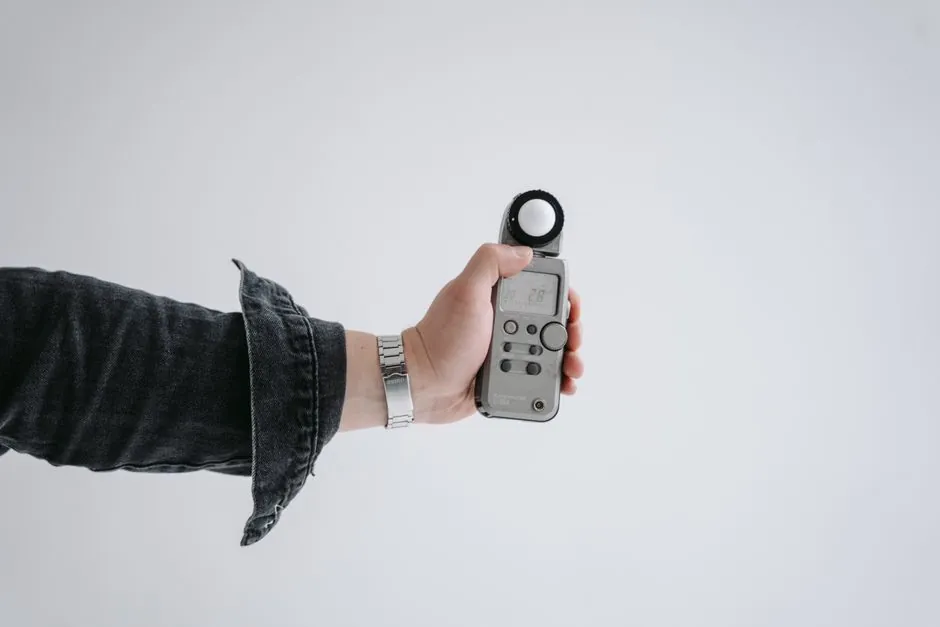
A 2026 plant flow meter decision collapses to four matching steps: fluid class (clean liquid, conductive, steam/gas, mass-critical), line size, accuracy class, and output protocol, because the technology taxonomy is stable and price bands are publicly visible on 2026 sourcing catalogs (US$160 entry turbine, US$300-360 IECEx chemical unit, US$325-1,148 electromagnetic) [S1][S6][S9].
Turbine, vortex, electromagnetic flowmeter, and Coriolis remain the four workhorse types on 2026 B2B catalogs; vortex flowmeter and turbine dominate steam and clean-liquid skids, while Coriolis flowmeter covers mass-critical and two-phase custody transfer. Buyer floor prices for Chinese OEM offerings sit at roughly US$160-3,000 for turbine, US$300-360 for IECEx-tagged chemical service units, and US$325-1,148 for DN100-500 electromagnetic desalinization/wastewater models [S1][S6][S9].
Four mainstream types and the duty each one actually covers
Turbine flowmeters are specified for clean, low-viscosity liquids (water, light oils, alcohol) with 4-20 mA output and 304/316 SS wetted parts, and 2026 Chinese OEM listings span US$160-3,000 with stated accuracy of ±0.2-0.5% across most liquid and gas product cards [S1][S8]. The technology is intolerant of particulates and air entrainment, so spec it on polished, degassed lines and budget for upstream strainers.
Vortex flowmeters (LWGY, LUGB series) handle steam, saturated steam, and clean process gas where the buyer needs moderate accuracy and reasonable installed cost; they appear across multiple 2026 Chinese OEM catalogs as the workhorse steam meter, paired with HART or 4-20 mA outputs [S4][S5]. For plant steam, the flow meter comparison typically comes down to vortex vs differential-pressure (orifice), not vs Coriolis, because Coriolis is overkill for the price point. The standard guidance for orifice-style differential pressure meters is ISO 5167, and vortex bodies for hazardous area service carry ATEX/IECEx marking on 2026 export lines [S6].
Electromagnetic flowmeters (EMF) are the only realistic non-intrusive choice for conductive slurries, raw wastewater, and desalinization brine; 2026 OEM cards show DN100-500 tube/flange bodies with ±0.2-0.5% accuracy, PTFE or rubber liner options, and US$325-1,148 price points [S9]. EMF needs no calibration fluid but requires minimum fluid conductivity (typically ≥5 µS/cm on most OEM datasheets) and a full pipe; the technology fails on hydrocarbons and on gas, which is the first disqualifying question buyers should ask.
Coriolis flowmeters are the mass-accuracy default for two-component liquids, custody transfer, and any line where density tracking matters. They are not in the 2026 entry-level price band (US$160-360) and only appear at the high end of OEM listings; reserve Coriolis spend for applications where density or mass-flow accuracy pays back the capex delta, and avoid specifying it for clean water service where an EMF or turbine will do the job for a fraction of the cost.
Selection criteria: conductivity, viscosity, temperature, line size, accuracy
Fluid conductivity is the first cut: conductive water-based liquids (≥5 µS/cm) map to EMF, hydrocarbons and oils map to turbine or Coriolis, steam and gas map to vortex [S9]. 2026 OEM offerings also include anti-corrosion metal-tube rotameter/variable-area designs in stainless steel, Hastelloy-style alloy, titanium, and PTFE wetted options for aggressive chemicals, with stated 10:1 turndown and 250 mm total stroke length on the ZW-LZ anti-corrosion series [S3].
Viscosity rules out standard turbine bodies above roughly 10-20 cSt for clean signal; the vortex flowmeter entry on the reference catalog covers a different envelope (steam/gas with low-to-moderate liquid viscosity), so the buyer should not default a viscous chemical line to vortex and expect nameplate accuracy. For 2026 chemical service, IECEx-certified chemical flow meters are listed at US$300-360 with 2-piece MOQ from Chinese OEM channels, paired with HART or 4-20 mA output [S6].
Temperature and pressure envelope matter: all-metal variable-area designs (ZW-LZ) claim suitability for high-temperature, high-pressure, and strong-corrosive media, with the magnetic coupling keeping the indicator electronics isolated from the process [S3]. For hazardous-area certified chemical skids, the 2026 IECEx certificate on the Supmea chemical flow meter has been valid since 2025-04-08, which is the right cut-off date to track on any submittal package [S6].
Line size and accuracy: 2026 OEM electromagnetic cards cover DN100-500 at ±0.2-0.5% for wastewater and desalination, with separate feed-water/slurry SKUs at US$325 and US$1,148 respectively [S9]. For DN < 50 high-precision liquid dosing, the liquid turbine flowmeter is the entry-level choice with 304 SS wetted parts and a stated high-pressure-resistant SKU at US$169.23+ on 2026 catalogs [S1].
Comparison: 4 flow meter types across 4 decision criteria
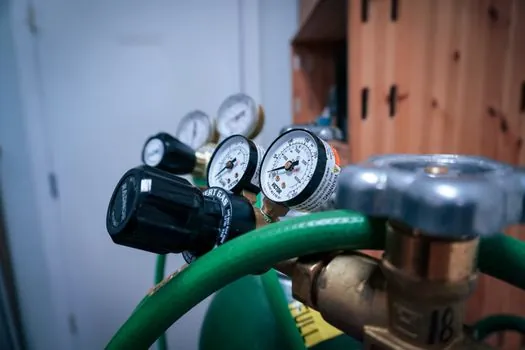
The structured comparison below lines up the four mainstream types against the four criteria that drive 2026 procurement. EMF dominates conductive liquid service and bidirectional flow but cannot measure hydrocarbons; turbine wins on price and clean-liquid accuracy but is intolerant of particulates; vortex is the workhorse for steam/gas and clean liquids with reasonable cost; Coriolis is the only choice for mass-accuracy, two-phase, and density-sensitive custody transfer but is overkill for clean water [S1][S4][S5][S6][S9].
Decision matrix: (1) Conductive clean water/wastewater/slurry with DN ≥ 100 → EMF, US$325-1,148, ±0.2-0.5% [S9]. (2) Clean low-viscosity liquid, DN < 100, budget-constrained → turbine, US$160-3,000, ±0.2-0.5% [S1][S8]. (3) Steam, gas, or clean process line with moderate accuracy → vortex, with HART/4-20 mA output, ATEX/IECEx options [S4][S5][S6]. (4) Mass-critical, two-phase, or density tracking → Coriolis, premium capex, reserved for cases where mass accuracy pays back.
Output protocol rules: 4-20 mA with HART is the 2026 default on turbine, vortex, EMF, and chemical-service meters, and HART on a 4-20 mA loop is the standard communication pattern shown on ZW-LZ anti-corrosion and Supmea chemical lines [S3][S6].
Who should NOT pick the mainstream option
Buyers with non-conductive hydrocarbons (diesel, lube oil, crude) should not default to electromagnetic, because EMF requires a minimum fluid conductivity (typically ≥5 µS/cm) and will read zero on a non-conductive line [S9]. The right answer is turbine for clean refined products or Coriolis for mass-accuracy custody, and the buyer should flag this on the datasheet inquiry before pulling a catalog quote.
Buyers with dirty, particulate-laden raw water (river intake, mining slurry) should not pick a standard turbine: turbine bearings fail fast on particulates, and a vortex body will give noisy readings on two-phase flow. For these lines, the 2026 OEM answer is an EMF with rubber or PTFE liner, DN100-500, with upstream protection; for abrasive slurry specifically, the dedicated slurry-type EMF SKU at US$325 is the lower-risk entry [S9].
Buyers specifying a vortex meter for steam should not skip the inlet straight-pipe run: vortex shedding accuracy collapses with insufficient straight run upstream (typically 10-20D, depending on the fitting upstream), and 2026 OEM cards do not call this out. If the skid has elbows or valves close to the meter body, specify a longer spool or a different technology.
Buyers pricing a Coriolis for clean water service are spending capex they cannot recover. A 2026 Chinese OEM EMF at US$325-1,148 with ±0.2-0.5% accuracy is a better fit for clean water, and Coriolis should be reserved for mass-critical or two-phase service where the accuracy delta actually pays back [S9].
Use cases, sourcing reality, and 2026 price bands

Chemical/petrochemical: 2026 IECEx-certified chemical flow meters from Chinese OEM channels are listed at US$300-360 with 2-piece MOQ and HART/4-20 mA output, with the IECEx certificate valid since 2025-04-08 as of the listing date [S6]. For aggressive media (strong acid, chloride-bearing brine), specify all-metal variable-area or PTFE-lined EMF wetted parts, matching the ZW-LZ material set (SS, Hastelloy-style alloy, titanium, PTFE) [S3].
Water/wastewater/desalination: 2026 EMF offerings for DN100-500 desalinization plants and wastewater sit at US$325-1,148, with stated ±0.2-0.5% and rubber/PTFE liner options [S9]. For drinking water and utility AMR/AMI, ultrasonic water meters and electromagnetic thermal-energy meters are separately listed with MID and drinkable-water certification on 2026 OEM channels [S2].
Steam/process gas: vortex (LUGB, LWGY) dominates 2026 Chinese OEM catalogs as the workhorse, with multiple SKUs from Tianjin and Shenyang-based manufacturers at MOQ 1-100 pieces [S4][S5]. Buyers who want a comparison of vortex vs other process instrumentation should track 2026 temperature transmitter and pressure switch specs in parallel, because most skid-level RFQs bundle the three instrument types.
Milk/food/dairy and sanitary service: 2026 milk flow meter SKUs are listed at US$380-999 per piece with ±0.2-0.5% accuracy, after-sales service and warranty, and water/wastewater/diesel/corrosive-liquid main applications on the OEM card [S8]. For sanitary service, the buyer should confirm surface finish, CIP/SIP compatibility, and 3-A or EHEDG certification directly with the OEM, because the 2026 catalog card does not always carry that detail.
Cross-reference note: the flow meter entry on the reference encyclopedia maps the type taxonomy (turbine, vortex, EMF, Coriolis, ultrasonic, variable-area) and links each type to its own encyclopedia page. For adjacent process instrumentation, the pressure switch buying guide 2026 and bimetal thermometer buying guide cover the rest of the typical skid-level instrument bill of materials, while outdoor tank farm manometer selection covers static-pressure instrumentation where the process side does not have flowing media.
Limitations, failure modes, and standards to track
Common 2026 failure modes: turbine bearing wear on dirty or abrasive service, EMF electrode coating on oil-bearing or low-conductivity water, vortex signal lock-on at low flow (below the body's cutoff), and Coriolis drive coil saturation on two-phase gas/liquid slugs. Buyers should review the OEM-published turndown (10:1 for variable-area, 10:1-20:1 for vortex, 100:1+ for EMF and Coriolis), the low-flow cutoff, and the maximum flow velocity on the body nameplate, and call out the line's actual minimum and maximum operating flow in the inquiry [S3].
Standards to track on 2026 submittals: ISO 9001:2005 and ISO 14001, ISO 18001, ISO 17025 plus CE mark on 2026 ultrasonic water meter and smart meter SKUs [S2]; ISO 5167 for differential-pressure (orifice) flow elements; ATEX/IECEx for hazardous-area chemical service, with the IECEx certificate validity date visible on the OEM card (e.g., 2025-04-08 for the Supmea chemical flow meter) [S6]. HART protocol on a 4-20 mA loop is the 2026 default communication layer, and buyers should confirm the specific HART revision (5, 6, 7) on the nameplate rather than assume it.
Spec checklist for the 2026 RFQ: fluid name, conductivity, viscosity, minimum and maximum flow, line size, process pressure and temperature, accuracy class, output protocol (4-20 mA, HART, Foundation Fieldbus, PROFIBUS PA, Modbus), hazardous-area certification (ATEX/IECEx/UL/CSA), wetted material, liner material, and the standard required on the body (ISO 5167, MID for utility water, 3-A/EHEDG for sanitary). For tank-level and static-pressure use cases where no flow measurement is needed, the tank farm manometer spec map is the right reference.
Trackable next signals for 2026 buyers: 2026 IECEx chemical meter certificate validity dates on OEM cards, the 2026-08 update cycle on ultrasonic and electromagnetic OEM product lines, and the next round of price band shifts on the US$160-3,000 turbine and US$325-1,148 EMF SKUs. Buyers who need a holistic 2026 instrumentation RFQ should also pull the temperature transmitter selection guide and the bimetal thermometer buying guide to build a single submittal package.