
Thermostat total cost of ownership should be calculated across acquisition, installation, energy use, maintenance, replacement, labor, and downtime, rather than from the purchase quote alone [S1][S3].
The analysis applies to residential, commercial, and industrial facilities, including HVAC systems, process heating, refrigeration, and equipment rooms where temperature control affects energy consumption and availability [S1][S3].
Thermostat TCO Model and Cost Boundaries
Thermostat TCO combines the purchase price with replacement costs, energy consumption, labor, and downtime across the service life of the temperature-control asset [S1]. A practical model follows the broader HVAC formula: TCO = acquisition cost + energy consumption + preventive and reactive maintenance + disposal and downtime [S3].
The acquisition boundary should include the thermostat, sensors, actuators, controls, freight, installation, commissioning, and compliance work where required [S3]. Replacement and upgrades at the end of the life cycle belong in the analysis rather than being treated as an isolated future expense [S4][S5].
The facility and equipment context matters because the same thermostat can produce different lifecycle costs when installed in a warehouse, office, plant, or process area [S2]. For equipment-level decisions, the wider method is explained in Temperature Controller TCO: Lifecycle Cost Decision Framework.
Purchase Price Is Only One Cost Driver
For broad HVAC assets, acquisition costs represent less than 15% of total ownership cost, and lifecycle expenses are underestimated by 30–50 percent when teams rely solely on upfront vendor quotes [S3]. These percentages are planning benchmarks, not universal thermostat constants, because an isolated thermostat can dominate an otherwise efficient plant if it controls a large heating or cooling load.
A thermostat that prevents cycling, excessive heating, or unnecessary cooling can therefore influence operating cost beyond its own price.
Material and component selection affects both acquisition price and service cost. Low-cost sensors may reduce capital expenditure but increase calibration, replacement, or maintenance expense if their useful life is shorter. Premium sensing elements, rugged enclosures, better contacts, and sealed construction can raise unit price while reducing exposure to contamination, mechanical wear, or premature replacement [S1][S8].
Compare Thermostat Types Against Four Criteria
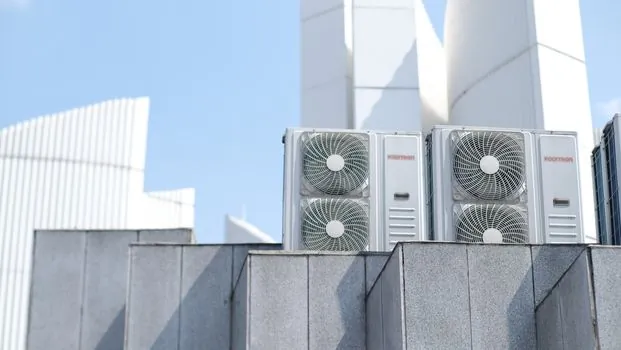
Mechanical, electronic, and networked temperature controllers differ most clearly in control accuracy, operating features, installation burden, and lifecycle support [S2]. Mechanical thermostats remain suitable for simple, noncritical temperature points, while electronic models support tighter switching control and programmable schedules. Networked controllers add remote monitoring, alarms, data logging, and centralized configuration, but also introduce commissioning, communications, and cybersecurity considerations.
The comparison must be made at the application level, not by controller type alone. A simple mechanical device can provide better TCO in an isolated utility room, while a networked thermostat can be justified where alarms, trend data, and centralized control reduce troubleshooting time or equipment downtime [S2][S3].
Energy, Labor, and Downtime Shape the Real Bill
Energy cost, maintenance, and downtime are included in HVAC total cost of ownership analysis alongside acquisition and disposal costs [S3]. Thermostat selection should therefore be tested against measured kWh, run hours, temperature deviation, compressor cycling, and heating-load behavior rather than purchase price alone.
Installation cost includes more than mounting the enclosure. It includes sensors, wiring, actuators, field configuration, commissioning, calibration, documentation, and technician time [S3]. Retrofitting an existing thermostat can therefore erase part of the saving generated by a lower-cost device if labor, wiring modifications, or control integration are substantial.
Reactive maintenance is another measurable lifecycle driver. For thermostats, the equivalent failure indicators include repeated temperature alarms, cycling outside the expected pattern, sensor drift, relay failure, schedule loss, and recurring nuisance callouts.
Downtime must be priced at the operating level rather than treated as a general risk. A thermostat failure may produce a smaller immediate loss in a low-load room, but it can trigger a much larger interruption when it controls chilled water, process heating, refrigeration, or safety-related equipment.
Maintenance Strategy Changes Replacement Frequency
Preventive maintenance, equipment quality, facility location, and equipment life expectancy all influence the cost of owning HVAC assets [S2]. Thermostat inspections should include sensor placement, setpoint verification, terminal condition, enclosure integrity, schedule operation, alarms, and the accuracy of downstream temperature measurements.
A calibration interval should follow the measured accuracy requirement, sensor technology, environment, and consequence of drift. Generic replacement intervals are not defensible because a stable occupied-space zone and a process-control point have different tolerances. The record should preserve installation date, firmware version, setpoint history, alarm events, corrective work, and sensor replacement dates so that the next TCO update uses evidence rather than an assumed service life.
Facilities teams can use a CMMS or equivalent asset history to track maintenance and lifecycle costs. The referenced TCO framework recommends dynamic, auditable data per asset rather than static spreadsheets [S3]. For data-heavy applications, a paperless recorder may provide historical evidence, but it should be counted as part of the monitoring system rather than treated as a free feature of the thermostat.
Who Benefits from TCO Analysis
TCO analysis is suited to owners, facility managers, procurement teams, and engineers who need a defensible comparison between thermostat options or vendors [S4][S5]. It supports budgeting, asset lifecycle management, vendor selection, replacement planning, and decisions about upgrades [S4].
It is less useful for a small, noncritical replacement where no operating data exists and installation effort is minimal. In that case, a simple purchase-price comparison may have a lower administrative burden. Even then, the decision should record the service life, replacement labor, and consequence of failure rather than assume that acquisition cost equals ownership cost.
A digital panel meter can improve local indication and measurement in some installations, but it should not be credited as a thermostat feature without evidence that the selected device performs the required switching or control function. Functional boundaries need to remain clear when developing a bill of materials.
Build a Procurement Model with Traceable Inputs

A defensible thermostat TCO calculation requires four input groups: acquisition, operation, maintenance, and end-of-life treatment [S3][S8]. Acquisition covers the thermostat, accessories, freight, installation, and commissioning. Operation covers electricity and any HVAC energy penalty attributable to control performance. Maintenance covers inspection, calibration, parts, repair, and contractor dispatch. End-of-life covers removal, replacement, upgrade, and disposal.
For multi-site purchasing, volume affects unit price and configuration effort, while certification and application requirements can narrow the supplier set. Lead time affects installation labor and project disruption. Rather than accept a generic lifecycle percentage for thermostats, teams should replace each allocation with site data: kWh per period, service-call count, labor hours, failure frequency, useful life, replacement cost, and downtime exposure.
Tools and governance are as important as the formula. The ReShoring Now TCO Estimator is a free online tool that addresses overhead, balance-sheet, and risk factors [S6]. For institutional portfolios, TCO reviews can be introduced when building projects reach 50% completion, as described in Chaffey College's 2023 implementation framework [S5]. This creates a decision point before operating costs are embedded in the facility budget.
Total ownership must also include operating quality, not merely cash expenditure. Lower labor cost is not a valid objective if the replacement produces wider temperature swings, more cycling, failed alarms, or a shorter service life. The stronger procurement choice is the thermostat whose measured control performance, installation effort, energy behavior, and maintenance history produce the lowest lifecycle cost under the facility's actual operating conditions.
Track energy consumption, calibration exceptions, service calls, replacement intervals, and downtime events against each thermostat asset. Recalculate TCO after sensor upgrades, control-sequence changes, electricity-price shifts, or a failed unit, because each event changes at least one lifecycle cost input [S3][S4].