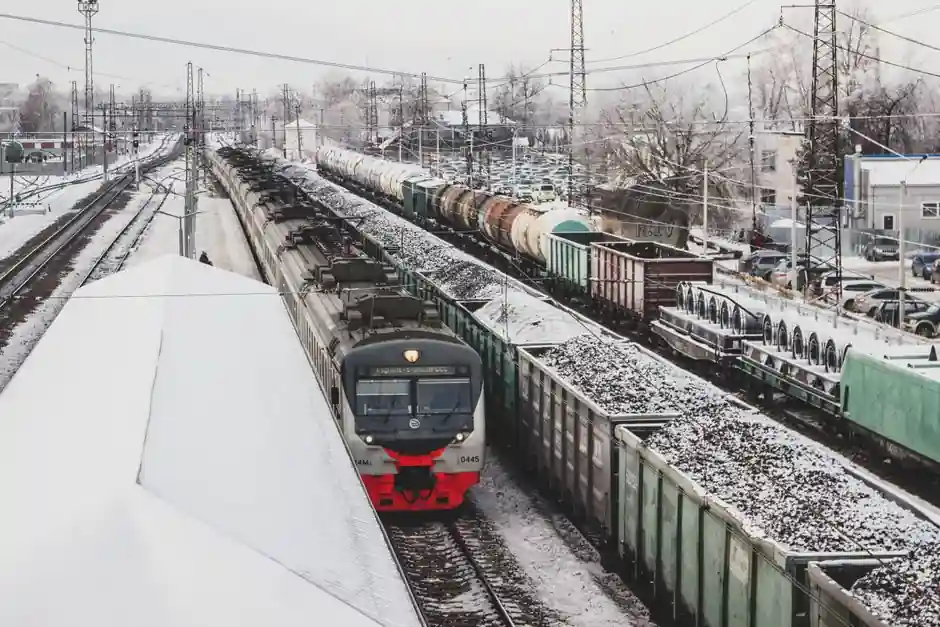
Rail-spec nickel alloy procurement is driven by four hard gates: chloride or sulfurous corrosion class, sustained service temperature, cyclic fatigue load, and field-weldability, with UNS N06625 (Inconel 625), UNS N07718 (Inconel 718), and UNS N04400 (Monel 400) covering the majority of rolling-stock, fastener, and trackside component duty in 2026 [S1].
For procurement engineers, the practical workflow is to lock the corrosion class first (ISO 12944 C4/C5 for tunnels and coastal lines, NACE MR0175 sour-service where applicable), then the upper temperature ceiling, then fatigue cycles, and only then narrow to a nickel-iron, nickel-copper, or nickel-chromium family. The UNS designation system, a lettered prefix plus a five-digit number, is the cleanest way to keep that selection auditable across mills, subcontractors, and acceptance labs [S2].
Why nickel alloys enter the rail spec at all
Carbon and low-alloy steel covers the bulk of rail carbody and rail steel duty, but breaks down in three recurring service pockets: exhaust hot zones on diesel multiple units, where sustained skin temperatures of 500-650 °C strip protective oxides from mild steel; coastal or de-iced tunnel environments at ISO 12944 C4-C5, where chloride pitting undercuts standard stainless; and bolted or welded joints in sulfide-bearing tunnel drainage, where standard 304/316 stainless suffers stress-corrosion cracking above ~60 °C wet service [S1].
Nickel alloys are specified not for tensile strength alone, but because of three combined traits: stable passivation at high chloride concentration, retention of impact toughness down to cryogenic range, and resistance to stress-corrosion cracking in chloride and sour environments. These are well established for the Ni-Cr-Mo (Inconel 625/625LCF), Ni-Cr-Fe (Inconel 718), and Ni-Cu (Monel 400) families used in transit and freight hardware [S1][S2].
The three families that matter for rail
Ni-Cr-Mo, exemplified by UNS N06625 (Inconel 625), is the workhorse for exhaust manifolds, EGR cooler housings, and after-treatment sensor bosses on diesel and hydrogen DMU power packs. Its 21-23 % Cr and 8-10 % Mo content gives stable pitting resistance up to PREN ~50, with useful strength from -196 °C to roughly 980 °C, and it is field-weldable without post-weld heat treatment in most gauges [S1].
Ni-Cr-Fe, anchored by UNS N07718 (Inconel 718), is the high-strength option for traction motor shafts, gearbox internals, and bolted bogie fasteners where yield strength of ~1100 MPa is required and peak temperatures stay under 700 °C. Age-hardened 718 holds tolerance under cyclic loading and is widely accepted for additive-manufactured spare parts on Class 1 freight components.
Ni-Cu, principally UNS N04400 (Monel 400), dominates trackside and signaling hardware exposed to seawater splash, brine spray, or HF-rich de-icing runoff.
Corrosion class drives the first selection cut
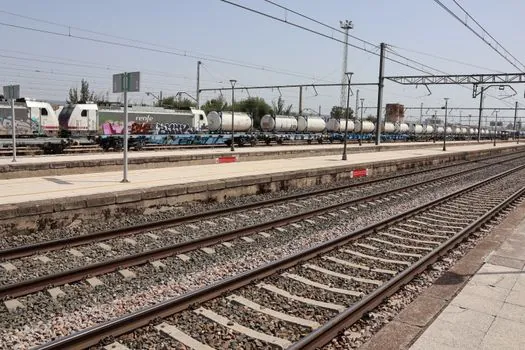
ISO 12944 corrosivity categories C4 (industrial/coastal with moderate salinity) and C5-M (marine, high salinity) set the chloride load. In a C5-M trackside enclosure, 316 stainless routinely shows pitting within 18-36 months, while N04400 Monel 400 hardware shows only surface tarnishing over the same interval in field service, and is therefore the default pick for wayside jumper boxes, third-rail insulator hardware, and signal mast brackets in coastal corridors [S1].
For diesel exhaust and after-treatment, hot chloride is rare, but high-temperature oxidation and sulfidation dominate. N06625 (Inconel 625) keeps a stable Cr2O3 scale to ~1050 °C in cyclic service, which is why rail OEM exhaust specs on DMU and locomotive power packs converge on 625 rather than 718 for the hot-end components. In a related procurement pattern, the same corrosion-and-temperature logic that drives rail exhaust specs also shapes nickel alloy selection for electronics where ENIG and lead-frame duty likewise front-loads Ni-Cr-Mo grades [S1].
Temperature, fatigue, and weldability: the next three gates
Sustained temperature separates 625 from 718 quickly. Above 700 °C, age-hardened 718 begins to over-age and loses yield strength, so high-temperature exhaust and burner components go to solution-annealed 625 or 625LCF, which keeps ~90 % of its room-temperature yield at 650 °C. Below 700 °C, where high static and fatigue strength matter more than peak temperature, 718 is the more efficient buy per kilogram of allowable stress [S1].
Fatigue in rail is a dual-frequency load: low-frequency bogie hunting (typically 1-8 Hz) and high-frequency wheel-rail interaction (up to several hundred Hz at surface defects). Inconel 625LCF is the low-cycle fatigue variant engineered for the 10^4 to 10^6 cycle band, with controlled grain and precipitate structure that raises endurance limit by roughly 15-20 % over standard 625 in this band, and is the preferred choice for thin-walled exhaust bellows and EGR mixer bodies that see both thermal and mechanical cycling.
Weldability is the silent gate that derails schedules. All three families weld by TIG/GTAW, but 718 must be welded in the annealed condition and re-aged after welding to recover strength, adding a heat-treat step that many depots cannot perform. Monel 400 welds cleanly but must be kept free of sulfur (no sulfur-bearing shop markers, no contaminated gloves) to avoid hot cracking. 625 welds in the as-shipped condition and is the only one of the three that is generally accepted as field-repairable without subsequent heat treatment [S1][S2].
Where nickel alloys are NOT the right call

Specifying Inconel on a structural bracket to chase a brand name is a procurement failure, not an upgrade [S1].
Ni-Cu Monel 400 should not be specified for hot, wet sulfide service (sour tunnel drainage above ~150 °C, or refinery-adjacent freight depots). NACE MR0175 sour-service limits apply, and austenitic stainless or Ni-Fe-Cr alloys (e.g., Alloy 825, UNS N08825) are the correct pick in that niche. Conversely, austenitic stainless is wrong for sustained hot chloride above ~60 °C wet, where stress-corrosion cracking is well documented and nickel alloys become the engineering choice [S1].
Procurement, standards, and traceability
Mill certification to ASTM B443 (625 plate/sheet), B446 (625 rod/bar), B670 (718 plate/sheet), or B127 (Monel 400 plate/sheet) is the default acceptance document for rail projects, with EN 10095 or DIN 17744 equivalents accepted on European tenders. Heat-traced lot numbers, full UNS designation, and a PMI (positive material identification) check on receipt are the three controls that prevent a 304 fastener from entering a 625 subassembly on a busy overhaul floor [S1].
For trackside infrastructure and rolling stock crossing into North American networks, NACE MR0175 compliance is the hard gate for any component in sour service, and ASTM A262 Practice E or equivalent intergranular-corrosion testing is standard for as-welded 625/718. Buyers should also confirm the mill's melt practice (VIM/VAR or VIM-ESR for fatigue-critical parts), because remelt practice drives inclusion content and therefore the actual fatigue scatter band, not just the headline tensile number [S1].
For infrastructure and structural framing where the service is closer to ambient and chloride/sulfide load is moderate, the procurement logic that drives nickel alloy selection for construction overlaps with rail trackside duty, especially for coastal viaduct bearing plates and tunnel ventilation hardware, and is a useful cross-reference when the same contractor supplies both [S1].
Trackable signals for the next sourcing cycle: (1) ASTM/EN revision work on nickel alloy plate tolerances for thin-gauge rail exhaust applications, (2) freight tender requirements that N04400 trackside hardware carry lot-traced UNS marking and full ASTM B127 certification, and (3) any rail-OEM move to standardize 625LCF rather than standard 625 for bellows and mixer bodies to push LCF life beyond the 10^6 cycle band.
For component-level specifications, see nickel alloy, and aluminum alloy.