
For pulp-and-paper tooling — slitter knives, refiner plates, corrugating rolls, creasing rules and trim dies — AISI D2 (DIN 1.2379 / JIS SKD11) air-hardening cold-work tool steel is the default pick where 58–62 HRC working hardness and low distortion during heat treatment are required [S3].
AISI A2 (1.2363) air-hardening steel and AISI O1 (1.2510) oil-hardening steel cover the lower-cost, easier-to-machine end of the same envelope, while D2-class grades deliver 2–3× longer edge life on paperboard and recycled-fiber stock [S1]. Stamping-die fabricators such as Unittool Punch & Die and China-based OEM tooling shops supplying SECC/SECC-1.2 mm blanking and transfer dies are the principal sourcing channels for these grades [S1][S3].
Grade Selection Matrix: D2, A2, O1, S7 and PM Grades
Cold-work tool steels dominate pulp-and-paper tooling because the parts are cut, creased or sheared at room temperature; hot-work grades (H11, H13, 1.2343, 1.2344) are reserved for refiner-disk forging and for calender-roll tooling exposed to steam and condensate above 200 °C. [S1]
The four grades that cover roughly 90% of slitter, trim and creasing tooling are: AISI D2 (1.2379) for high-wear, high-volume runs, supplied in HRc 58–62 after temper; AISI A2 (1.2363) for distortion-critical geometry, typically 57–60 HRc; AISI O1 (1.2510) for short-run dies and prototyping at 58–60 HRc; and AISI S7 (1.2355) shock-resistant grade for chopper blades and high-impact trim dies at 54–58 HRc [S3]. Powder-metallurgy grades such as ASP-2023 (1.3395) and CPM-10V (1.2631) appear in high-speed slitter rebuilds where edge retention beyond 2× D2 is required; both reach 60–62 HRc with primary carbides below 5 µm.
Hardness, Wear and Corrosion: Why D2 Wins on Wet Stock
AISI D2 contains 1.4–1.6% C, 11–13% Cr, 0.7–1.0% Mo and 0.8–1.2% V, giving roughly 10–15 vol% of primary M7C3 carbides in a tempered martensitic matrix; this is the metallurgical reason paper mills see 2–3× longer edge retention versus A2 on recycled-OCC and kraft lines [S3].
Typical working hardness windows for pulp-and-paper tooling: slitter knives 58–62 HRc (D2), creasing rules 56–60 HRc (A2 or D2), refiner plates 58–62 HRc (D2 with plasma-nitrided surface), corrugating rolls 56–60 HRc (A2) and chopper/guillotine blades 54–58 HRc (S7) [S3]. Working hardness above 62 HRc raises chipping risk on caliper swings above 8 mm; below 56 HRc wear life on kraft falls sharply. Chromium at the 11–13% D2 level gives borderline stainless behaviour — not a true stainless — and is enough to resist the humidity and occasional condensate exposure on a paper machine; for sustained wet-stock or bleach-plant tooling AISI 440C (1.4125) at 58–60 HRc or 4Cr13 is specified.
Heat-Treatment and Dimensional Stability for Long Dies
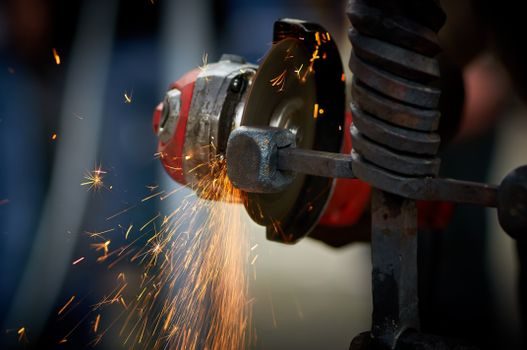
D2 and A2 are air-hardening, which limits distortion on long trim dies (≥1 m) to roughly 0.05–0.10% versus 0.20–0.40% for oil-hardening O1; this is the single biggest reason paper-converter dies move to A2 or D2 once the die length passes ~600 mm [S3].
Standard hardening practice for D2 in tooling shops: austenitise 1020–1050 °C, hold 30 min after equalisation, air-quench to below 50 °C, then double-temper at 510–530 °C for 2+2 h to reach 58–60 HRc [S3]. For A2: 950–980 °C austenitise, air-quench, temper 180–220 °C for 57–60 HRc. Sub-zero treatment at −80 °C between quench and first temper pushes retained austenite below 2% and stabilises dimensions on slitter rings and refiner plates where size drift above 0.01 mm is unacceptable. Stress relief after EDM or wire-cut (200–250 °C, 2 h) is mandatory to avoid service cracking.
Comparison: D2 vs A2 vs O1 vs S7 for Paper Dies
Four decision criteria line the grades up cleanly against the conditions seen on a paper line: wear life on kraft/OCC, dimensional stability on long dies, impact toughness for chopper duty, and shop-floor machinability before hardening. [S2]
D2 leads on wear life and edge retention (10–15% primary carbides, 58–62 HRc) and is good on stability (air-hardening) but poor on machinability and impact [S3]. A2 is the balanced default — 5–8% carbides, 57–60 HRc, excellent stability, moderate machinability, moderate toughness. O1 wins on machinability and is good on toughness but poor on stability (oil-quench distortion) and wear life, so it suits short-run trim and prototype dies. S7 is the toughness leader (27 J Charpy V at 56 HRc) but trails on wear, so it is the call for chopper, guillotine and shredder blades where chipping is the failure mode, not abrasive wear.
Supplier Landscape: Mill Stock, Tooling Shops and the China OEM Map

Mill-level supply of D2/A2/S7 round and plate runs through Voestalpine (Austria), Bohler/Uddeholm (Sweden/Austria), Daido (Japan), Hitachi Metals and the domestic Chinese mills producing SKD11 / Cr12MoV-equivalent stock; the China OEM tooling map for downstream blanks, transfer dies and progressive dies is dominated by SECC/SGCC-feed stamping shops such as those grouped on en.china.cn [S3].
North American tool-builders such as Unittool Punch & Die act as the finishing-tier partner that takes bar/plate stock, processes it into Model H-style punching units and ship to the converter [S1]. Amazon-listed tap-and-die consumable sets cover the maintenance-floor thread-repair use case, not paper-mill tooling, but they confirm that small-format D2/HSS consumable tooling is commodity-sourced and price-elastic in 2026 [S2]. Buyers specifying D2 for paper tooling should pin the heat-treat certificate, the ESR (electroslag-remelt) flag for critical wear parts, and a chemistry window of C 1.40–1.60, Cr 11.0–13.0, Mo 0.7–1.0, V 0.8–1.2 to avoid the high-Si and high-S SKD11 lookalikes that fail edge-retention tests on kraft.
Limitations, Failure Modes and Standards
The dominant failure modes on paper tooling are abrasive wear (recycled-OCC, mineral-coated stock), edge chipping (caliper swings, contamination), corrosion pitting (bleach plant, high-humidity reel rooms) and dimensional drift (retained austenite, inadequate temper) [S3].
Standards commonly referenced: ASTM A681 for D2/A2/O1/S7 tool-steel bar and plate chemistry and hardenability; DIN EN ISO 4957 for the European tool-steel designation system (1.2379, 1.2363, 1.2510, 1.2355); JIS G4404 for SKD11/SKS3 equivalents; and ISO 2768 for general machining tolerances on die bodies [S3]. For pulp-and-paper hygiene and FDA-contact edges, the surface-grinding and deburring specification should comply with 3-A sanitary and EHEDG cleaning requirements even though the steel grades themselves are not food-contact listed. Buyers ordering from China-based OEM stamping and blanking-die suppliers should request sample coupons at 60 HRc for wear testing against the incumbent grade before signing annual releases [S3].
Related Sourcing Levers and Tooling Context
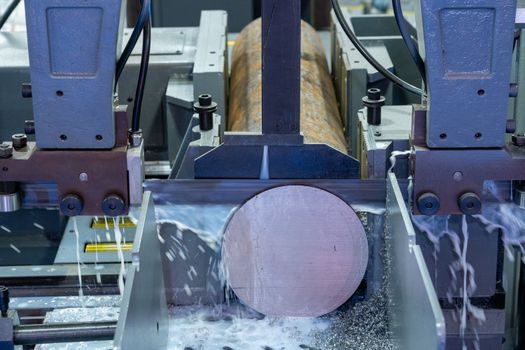
For maintenance teams that also specify wear parts upstream and downstream of the die shop, the Carbon Steel Suppliers 2026 China OEM Map, Grade Bands and Sourcing Levers reference covers the same SECC/SGCC feed-stock envelope that flows into transfer and blanking dies for paper-converter lines. Sourcing engineers auditing the bearing side of the same paper machines can cross-check the Bearing Upstream and Downstream Industries 2026 map to align D2 tooling spares with refiner bearing change-out windows. [S3]
The reference Tool and Die Steel grade families landing page collects chemistry, hardness and lead-time data for the D2/A2/O1/S7 cluster discussed above, and the Unittool Punch & Die Model H product line is the typical finishing-tier punching unit built from these bar grades for slitting and notching stations [S1][S3]. Buyers should treat any 1.2379 quote priced more than 15–20% below the China mill reference as a signal to re-test chemistry before accepting a production lot.
For component-level specifications, see tool die steel, die casting die, and die casting machine.
