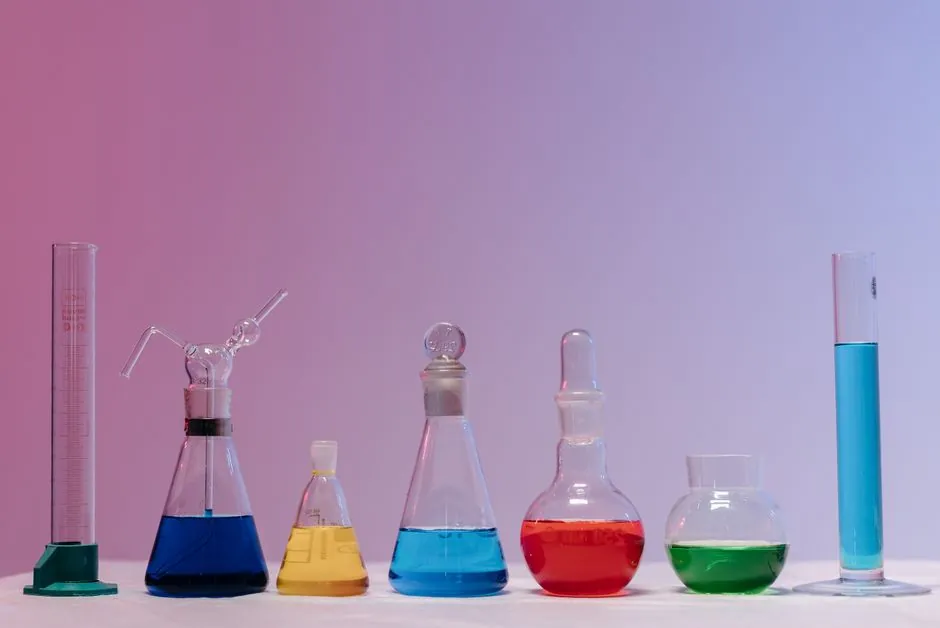
Tinci Materials, CAPCHEM, ENCHEM, Mitsubishi Chemical Group and Zhangjiagang Guotai Huarong lead the 2026 battery electrolyte supplier ranking on the strength of LiPF6 lithium salt production and integrated carbonate-solvent lines, with the global market projected to reach USD 34.46 billion [S1][S2].
Market sizing varies by report: Fortune Business Insights pegs the 2026 electrolyte opportunity at USD 34.46 billion [S1], MarketsandMarkets models USD 15.06 billion in 2025 expanding to USD 27.99 billion by 2030 at a 13.2% CAGR [S2], while DataM Intelligence projects USD 15.18 billion in 2025 reaching USD 54.87 billion by 2035 at a 13.7% CAGR [S4]. Pheonix Research tracks a narrower EV-electrolyte production line growing from USD 11.49 billion in 2025 to USD 41.08 billion by 2033, a 17.27% baseline CAGR [S6].
Top 5 Suppliers by Capacity and Vertical Integration
Tinci Materials operates a vertically integrated LiPF6 salt, carbonate solvent and additive chain, with overseas subsidiaries and R&D centres in the US, Germany, Singapore, Morocco and South Korea [S2]. CAPCHEM's Battery Chemicals segment produces lithium salts, carbonate solvents and performance additives for EV, grid storage and portable electronics, with regional sales coverage across Europe, Asia Pacific, North America, South America and Africa [S2].
South Korea's ENCHEM runs multi-country production lines supplying application-specific electrolyte formulations for EVs, consumer electronics, stationary storage and EDLC (electric double-layer capacitor) cells [S2]. Mitsubishi Chemical Group rounds out the top tier out of Japan through its Specialty Materials, Industrial Gases and Basic Materials & Polymers segments. Zhangjiagang Guotai Huarong completes the five-company list called out by MarketsandMarkets on production-capacity criteria [S2].
The Global Electric Vehicle Battery Electrolyte Market is projected to grow from USD 10.2 billion in 2025 to USD 31.8 billion by 2035, at a CAGR of 12.04%, according to Spherical Insights [S3].
The EV-only battery electrolyte segment is modelled by Spherical Insights at USD 10.2 billion in 2025 rising to USD 31.8 billion by 2035, a 12.04% CAGR from 2026 onward, with Tinci, CAPCHEM, Soulbrain and Mitsubishi repeatedly cited as lead names [S3].
Liquid, gel and solid formats all sit inside the same EV-electrolyte scope, and additive packages that extend cycle life and improve high-temperature stability are explicitly part of the market definition [S3]. Spherical's ranking extends to 20 companies for the EV-electrolyte window alone [S3].
Solid-State and Adjacent Chemistries: Who Else Is in the Frame
Solid-state battery development is dominated by cell makers rather than electrolyte blenders: Toyota, Panasonic, CATL, QuantumScape, Solid Power and ProLogium lead that field as of February 2026 [S7]. For conventional liquid electrolytes, SkyQuest adds 3M, Asahi Kasei, BASF SE, Cabot Corporation, Clariant, Dow and Eastman Chemical as recognised participants [S5]. Knowledge Sourcing also lists 3M, NEI Corporation, Tinci and Mitsubishi Chemical Holdings as notable suppliers [S8].
Tracxn counts 53 battery-electrolyte startups in April 2026, including South 8, GFCL EV, Ampcera, Safire Technology Group and Ionic Materials, signalling a deep innovation tail beyond the top five [S9].
Selection Criteria for Procurement Teams
Three filters separate the leaders from the rest: LiPF6 or alternative lithium salt backward integration, multi-region production footprint, and formulation capability for additives such as vinylene carbonate (VC), fluoroethylene carbonate (FEC) and lithium bis(oxalato)borate (LiBOB) that extend cycle life at high state of charge. Tinci and CAPCHEM score on the first two; ENCHEM and Mitsubishi score on additive and application-engineering depth [S2].
A second filter is OEM qualification depth. Tier-1 cell makers require PPAP-level (Production Part Approval Process) documentation, IATF 16949 quality management and traceability of solvent lots, so suppliers without automotive-grade audits are effectively excluded from EV-cell contracts even if their chemistry is sound [S3].
Comparison of Leading Electrolyte Suppliers
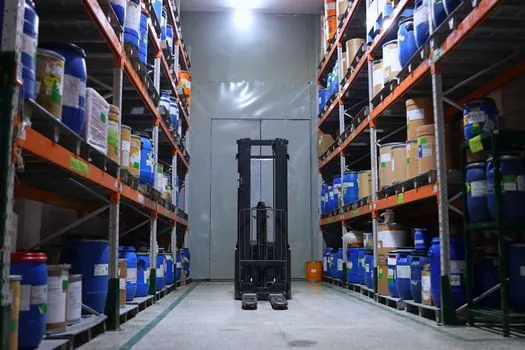
Comparing the top five against four decision criteria: Tinci and CAPCHEM lead on vertical integration (LiPF6 + solvents in-house) and global footprint (4-5 regions); ENCHEM leads on EV-specific additive tuning and South Korean OEM proximity; Mitsubishi Chemical leads on Japan-based specialty chemistry and solid-state R&D pipelines; Zhangjiagang Guotai Huarong leads on China-domestic cost position but lags on overseas manufacturing [S2].
What the Numbers Do Not Settle
Forecast CAGRs cluster between 12.04% and 17.27% depending on the same scope question [S3][S4][S6]. For spec-driven buyers, the relevant question is which chemistries each supplier can deliver at automotive PPAP-grade, not the headline TAM (total addressable market) figure.
Watch the Q4 2026 LiPF6 spot price and the next CAPCHEM or Tinci earnings call for additive-mix disclosure, since additive share is the cleanest signal of how far each supplier has moved up the value chain from commodity solvent to application-engineered electrolyte. For related supplier maps across the wider chemicals and components space, see the 2026 fluoropolymer supplier shortlist and the ball screw supplier map.
Spec-level background on the components involved: pressure transmitter, flow meter, and industrial valve.