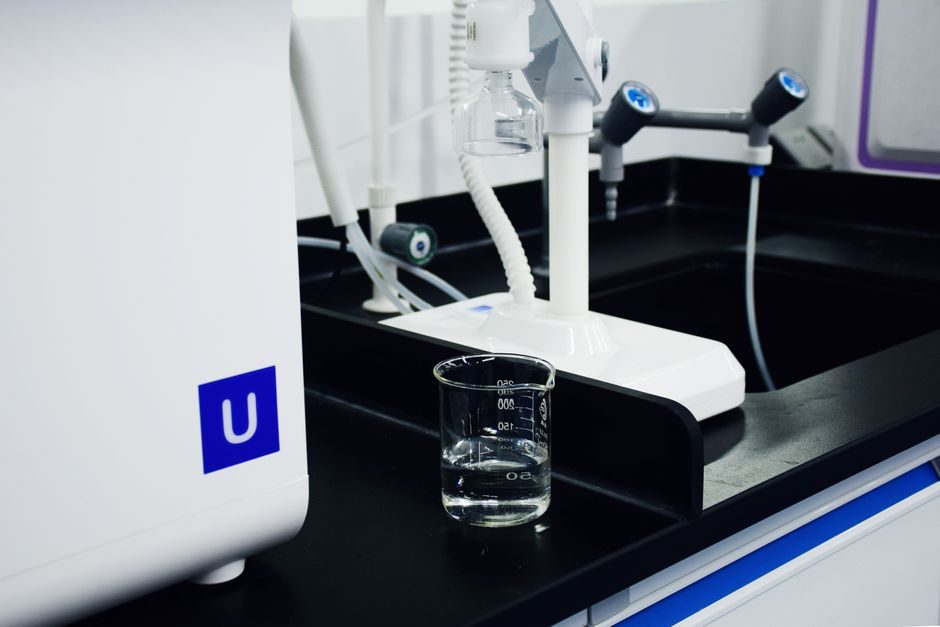
The global reverse osmosis (RO) membrane market was reported at USD 5.0 billion by 2026, segmented by type into thin-film composite membranes and cellulose-based membranes, with end-use industries including water & wastewater treatment and industrial applications [S4]. Asia-Pacific demand — from Chinese industrial OEMs, Indian EPCs, and Middle Eastern desalination — sets the volume curve. Reverse osmosis is defined as a pressure-driven separation of water from a saline solution across a semipermeable membrane, with the applied pressure exceeding the osmotic pressure of the feed [S1].
Two Membrane Chemistries: TFC Polyamide vs Cellulose Acetate
Two membrane chemistries dominate 2026 commercial RO specifications: TFC polyamide and cellulose acetate (CA) / cellulose triacetate (CTA) [S1][S4]. TFC polyamide membranes use an ultrathin cross-linked aromatic polyamide rejection layer on a microporous support, delivering 99.0–99.8% nominal salt rejection at standard test conditions, and operate across pH 2–11 for clean-in-place cycles [S1]. Cellulose-based membranes — the older asymmetric CA/CTA chemistry — typically deliver 95–98% rejection and tolerate continuous free chlorine up to about 1 ppm, a niche advantage for feed waters with residual oxidant [S4].
Selection rule of thumb: specify TFC for seawater (TDS 10,000–45,000 mg/L) and most brackish (TDS 1,000–10,000 mg/L) duties; specify CTA only when the feed carries oxidant that the polyamide skin cannot survive without aggressive pretreatment [S1]. For process-engineering background on how TFC structures function, see the RO membrane material primer.
Brand-Level Spec Levers and Configuration
Standard 8-inch (201 mm) diameter spiral-wound elements are the industrial norm; the two reference geometries are 8040 (~37 m² active area) and 4040 (~7.2 m²), with 2540 / 4021 small-format variants for skid OEMs [S2]. Brackish elements typically operate at 10–30 bar feed pressure with 10–20 LMH flux; seawater elements run at 55–85 bar with 10–14 LMH flux, reflecting the osmotic pressure of 35,000 mg/L TDS feed (~27 bar) plus the required net driving pressure [S1][S4].
Real 2026 catalog prices for Chinese-built industrial RO systems (skid-mounted, not bare elements) span US$ 4,000–60,000 per piece for 50–50,000 gallon-per-day capacities, with salt rejection of 99.0% on TFC systems and ≥97% on lower-tier units, certified to ISO 9001 with CE / RoHS markings [S6]. Element-only pricing tracks roughly US$ 300–1,500 for 4040 brackish, US$ 600–2,500 for 8040 brackish, and US$ 1,200–4,000 for 8040 seawater, with brand premium and order volume shifting the band ±20%. For the related spec question of how operating pressure is sensed and controlled on a membrane skid, see pressure transmitter selection and flow meter working principles.
Manufacturer Snapshot: Five Anchors and Chinese OEM Tier
Below the global five sit Chinese OEM/ODM tier suppliers: Ande Membrane Separation Technology (Beijing) was established in 1998 (parent AMFOR Inc. in the USA), with ISO 9001 certification, manufacturing RO elements plus spiral EDUF and flat-sheet membranes [S8]; Polaris International Group Co., Ltd. lists 75 GPD domestic RO membranes (CE, RoHS) alongside FRP tanks, UV sterilizers, and RO pumps for skid integrators [S2]. For the broader 2026 market sizing and TFC dominance context, see RO membrane market 2026: USD 5.0B run-rate, TFC dominance, and Asia-Pacific pull.
Selection Criteria: Rejection, Flux, Feed TDS, and Cert
Four decision criteria separate the candidates: (1) salt rejection — TFC gives 99.0–99.8% vs CTA 95–98%; (2) operating pressure — TFC brackish 10–30 bar, TFC seawater 55–85 bar, CTA brackish 15–40 bar; (3) free-chlorine tolerance — CTA up to ~1 ppm continuous, TFC near zero without dechlorination; (4) pH cleaning window — TFC 2–11, CA 4–7. Industrial buyers should match chemistry to feed first, then compare element-level flux and rejection at the spec sheet's standard test condition (NaCl 2,000 mg/L at 225 psi for brackish, 32,000 mg/L at 800 psi for seawater) before evaluating price [S1][S4].
Certifications to confirm on the supplier datasheet: ISO 9001 quality management, NSF/ANSI 61 for drinking-water contact (where applicable), and for hygienic/pharma duty, USP/EP/BP-grade dispersant compatibility on the wetted path [S3][S6]. On system skid integration, monitoring differential pressure across each vessel and permeate flow per stage is standard practice, as described in the pressure sensor working principle and industrial valve selection references. For an adjacent fluid-handling comparison that often shares the same skid (CIP chemical dosing, antiscalant feed, permeate back-pressure regulation), see diaphragm pump suppliers and manufacturers: 2026 spec and sourcing map.
Real Failure Modes and Operating Constraints
Three failure modes terminate RO element life well before rated life: (a) fouling — adhesion of organic substances and bacteria to the membrane surface, mitigated by periodic CIP with alkaline (pH 11) and acidic (pH 2) cleaning cycles; (b) chlorine damage — free chlorine above ~0.1 ppm oxidizes the polyamide amide bond and causes permanent flux loss; (c) scaling — CaCO₃, CaSO₄, SiO₂, and BaSO₄ precipitation on the tail elements when recovery exceeds solubility limits, controlled by antiscalant dosing and recovery ratio tuning [S9].
Polydopamine coating studies confirm measurable improvement in fouling resistance and chlorine tolerance when a thin polydopamine layer is deposited on the TFC surface, though this remains a research-stage route rather than a 2026 catalog option on the global five's lines [S5]. Nanostructure analysis of advanced TFC membranes also indicates that the free-volume hole size of the polyamide network — typically 0.2–0.4 nm — is the structural lever controlling water/salt selectivity, and that polyhedral oligomeric silsesquioxane (POSS) nanofillers can tune that free volume for higher flux without losing rejection [S7][S9].
Who RO Membranes Are For — and Who Should Not Specify Them
RO is the right answer for: seawater desalination plants (TDS 10,000–45,000 mg/L), brackish groundwater treatment (TDS 1,000–10,000 mg/L), industrial process-water polishing (semiconductor, pharma WFI pre-stage, boiler feed pretreatment), and wastewater reuse for indirect potable reuse. RO is the wrong answer for: low-TDS softening where ion exchange or nanofiltration is cheaper; feed streams with high oil & grease (>0.1 mg/L) without pretreatment; applications where the concentrate disposal path is not solved — concentrate volume is typically 15–30% of feed for seawater, 5–25% for brackish [S1][S4].
Buyers who should NOT specify from the global-five tier: low-budget residential / light-commercial 75 GPD point-of-use systems, where Chinese OEM/ODM tier products (e.g., Polaris 75 GPD units) deliver acceptable quality at 20–40% of brand pricing and are stocked in volume for distribution [S2]. Indian and Middle Eastern EPCs frequently blend — global-five elements on the seawater stage, Chinese OEM elements on the BW polishing stage — to optimize cost without compromising system performance [S4][S10].
Sourcing, Standards, and Trackable Signals
For procurement, the verifiable inputs to demand on the supplier are: (a) salt rejection at standard test condition, written on the datasheet as "99.7% nominal" or "99.5% minimum"; (b) element model code (e.g., DuPont BW30-400, Toray TM720-400, LG BW400-LE, Hydranautics ESPA2-LD, SUEZ AG400); (c) active area in m²; (d) feed spacer thickness in mil (typically 28 or 34 mil); (e) ISO 9001 certificate number and NSF/ANSI 61 status for drinking-water projects [S2][S4][S6]. For Chinese OEM tier, demand the test report for salt rejection and the pressure-vessel compatibility chart against standard 8040 housings [S8].
Two trackable signals to watch: NSF/ANSI 61 renewal cycles on the global-five element lines through 2026–2027, and any expansion announcements from Chinese OEM tier on 16-inch (16x40) large-diameter seawater elements, which would directly undercut global-five pricing on the SWRO stage. Related reading: RO membrane market 2026: TFC dominance, Asia-Pacific pull, and spec levers.