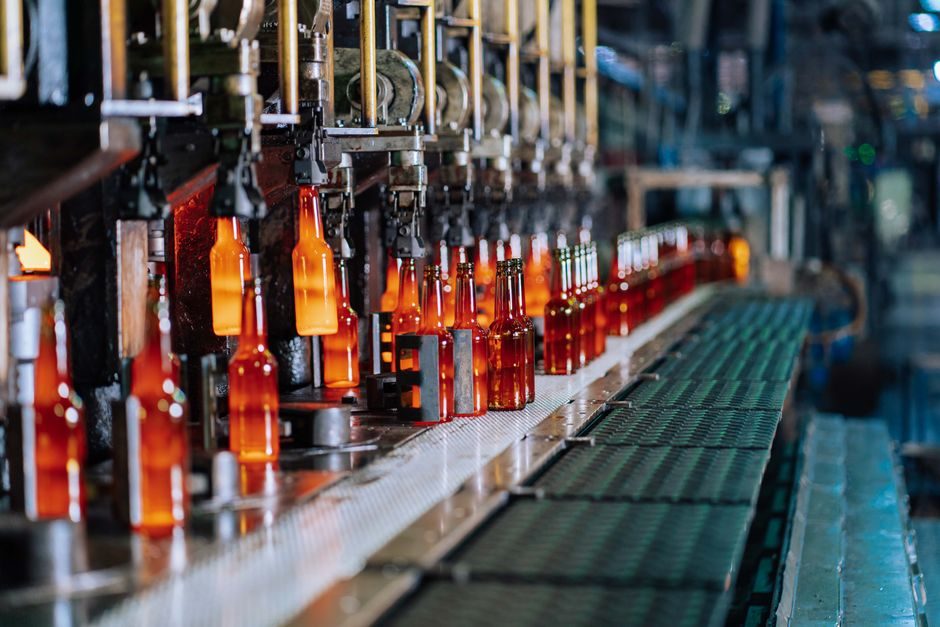
Aluminum ingot production in 2026 is being re-engineered around closed-loop process control: molten-metal temperature, cooling-water flow, and homogenization furnace residence time are now streamed as continuous data instead of sampled by hand, with Chinese extrusion-grade billet lines and North American truck-trailer fabricators both pulling from the same underlying automation stack [S1][S3][S5].
The scope of "smart" varies widely by tier: Tier-1 casthouse retrofits layer AI vision and OPC UA gateways onto existing DC casters, while greenfield projects in Jiangsu and Guangdong ship with full Level 3 MES, robotic sow handling, and laser-marked traceability ingots from day one [S3].
Aluminum Alloy Baseline: 5052-H32, 6061-T6 and the Ingot-to-Billet Chain
End-product alloy choice dictates the upstream ingot specification: 5052-H32 and 6061-T6 remain the workhorses for marine, trailer, and structural fabrication, and both are pulled from extrusion-grade billet produced by either direct-chill (DC) casting or, for higher purity, hot-top vertical casting [S1].
Aluminum density near 2.70 g/cm³ versus steel at roughly 7.85 g/cm³ is the underlying reason ingot throughput matters: every percent of caster yield loss is amplified across the downstream aluminum alloy supply chain feeding extrusion presses, CNC machining cells, and welded assemblies [S3].
Ingot metallurgy must satisfy customer-specific chemical ceilings — Fe, Si, Cu, Mg, Mn, Zn, Ti — with tight limits on alkali metals and hydrogen content; for extrusion billet destined for anodizing lines, Fe is typically capped under 0.20 wt% to prevent streaking after anodizing, a constraint that has driven demand for higher-purity foundry alloys [S3].
Smart Manufacturing Stack: Sensors, Protocols and AI Vision
The 2026 casthouse automation stack is layered: bottom layer is field instrumentation — smart meter-grade thermal probes in the launder, load cells on the casting table, and conductivity sensors in the cooling water; middle layer is PLC + SCADA with OPC UA pub/sub; top layer is MES plus AI vision that classifies surface defects on the sawed billet face [S2][S3].
AI vision is the single biggest 2025-2026 investment line item: high-temperature cameras mounted above the casting pit now run convolutional models that detect cold shuts, bleed-out, and surface cracks in real time, replacing the manual scribe-and-inspect step that historically added 3-5% scrap [S2].
Cloud and edge split follows the data-rate rule: thermal and vibration streams stay on-premise for sub-second control loops, while batch-level energy and chemistry data flow to plant-level historians and cloud analytics, mirroring the distributed pattern seen in Chinese display and NEV factories serving European OEMs [S2].
Selection Criteria: Caster Type, Capacity, and Traceability
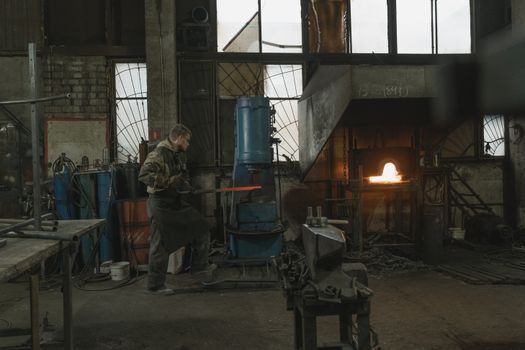
Direct-chill (DC) vertical casting remains the default for extrusion billet in the 150-300 mm diameter range at throughputs of 20-50 t/h per strand, while horizontal DC and electromagnetic casting serve specialty narrow-format ingots for aluminum ladder rail and small-section extrusion [S3][S5].
Capacity matching is straightforward: a 50,000 tpy extrusion mill needs roughly 1,400 t of monthly billet, and that translates to one or two DC casting strands running two-shift, with homogenization furnace capacity sized at 1.2× casting throughput to absorb batch variation [S3].
Comparison: Conventional vs Retrofit-Smart vs Greenfield-Smart Casthouse
Conventional manual casthouse, retrofit-smart, and greenfield-smart line up against four decision criteria as follows: capex per annual ton, time-to-first-heat, data granularity, and OPEX per ton of usable billet. [S1]
Conventional: lowest capex (~$150-250/t annual capacity in 2025-2026 China pricing), longest time-to-first-heat (12-18 months including civil works), batch-only data, and OPEX dominated by labor and yield loss [S3].
Retrofit-smart: moderate capex (~$280-400/t), shortest time-to-first-heat (4-8 months), per-strand streaming data at 1-10 Hz, and OPEX gains of 4-8% from yield and energy — the dominant 2025-2026 spending pattern among mid-tier Chinese extruders [S3][S5].
Robotics, Smart Valves and the Smart Camera Layer on the Casting Floor

Robotic sow handling has moved from pilot to standard on 2024-2026 greenfield lines: six-axis robots with 50-100 kg payload place sows on the homogenization-charge car, replacing the operator-led forklift pattern that historically limited furnace packing density to about 70% [S2][S3].
Smart valve positioner density on the cooling-water and launder-trim circuits is the second-most-visible upgrade: digital positioners with HART or IO-Link feedback close the loop on flow split between primary and secondary water, which is critical because water flow rate variation above ±5% is a primary driver of billet surface segregation [S3].
Smart cameras and laser-line scanners now sit on three stations: above the casting table for shell-zone profile measurement, at the saw entry for length verification, and at the bundle-stacking cell for finished-goods OCR — a stack that has reduced manual inspection headcount by 60-80% in published 2024-2025 retrofits [S2].
Standards, Certification and 2026 Sourcing Signals
No single ISO standard governs the smart-casthouse integration layer end-to-end, but several pieces are individually standardized: ISO 9001 for the QMS backbone, ISO 14001 for environmental management, ISO 45001 for safety, and IEC 61131-3 / OPC UA for the PLC-to-MES interface; chemical composition of the ingot is typically certified to ASTM B179 or EN 1676 depending on end market [S3].
The 2026 sourcing map is clearly bifurcated: Chinese suppliers dominate OEM/ODM extrusion-grade billet with auditable factories on the Made-in-China platform, while North American trailer and marine fabricators source from regional mills emphasizing 5052-H32 and 6061-T6 inventory with shorter logistics lead time [S1][S3].
For European OEMs the trajectory is clear: smart manufacturing products from China — drones, NEVs, cloud, and display — are recognized in the market, and the same OEM-grade expectations for data transparency, recyclability, and energy disclosure are now flowing back into Chinese aluminum export billet specifications [S2].
Use Cases: From Trailer Deck to Extrusion Press to Ladder Rail
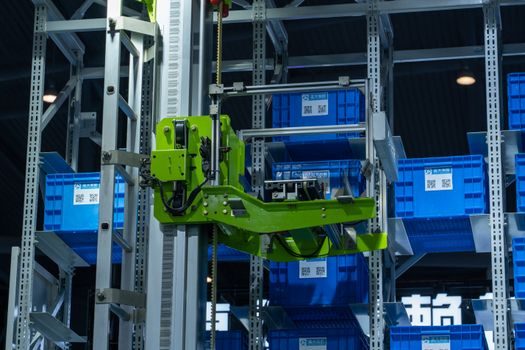
Trailer and emergency-response fabrication is a volume user of 5052-H32 plate and 6061-T6 structural extrusion, with weld cycle times and corrosion resistance driving alloy choice; a single 5'x10' flat-deck trailer at ~3,000 lbs GVW consumes on the order of 200-300 lb of aluminum, most of it traceable to a specific heat and cast code under the 2026 MES pattern [S1].
Extrusion press operators care most about billet metallurgical consistency: hardness, grain size, and homogenization soak temperature uniformity determine press speed and surface finish, and AI-vision billet-face inspection has become a procurement requirement at the larger Chinese extruders [S3][S5].
Ladder and scaffolding rail production pulls from a narrower 6061-T6 / 6005-T5 specification window where surface-anodizing quality is non-negotiable, which is why Fe control under 0.20 wt% and hydrogen under 0.15 cc/100g Al are now commonly written into the ingot purchase spec, not just the extrusion spec [S3].
Failure Modes, Limits and What Smart Does Not Fix
Automation does not eliminate the metallurgical limits of the process: pick-up depth in DC casting, hot-tearing susceptibility in 6xxx alloys, and the inherent energy intensity of primary aluminum smelting (roughly 13-15 kWh per kg of primary Al) are physics-bound, not control-loop problems [S3].
AI vision is a scrap-reduction tool, not a quality oracle: misclassification of sub-surface defects remains a known failure mode, and most 2025-2026 deployments keep a human-in-the-loop review for any defect above 2 mm² until the model reaches a measured false-reject rate under 1% on its training distribution [S2].
Cybersecurity on the OPC UA surface is the under-addressed risk: external cloud analytics links open a path to the casting PLC if segmentation is weak, so 2026 reference designs now require a DMZ with unidirectional data diodes between plant-floor control and any cloud historian used for AI training [S2][S3].
Closely related process-chain detail — caster selection, homogenization soak parameters, and the chemical gates that separate extrusion-grade from foundry-grade ingot — is mapped end-to-end in the aluminum ingot manufacturing process chain reference, which pairs naturally with the comparison criteria above [S3][S5].
Trackable 2026 signals: (1) Chinese extruder capex disclosure in the FY2025 annual report cycle showing continued AI-vision and robotic-sow spend; (2) the IMTS Smart Manufacturing Experience (September 9-14, 2024, with the 2026 edition expected) as the calendar anchor for North American casthouse retrofit RFPs [S4]; (3) any ISO/IEC standardization of an OPC UA companion specification for casthouse process data, which would force the next wave of MES interoperability on Tier-2 suppliers [S2][S3][S4].