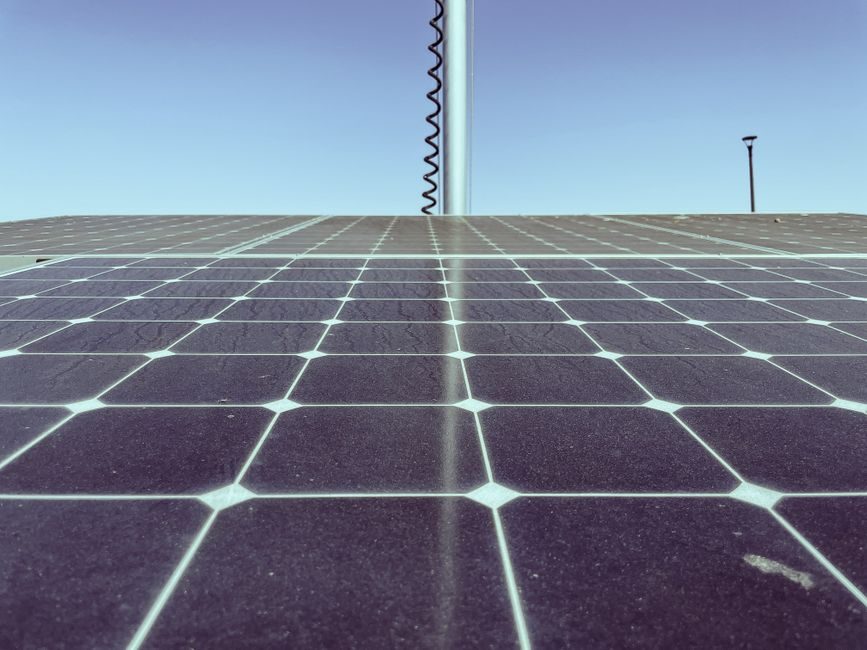
Each gigawatt of crystalline silicon module capacity now consumes 7,000 to 9,000 tonnes of solar glass, and every tonne of that glass requires roughly 750 to 800 kg of ultra-pure silica sand with iron oxide (Fe2O3) content held below 0.012% [S3]. That multiplicative ratio sits at the heart of the 2026 supply risk, because float-line construction lead times run 18 to 24 months and ultra-low iron silica feedstock is geographically concentrated, so a 50 GW/yr demand step cannot be matched inside one planning cycle.
The global solar glass market is valued at USD 5,823.58 million in 2026 with a forecast CAGR of 5.9% toward USD 9,938.83 million by 2035 [S6]; a parallel volume estimate puts 2026 consumption at 32.24 million tonnes, expanding to 75.08 million tonnes by 2031 at 18.42% CAGR [S7]. The ultra-low iron silica sand subsegment alone is tracked from USD 2.8 billion (2025) to USD 5.6 billion (2034) at 8.1% CAGR, with Asia Pacific holding 46.2% revenue share and the dry-sand product tier at 58.3% share [S3].
Feedstock Gate: Why Fe2O3 Below 0.012% Is the Hard Filter
Solar-grade float glass transmits roughly 91-92% of incident light only when the silica feedstock holds iron oxide below 0.012%; above that threshold, every 0.01 percentage point of residual Fe2O3 cuts visible transmittance by measurable fractions and erodes module watt-peak output [S3]. Three suppliers — Sibelco, Quarzwerke GmbH, and Saint-Gobain — anchor the global ultra-low iron silica supply, and beneficiation upgrades (froth flotation, acid leaching, magnetic separation) are the only path for marginal deposits to clear that purity bar [S3].
For context, the same purity discipline governs architectural low-iron glass and automotive sunroof glazing, so the solar pull stacks on top of existing premium-glass demand rather than drawing from a dedicated reserve. PV installation additions cleared 400 GW in 2024 and are projected to average above 500 GW per year through the early 2030s [S3], which means a structural 3,500-4,500 GW of cumulative nameplate glass demand inside the decade. Sand beneficiation capacity, not raw silica abundance, is the binding constraint.
Float Line Capacity: 18-24 Months From Green-Light to First Melt
A new solar-grade float line takes 18 to 24 months from groundbreaking to first qualified glass, with capital intensity high enough that few players can fund more than one or two lines per cycle [S5]. The supply-side adjustment mechanism is therefore slower than the demand-side acceleration: when module fab announcements land in Q1 of a given year, the matching glass capacity cannot physically come online until the second half of the following year at the earliest.
North American re-shoring provides the most concrete recent datapoint. NSG Group converted a Rossford, Ohio float line to transparent conductive oxide (TCO) glass for First Solar at the start of 2025, and First Solar announced a USD 330 million North Carolina facility in November 2025; Canadian Premium Sand is also advancing a solar-grade glass project [S8]. For an industry that previously relied almost entirely on Asian float lines, the bottleneck is no longer just capacity — it is the qualified-supplier count, which still numbers in single digits per region.
Tariff, AD/CVD, and Section 232 Overlay on Polysilicon and Glass

AD/CVD determination dates, Section 232 investigations into polysilicon, and possible future action on processed critical minerals define the trade-policy overlay for 2026 solar procurement [S4]. Government-mandated local-content rules, anti-dumping measures, and targeted tax credits in the United States (Inflation Reduction Act), the European Union (Net-Zero Industry Act), and India (Production Linked Incentive for solar glass) are simultaneously accelerating regional capacity additions and intermittently depressing global module prices through oversupply [S3][S7].
The net effect for a procurement engineer is a bifurcated market: US/EU/India-bound projects face a 12-24 month domestic-glass premium and a narrow supplier list, while non-protected geographies continue to clear through Asian float lines at lower cost but with longer logistics tails. Hedging between the two channels is the dominant 2026 contract clause, and dual-sourcing requirements are now standard in most utility-scale RFPs.
Material Substitutes and Format Trends: TCO Glass and Bifacial Cover
Thin-film CdTe modules from First Solar use TCO glass as a front substrate rather than conventional low-iron patterned cover glass, which is why NSG's Rossford conversion specifically targets TCO rather than c-Si cover [S8]. Bifacial PERC and TOPCon architectures use 2.0-2.5 mm low-iron cover glass on both faces, which raises the per-GW glass tonnage toward the upper end of the 7,000-9,000 t/GW range [S3].
The same 3D-formable, high-hardness, anti-fingerprint glass surfaces (developed by Corning, SCHOTT, NEG, and AGC for consumer electronics) show the manufacturing know-how transfer path into solar, though solar volumes run several orders of magnitude larger than 3D cover-glass for smartphones and wearables [S1]. Encapsulant films such as PVB interlayer, EVA interlayer, and solar-grade EVA interlayer — manufactured by firms like 协凯科技 (Xiekai Technology, 20,000 m² facility in Zhenjiang Baohua Economic and Technological Development Zone) — sit downstream of the glass and inherit the same capacity-constrained posture [S2].
FM 1-15 and Code Compliance: Roof-Mounted PV Glass-Backed Requirements

FM Property Loss Prevention Data Sheet 1-15 (2026 edition) requires roof-mounted PV arrays to use glass-backed panels with noncombustible frames, maximum array footprint of 150 ft (46 m) by 150 ft (46 m), and minimum 4 ft clearances, with 45° spray nozzle positioning at 10° specified in Figure 2.1.1.3-1 for suppression layout [S9]. That code path favours tempered low-iron solar cover glass with documented fire ratings, which narrows the eligible supplier list on top of the already-tight float-line pool.
For specifiers, the practical gate is therefore three-layered: (1) Fe2O3 below 0.012% silica feedstock traceability, (2) 18-24 month float-line lead time for new capacity, and (3) code-listed tempered cover glass with regional tariff treatment. Solar glass sourcing lists and spec gates consolidates the supplier matrix that procurement teams need to clear all three filters simultaneously.
Side-by-Side: Cover-Glass Format Comparison
For c-Si PERC/TOPCon bifacial modules, the dominant choice is 2.0-2.5 mm low-iron patterned tempered cover glass at 91-92% transmittance; for First Solar CdTe Series 7, the front sheet is TCO glass with a different Fe2O3 and conductivity spec; for building-integrated PV (BIPV) the same low-iron substrate is paired with PVB or ionomer interlayers instead of EVA, with the interlayer choice set by 协凯科技 and equivalent EVA/PVB manufacturers [S2][S3][S8]. Cost sits lowest on c-Si patterned cover, mid on TCO (smaller volume base), and highest on BIPV laminates; lead time is shortest for stock c-Si patterns (8-14 weeks) and longest for new TCO or BIPV builds (12-24 months on dedicated float conversions). Procurement teams should match the format to module architecture first, then overlay the tariff region, then check fire-code listing per FM 1-15 or the local equivalent [S9].
Next Tracking Signals (12-Month Horizon)
Three concrete datapoints will confirm whether the 2026 supply tightness eases or extends into 2027: (1) the next quarterly disclosure of new Asian float-line commissioning dates through Xinyi Solar, AGC, and NSG; (2) the next AD/CVD or Section 232 ruling on solar-grade polysilicon and finished glass from US/India trade authorities [S4]; (3) the next round of Inflation Reduction Act 45X manufacturing tax credit disbursements for domestic solar-grade float lines, which directly fund the 18-24 month capacity build-out that procurement teams are waiting on. Watch those three vectors in parallel, because the bottleneck is not silicon abundance or sand reserves — it is the qualified float-line count multiplied by the tariff map.
For component-level specifications, see dc power supply, switching power supply, and glass fiber.