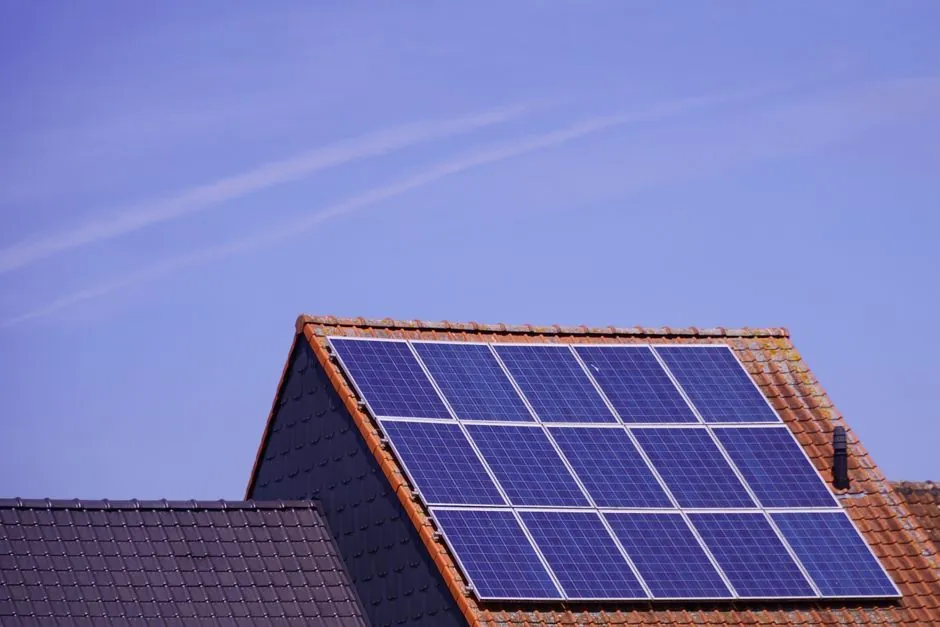
TOPCon (Tunnel Oxide Passivated Contact) is the dominant n-type architecture in commercial production, with an estimated near-60% share of cell shipments as of 2025 and a 22–24% mass-production efficiency band that sits roughly 1.5–2 absolute points above legacy mono-PERC [S4][S5].
The dedicated TOPCon cell market is sized at USD 13.66 Bn in 2026 and is forecast to reach USD 29.83 Bn by 2033 at an 11.8% CAGR, while the broader solar cell market sits at USD 177.07 Bn in 2026 on an 11.88% CAGR toward USD 310.39 Bn by 2031 [S1][S6].
Patent concentration: a JinkoSolar-led moat with a steep falloff
Zhejiang Jinko Solar Co. Ltd leads the TOPCon patent corpus with 773 records, followed by Jinko Solar Co. Ltd at 574, with the JinkoSolar corporate family together holding a commanding share of all ranked activity [S2].
The top five filers account for 58% of the combined total across the hundred largest filers, and the gap to mid-tier players (Tongwei Solar at 64 records, French CEA at 60) is substantial, signalling a highly concentrated competitive structure where a handful of vertically integrated Chinese manufacturers hold decisive portfolio depth [S2].
Annual filings rose from 10 records in 2017 to a 2023 peak of 677, a 160% growth over the recent three-year window versus the prior three-year window; the 2024 figure of 517 and 2025 figure of 70 are materially understated due to publication lag and should not be interpreted as a real decline, so new entrants face a dense prior-art landscape in the core H01L semiconductor device class [S2].
Vendor map: who actually ships TOPCon at scale
The shipping leaderboard mirrors the patent ranking, with JinkoSolar, Trina Solar, LONGi Green Energy, Tongwei, JA Solar, and Aiko occupying the top of the patent list and the cell shipment leaderboard, while Maxeon (40 records) and Hanwha Q Cells (21 records) represent the meaningful non-Chinese IP positions [S2].
According to Coherent Market Insights, the N-type segment is projected to account for 54.6% of the TOPCon market share in 2026, the rooftop segment 52.9%, the residential segment 46.6%, and Asia Pacific leads with a 37.8% share, with North America at 19.5% framed as the fastest-growing region on policy-driven residential and commercial demand [S1].
JinkoSolar and Trina both market TOPCon-based modules with conversion efficiencies in the 22–24% band and bifacial gain, and TOPCon is increasingly being adopted as the bottom cell in perovskite-on-silicon tandem stacks where the n-type passivated contact improves open-circuit voltage and current matching [S3][S5].
TOPCon vs mono-PERC vs HJT: the 2026 trade-off table
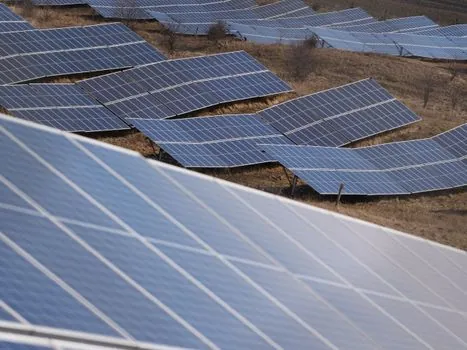
TOPCon delivers higher cell efficiency (22–24%) and lower degradation versus mono-PERC (20.5–22%) but carries a 5–15% price premium in India, while HJT offers comparable or higher efficiency with a different cost stack and lower-temperature processing that is still capacity-constrained relative to TOPCon [S5].
For utility-scale plants where LCOE dominates, TOPCon's 1.5–2 point efficiency advantage over PERC plus bifacial gain offsets the 5–15% module premium in most insolation regimes, which is the standard economic case Indian EPCs use to justify TOPCon over PERC in 2026 builds [S4][S5].
Reliability fault lines: LECO and damp-heat failure modes
Research from Oxford and Changzhou found that the Laser-Enhanced Contact Optimization (LECO) process can cause massive increases in series resistance after reverse bias cycling, a failure mode that may lead manufacturers to halt LECO adoption or invest in redesign and slow rollout of high-efficiency TOPCon lines [S1].
A University of New South Wales (UNSW) study shows EVA-encapsulated TOPCon modules under humid heat accelerate acetic acid formation, corroding metallization and hurting fill factor, so modules may not meet durability expectations in tropical and monsoon climates and manufacturers might shift to POE or new metallization processes at higher cost [S1].
These two failure modes are the main engineering reasons TOPCon buyers in 2026 should still verify IEC 61215 plus IEC 61730 salt-mist and ammonia certifications on a per-supplier basis rather than rely on technology class alone, since damp-heat sensitivity is supplier- and encapsulant-dependent, not just cell-architecture-dependent [S1].
Where TOPCon does not win: use-case fit and limits
For very small residential rooftops where the bill-of-materials premium per watt dominates, the 5–15% price premium of TOPCon can be harder to amortize, and legacy mono-PERC remains a defensible choice on pure payback math [S5].
For research and tandem-pilot lines targeting 28%+ cell efficiency, the relevant comparison is no longer TOPCon versus HJT but TOPCon-as-bottom-cell versus all-HJT bottom cells, with TOPCon-based bottom cells offering competitive advantages for potential mass production of perovskite/Si tandems on existing n-type lines [S3].
Coherent Market Insights projects Asia Pacific to lead the global TOPCon solar cell market in 2026 with a 37.8% share, while North America holds a 19.5% share as the fastest-growing region [S1].
Standards, sourcing signals, and 2026 cost benchmarks
TOPCon is not governed by a single dedicated IEC standard; product qualification still flows through IEC 61215 (design qualification) and IEC 61730 (safety) for crystalline silicon modules, with PN junction classifications following the semiconductor-device (H01L) patent class that dominates the TOPCon IP corpus [S1][S2].
The Indian policy environment treats TOPCon as the leading commercial technology since 2023 with nearly 60% share, but India's domestic cell cost remains structurally above global benchmarks due to higher capital and consumables costs, so imported TOPCon cells still set the price reference in Indian tenders [S4].
For buyers comparing domestic versus imported TOPCon, the verifiable next nodes to track are (a) the IEC revision cycle for damp-heat and PID test sequences relevant to n-type modules, (b) perovskite-on-TOPCon tandem pilot line announcements from JinkoSolar, Trina, and LONGi, and (c) the India ALMM list deltas between mono-PERC and TOPCon capacity, all of which will re-price the technology premium within the 11.8% CAGR forecast window [S1][S3][S4][S5][S6]. For adjacent supply-chain pressure on glass and encapsulant costs that feed the TOPCon bill of materials, see the Solar PV Glass 2026 capacity and pricing map.
The underlying component specifications are covered under load cell, load cell module, and pressure transmitter.