Selecting a truck scale for an e-commerce fulfillment center comes down to three non-negotiable gates: weighing capacity matched to the heaviest loaded vehicle plus a 5%–20% safety buffer, platform length exceeding the longest wheelbase by 1.5 m, and OIML R76 or NTEP certification when shipments are billed by weight [S2][S5].
For high-volume distribution hubs processing 200+ outbound trucks per day, full-length static weighbridges with axle-specific load cells dominate the spec sheet, while weigh-in-motion (WIM) systems are reserved for screening lanes where throughput outweighs the need for legal-for-trade accuracy [S4].
Capacity, Vehicle Weight, and the 5%–20% Buffer Rule
The foundational formula is Truck Tare Weight + Maximum Payload ≤ Scale Capacity, with industry guidance recommending a 5%–20% capacity buffer above calculated peak load to absorb growth, mis-declared freight, and axle-level overloads [S2][S5]. A 15-ton tri-axle truck hauling a 30-ton aggregate payload therefore demands a 45-ton scale minimum, with future-proofing pushing the spec to 50–60 tons [S2].
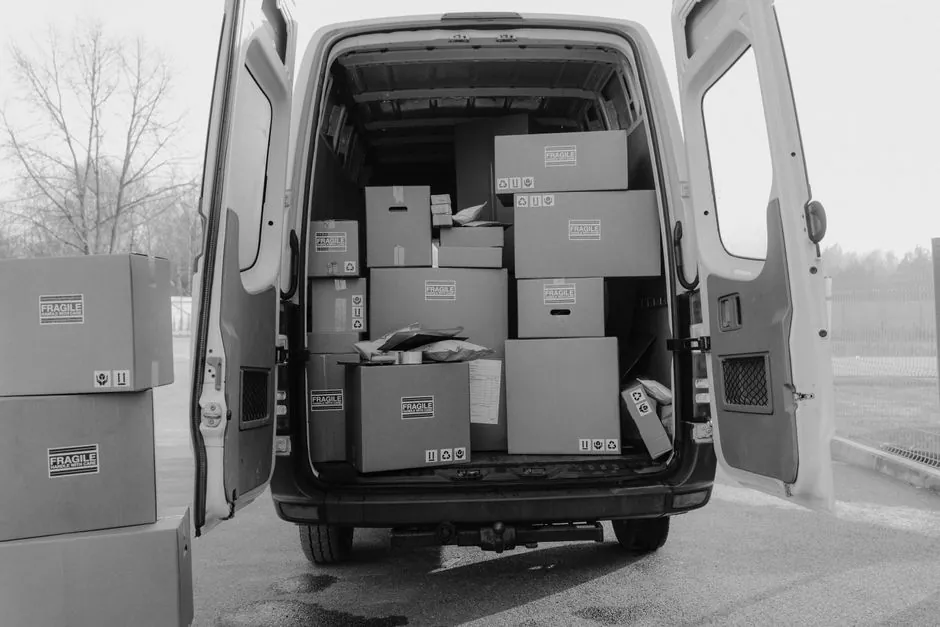
For e-commerce fleets, the heaviest realistic unit is a fully-loaded 40 ft box truck at approximately 36,000 lb (16.3 t) gross, which puts the lower spec line near 18 t and the buffered spec near 20–22 t. Full-length heavy-duty truck scales can reach 280,000 lb (140 t) capacity in extreme configurations, but that headroom is wasted in a parcel network where trailers are rarely over 80,000 lb GVWR [S4].
Buffer selection is a function of growth trajectory and commodity mix: parcel-only operations sit at the low end of the 5%–20% band because SKU weights are tightly bounded, while mixed-load B2B hubs handling palletized industrial freight should sit at the upper end to absorb seasonal spikes and palletization variance [S5].
Platform Dimensions, Installation Type, and Site Geometry
Platform length must exceed the longest vehicle wheelbase by 1.5 m to keep both axles on the deck during a static weighing, and platform width must surpass the vehicle track width by 0.8 m to prevent wheel overhang that distorts the load distribution [S2]. Standard full-length decks run 60–120 ft (18–37 m) long; for parcel fleets with day-cab tractors and 28 ft pup trailers, a 60 ft platform is the practical minimum [S4].
Four installation configurations cover the e-commerce use cases: pit-mounted (flush deck, lowest civil cost over time but requires drainage), surface-mounted (above-grade, faster install, needs approach ramps), low-profile (reduced deck height for tight sites), and portable (mobile steel decks for multi-site operations or seasonal overflow) [S2]. Fulfillment centers with constrained dock aprons typically specify low-profile or pit-mount; temporary cross-dock operations during peak season use portable decks rated for the same axle loads as permanent installs.
Soil bearing capacity for the foundation must fall in the 1,500–2,500 psf range per civil guidance, and approach ramps should not exceed ½ inch per foot slope to prevent load shift during entry and exit [S4]. Drainage is a recurring failure mode, not a finishing detail: standing water around the pit accelerates corrosion and load-cell drift.
Scale Type Comparison: Static, Multi-Axle, and WIM for Fulfillment

Single-axle scales deliver the slowest throughput because the vehicle must stop multiple times, but they remain common for compliance checks where axle-by-axle weight capture is mandatory; capacity ceiling sits near 130 tons [S4]. Full-length static scales trade multiple stops for one stop and are the legal-for-trade default for billing by weight, running 60–120 ft long with medium processing speed.
Multi-axle scales capture individual axle weights alongside gross vehicle weight and are the right pick when axle-load regulations drive the process, such as cross-border drayage or returns processing where overloaded pallets are common [S4]. Weigh-in-motion systems offer the fastest throughput because the truck never stops, but the legal-for-trade accuracy floor is generally below OIML R76 / NTEP tolerances, so WIM belongs on screening or bypass lanes, not on the billing deck [S4].
For an e-commerce hub running 200+ trucks per day, the typical configuration is one legal-for-trade full-length deck plus one WIM pre-screen lane; for 50–100 trucks per day, a single full-length deck with a bypass lane is sufficient [S4].
Accuracy, Certification, and the Legal-for-Trade Question
Weigh-scale pallet jacks integrated into the lift-and-transport cycle hit ±0.1%–0.5% accuracy using 2–4 strain-gauge load cells bonded to the fork assembly, but those are pallet-class instruments, not truck scales, and do not satisfy legal-for-trade requirements for billing [S3].
For legal-for-trade billing at the dock door, the deck indicator and load-cell chain must be OIML R76 compliant in EU jurisdictions or NTEP Handbook 44 compliant in the US; both standards govern accuracy class, repeatability, and environmental sealing, and they are the only universally accepted trade certifications on truck-scale procurement specs [S5]. Indicators should support data logging, remote transmission to the WMS, and sealed audit trails for dispute resolution [S2].
Anti-fraud features such as sealed junction boxes, encrypted indicator firmware, and automatic vehicle identification (AVI) integration are no longer optional at high-volume hubs because billing disputes and overload tolerance abuse are routine operating concerns [S2][S4].
E-commerce Use Cases: Receiving, Cross-Dock, and Returns

Receiving docks benefit most from full-length static scales because inbound verification against purchase orders and ASN weights requires legal-for-trade accuracy; weight variance above 0.5% against the manifest is a flag for short-shipment claims. Cross-dock operations prioritize throughput, so WIM pre-screening plus spot-check static weighing is the standard pattern. [S3]
Returns processing is the hidden driver of truck-scale adoption in e-commerce: returned pallets are weighed both for restocking inventory and for customer refund validation, and the weight data feeds back into the WMS for SKU-level reconciliation. Inside the warehouse, weigh-scale pallet jacks complement the truck scale by capturing per-pallet weight during put-away, saving 30–60 seconds per pallet and, at 500 pallets/day, recovering 4–8 operator hours daily per published operational data [S3].
Adjacent automation such as carton erecting machine selection for warehouse automation: 5 spec gates shares the same upstream weighing and dimensioning data feed, and a truck scale spec'd without a WMS/EDI output interface will create a manual hand-off bottleneck at the dock door.
Corrosion, Environment, and Lifecycle Costs
Standard Munsell N6.5 gray coatings are sufficient for most inland fulfillment yards, but coastal or chemical-exposed sites require hot-dip galvanization or specialty epoxy coatings to reach a 15–20 year deck life [S2]. Load cells in washdown or outdoor pits should be stainless steel, hermetically sealed to IP68/IP69K, and potted against moisture ingress, because load-cell failure is the most common field service event on any weighbridge.
Lifecycle cost dominates purchase price: civil works, foundation, drainage, and indicator integration typically double the upfront cost of the deck itself, while scheduled calibration (annual for legal-for-trade) and load-cell replacement every 7–10 years are the recurring line items. The truck scale category in the spec encyclopedia covers the full taxonomy from full-length decks to portable axles, and a side-by-side review of installation types is in the encyclopedia entry on dump truck on-board weighing, which uses similar load-cell chains.
Selection Criteria Matrix for E-commerce Fulfillment

Four decision criteria separate the main options: legal-for-trade accuracy, throughput (trucks/hour), civil-works cost, and best-fit facility size. Full-length static weighbridges lead on accuracy (OIML R76 / NTEP) and throughput (60+ trucks/hr with proper lane design) but carry the highest civil cost; multi-axle static scales lead on axle-level compliance data at medium throughput; WIM systems lead on raw throughput but trail on legal-for-trade accuracy; portable axle scales lead on civil cost and flexibility but trail on every other axis. For a 50–100 truck/day fulfillment hub, one full-length deck plus a bypass lane is the cost-optimized default; for 200+ trucks/day, add a WIM pre-screen lane and a second static deck for redundancy. [S4]
Procurement Red Flags and Field Failure Modes
Three failure patterns repeat in field data: undersized capacity (no buffer for peak SKUs), undersized platform (wheelbase overruns the deck during off-center entry), and missing drainage (water in the pit destroys load cells within 3–5 years). Each is preventable at the spec stage but expensive to remediate post-install. [S5]
Two trackable signals confirm the spec was right: (1) annual calibration drift stays under ±0.1% across the first 24 months, indicating foundation stability; (2) truck queue time at the scale averages under 90 seconds during peak, indicating capacity and lane count matched throughput. Both numbers are recorded automatically by the indicator's data log and should be on the post-installation acceptance test report.
Detailed specification references: reach truck.