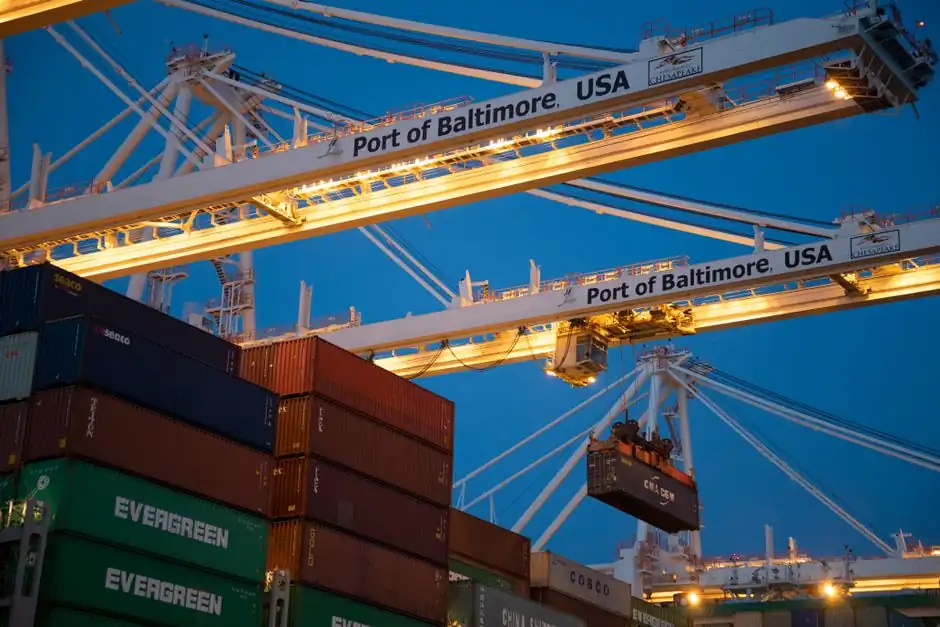
A 2026 port-logistics packing cell sized to a 40-foot container turnaround needs a double-station full-servo carton erector rated 80-180 pcs/min on B-flute (3 mm) or C-flute (4 mm) corrugated, with CE certification and a hot-melt tank of 15-25 kg for sustained shift running [S1][S4].
The selection is driven by five spec gates, throughput band, blank size envelope, drive architecture, changeover time, and downstream hand-off, and applies across e-commerce micro-fulfilment, FMCG mid-volume lines, and container-port export packers that handle EU-bound palletised goods [S3]. Lines below 20 cartons/min rarely justify a dedicated erector over manual or semi-auto build-up, so any port-side line running corrugated blanks at 30+ cpm is in scope for automatic selection [S3].
Speed Bands and the 1.3× Sizing Rule for Container Yards
The 2026 China-supplier market splits carton erectors into two throughput clusters: 15-40 cartons/min for entry-level case erectors aimed at e-commerce and short-run packing lines, and 80-180 pcs/min for PLC-controlled high-output lines such as the Zhixin ZX-1200 food-container system [S1]. For a port-logistics packer feeding a container-stuffing station, the erector should be specified at roughly 1.3× the net downstream case-packer throughput, so the erector never starves the line during recovery from a micro-stop [S1]. The published upper bound for current-generation Chinese OEM food-container lines is 180 pieces/minute on the Zhixin ZX-1200 under PLC control, which is the realistic ceiling when blank-feed magazine, glue pre-warm, and flap-fold cycles are all in steady state [S3]. Buyers running both shelf-ready shippers and large club-store trays usually need two erector sizes or a wide-format machine, because most mid-range erectors cover 200-600 mm length, 150-400 mm width, and 80-350 mm height, and specifying the wrong envelope is the single most common reason a new erector fails its SAT [S3].
Entry-tier 15-40 cpm machines list at roughly US$3,500-6,000 FOB on Made-in-China, while high-output 80-180 cpm lines such as the ZX-1200 sit in a different price bracket, with the wider specification envelope (board thickness, blank size, robot-arm versus mechanical-sucker pick, inline sealing) being what separates a US$3,500 case former from a US$60,000+ robotic top-load case packer [S1].
Carton Board Grade, Blank Type, and the Hot-Melt Decision
Most 2026 Chinese automatic carton erecting machines accept corrugated board in B-flute (3 mm) and C-flute (4 mm) as standard, with E-flute (1.5 mm) and double-wall BC-flute (6-7 mm) as configurable options on the higher-tier machines [S1]. Blank-size envelope for the entry tier sits around L 200-500 mm × W 150-400 mm × H 100-400 mm; the high-output tier extends to L 600 mm × W 500 mm × H 500 mm, and lock-style or 4-corner-glue food boxes sit in a separate machine family that overlaps with carton box die-cutting and folder-gluer lines [S1].
Hot-melt adhesive versus cold glue is the second material lever, and for port-logistics shift running, hot-melt is the safer default: PVA cold-glue open-time drops below 1 second on fast conveyors, while EVA hot-melt at 160-180 °C gives 3-5 seconds of tack for 4-corner carton closing [S1]. Hot-melt tank capacity typically runs 4-8 kg on entry machines and 15-25 kg on high-output lines, and the number of glue guns (4-6 on a standard 4-corner closer, 8-10 on a 6-corner with handle-attachment) should be written into the RFQ because specifying the wrong glue system is the most common cause of poor carton-square formation and downstream case-packer mis-picks [S1]. Seal pull-strength, typically specified at >6 N/cm for shippers destined for parcel networks, is the verifiable acceptance criterion, not the OEM's "strong seal" marketing line [S3].
Drive Architecture: Servo vs Mechanical, and the Changeover Tax
PLC program control is the current OEM baseline on Chinese-built carton erectors, with the Zhixin ZX-1200 line running a full PLC program for repeat format production [S3]. Double-station full-servo carton erecting machines are the defining engineering step up from single-station units, with ZX-series double-station models holding CE certification for EU-bound packaging per Zhixin product documentation updated 2026-07-22 [S4]. Servo-driven blank pick, flap-fold, and bottom-seal stations have largely replaced cam-and-pneumatic indexing on 2026-era machines, cutting mechanical changeover from 20-30 minutes to under 5 minutes on machines with recipe recall [S3].
Changeover time is the gate that procurement routinely underweights: a machine running 2 SKUs/day loses 40-60 minutes of throughput to setup, which at 120 cartons/min is 4,800-7,200 cartons of give-back, so recipe-driven servo changeover, HMI-stored format parameters, and quick-release blank magazines are the three concrete features to score during a FAT [S3]. A carton erecting machine that spends 25 minutes reaching operating temperature at start-up is a poor fit for a plant running two shifts with quick changeovers, even if its steady-state throughput is competitive, so hot-melt pre-warm time belongs on the spec sheet next to glue pattern control (slot die vs bead) [S3]. The carton erecting machine reference page indexes the machine types against these board and glue permutations for port-side spec writers.
Port-Logistics Integration: Conveyors, Coding, and Palletiser Hand-off
For exporters, integrating carton erectors with conveyor systems, labeling machines, and downstream sealers is the only way a port-side line keeps up with vessel cut-offs [S2]. A standalone automatic case erector sits between the blank magazine and a coding machine or filling station, while a robotic top-load case packer extends that scope with pick-and-place, hot-melt closure, and inline sealing as one integrated module [S1][S2]. Inline carton erecting on corrugated converting lines runs at 60-300 m/min across web widths of 1400-3200 mm on 2/3/5/7-layer board, but this class does not stand alone, the erector feeds from a flexo printer slotter folder gluer upstream and delivers erected blanks downstream toward coding or filling, with DESSION catalog data (2026-06-20) showing 18+ years of Cangzhou-based manufacturing and exports to 50+ countries [S4].
The shrink-wrapping and palletising stage is the binding constraint on the erector's nameplate throughput: throughput on a PLC-controlled erector like the ZX-1200 reaches 180 pieces/minute, but for a 2026 line build, throughput should be matched to the slowest downstream station, a shrink tunnel or a filling-machine infeed, not to the erector's nameplate, because the bottleneck always migrates downstream once erected blanks queue [S3]. The logistics packaging reference page maps these hand-off points for port-side line builders. For buyers weighing pharma-grade or cold-chain variants, a dedicated cold-chain spec gate review covers refrigerated pack cells, and the broader cutting machine and core machine categories matter where the erector feeds a slitter or a reel-handling station upstream of the blank magazine.
Selection Decision: Single-Station vs Double-Station vs Inline
Comparing the three structural classes on four decision criteria clarifies when each pays back in a port-logistics context: [S4]
<strong>Single-station compact (ZX-550 class, 30-50 pcs/min, 1900×1000×2200 mm, 900 kg, 6 kW at 380 V, 210-400 g/m² paper).</strong> Footprint under 2 m², manual mold changeover, optional 2- or 4-gun hot-melt glue sprayers. Suits only a low-volume feeder or a backup line; under-sized for a 40-foot container yard [S4].
<strong>Double-station full-servo (ZX-1200 / ZX-1600 / ZX-2000, 80-180 pcs/min, CE-certified for EU).</strong> Servo control replaces mechanical cam timing, which the OEM states reduces forming errors, material waste, and unplanned downtime, with smoother continuous run cycles and faster changeover between box styles because servo axes are re-referenced electronically [S4]. The default for port-logistics FMCG and food-container packers.
<strong>Inline erector on a corrugated converting line (60-300 m/min, 1400-3200 mm web, 2/3/5/7-layer board).</strong> Dominant format for industrial-scale converters; upstream flexo printer slotter folder gluer, downstream coding or filling; only relevant when the port operator also runs an integrated sheet-to-shipper plant [S4].
For most port-logistics buyers, the decision collapses to: pick double-station full-servo if container throughput is the driver, pick single-station only as a secondary cell for small SKUs, and pick inline only if the erector is one stage inside an existing corrugated line.
Common Failure Modes and Acceptance Gates
The four failure modes a port-side engineer should write into the SAT are well-documented across the 2026 OEM and integrator sources. Jamming is solved by regular cleaning and lubrication of moving parts and confirming the correct box size is set on the HMI [S2]. Inconsistent sealing is solved by checking the adhesive applicator and adjusting settings based on box materials, which is why slot-die versus bead pattern control and pre-warm time belong on the spec sheet, not in marketing collateral [S2][S3]. Frequent changeovers are mitigated by investing in models with quick-change capabilities, with the target being under 5 minutes of recipe recall on a servo-driven line, against 20-30 minutes on a cam-and-pneumatic legacy machine [S2][S3]. Poor carton square formation is solved by confirming hot-melt tank temperature is in the 160-180 °C window and that open-time is sufficient for 4-corner closure, the single most common cause of downstream case-packer mis-picks [S1].
The user-friendly interface is not a soft requirement: machines equipped with intuitive touch screen interfaces enable operators to monitor performance and make adjustments with ease, and advanced carton erectors feature built-in diagnostics that alert users to mechanical issues, so HMI-stored format parameters and recipe recall should be verified on the FAT floor, not deferred to commissioning [S2][S3].
Trackable signals to watch over the next two quarters: CE certification audits on ZX-series double-station lines for EU-bound food and pharma packaging, hot-melt tank capacity creep above 25 kg on the next OEM generation, and recipe-driven changeover dropping under 3 minutes as servo axis counts increase on 2027 platforms. A pharma cartoning machine spec gate review and a cold-chain carton erector gate review are the closest adjacent references for regulated port-side pack cells.