
Remote-seal systems add a diaphragm, fill fluid, and usually a capillary to isolate a pressure transmitter, while direct mounting places the instrument at the process connection.
The selection depends on temperature, corrosion, blockage, pressure rating, response time, and whether the extra components can be maintained without compromising measurement accuracy.
Choose by process severity, not instrument type
A remote seal is justified when the measured medium would damage or disable a directly connected sensor. Siemens identifies out-of-limit process temperature, corrosion, high viscosity, solids, freezing, fibrous or heterogeneous media, crystallization or polymerization, and cleaning requirements as reasons to isolate the measuring instrument [S4].
Direct mounting is normally preferable for clean, noncorrosive, nonfouling media when the transmitter can tolerate the process temperature and pressure. It removes the diaphragm-seal and capillary interfaces from the measurement chain, reducing installation complexity and potential drift.
The distinction is physical, not functional. A remote seal does not inherently improve accuracy; it transfers process pressure through an incompressible fill fluid to the measuring element [S3]. A direct-mounted transmitter senses the process pressure through its own wetted sensing element. For differential-pressure level measurement, the comparison also involves one or two sealed process connections and the transmitter’s high and low sides.
Remote-seal architecture changes system behavior
A remote-seal system contains a transmitter, one or two remote seals, an appropriate transmission liquid, and either direct mounting or a capillary connection between seal and transmitter [S4]. Siemens supports remote seals for SITRANS P320/P420 pressure and differential-pressure transmitter configurations, with one or two seals and filling liquid as defining system elements [S2].
A capillary is not simply extra pipe. It reduces the influence of hot process fluid on the transmitter by placing additional volume between the process and the instrument. The same document identifies two consequences: capillary length affects response time and system temperature response [S4]. The capillary line influences the response time and temperature response of the complete remote seal system [S4].
Rosemount describes a “Tuned-System” assembly as an asymmetrical remote-seal arrangement with one seal directly mounted on the transmitter’s high side [S1]. This is not equivalent to a conventional remote installation with two long capillaries. It reduces one side’s connection length, but the assembly still requires compatible seals, fill fluid, and matched range and temperature ratings.
Compare the two mounting options
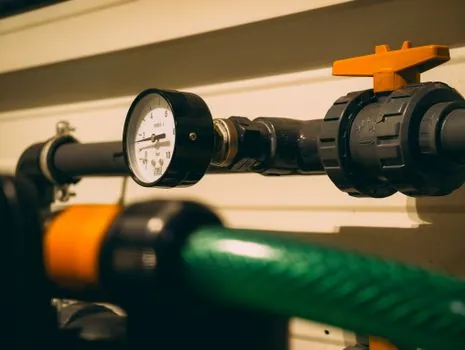
On installation effort, direct mounting normally wins because it has fewer interfaces and no capillary system. On process isolation, remote sealing wins when diaphragm material can handle corrosive, viscous, hot, or solids-bearing media without allowing them into the transmitter [S3][S4].
On dynamic response, direct mounting normally avoids the additional compliance and transport delay introduced by a long capillary. Siemens explicitly states that the capillary influences response time [S4]. On maintenance, a direct-mounted transmitter is usually easier to remove and compare because there is no fluid-filled capillary assembly to drain, flush, or keep equalized.
On measurement uncertainty, neither configuration is automatically superior. Direct mounting avoids seal-related fill-system effects, while a remote system introduces diaphragm characteristics, fill-fluid behavior, installation geometry, and capillary effects. Actual performance must be taken from the assembled system specification and test conditions, not inferred from transmitter accuracy alone.
Use remote seals for aggressive service
Corrosive fluids favor a remote seal when the wetted diaphragm can use a suitable alloy or polymer while the transmitter remains isolated. Common seal materials include stainless steel, carbon steel, Hastelloy C-276, and PTFE [S5]. The material choice must be based on fluid composition and temperature, because a compatible diaphragm does not make an incompatible fill fluid or capillary acceptable.
High viscosity and solids-bearing services favor a flush or extended diaphragm. A flush diaphragm reduces projection into the process connection, limiting the opportunity for material buildup around the sensing area. This geometry is more suitable than an exposed transmitter nozzle for slurries and viscous fluids [S3].
High-temperature service favors remote installation with sufficient capillary length to limit heat transfer to the transmitter, provided that the seal, fill liquid, capillary, and transmitter all remain within their rated operating ranges [S4]. For DP transmitters, both sides need compatible thermal and hydraulic treatment; matching the seal materials alone does not establish a valid system.
Sanitary service favors a sanitary diaphragm seal with no dead volume and a quick-release clamp. A compact pencil-style instrument can solve a separate nozzle-access problem, as explained in pencil-style pressure transmitters, but it does not replace corrosion or thermal isolation.
Respect pressure and temperature ratings
One published seal comparison states that threaded metal seals can handle 2,500–5,000 psi and PTFE seals up to 1,500 psi, while elastomer or non-metal seals can operate to 100 psi [S5]. Those figures are stated at 100°F, or 38°C, and cannot be carried into a hotter service without manufacturer confirmation [S5].
These figures are useful only for preliminary screening. The assembly rating is the intersection of the transmitter rating, seal rating, process connection rating, capillary rating, fill-fluid limits, and required safety margin. A valid specification should identify seal material, connection type, pressure and temperature limits, fill fluid, capillary length, and the relevant transmitter model.
For corrosive or sanitary service, use the diaphragm seal data as part of the assembled instrument specification. For DP level systems, specify the differential pressure transmitter and both seal legs as one assembly. Independent component ratings do not guarantee matched static zero or span performance.
Plan installation and failure exposure
Direct-mounted transmitters minimize failure points because the process boundary and transmitter connection are integrated. Remote systems add at least one diaphragm, fill volume, and seal-to-transmitter interface; a remote DP system also needs coordinated high- and low-pressure connections [S4]. Leakage, trapped or lost fill fluid, unequal capillary geometry, and thermal gradients can affect measurement or safe operation.
Do not loosen or remove flange bolts while an Emerson DP transmitter assembly is in service. Its reference manual requires all four flange bolts to be installed and tightened before pressure is applied, and warns that improper manifold assembly can damage the sensor module [S1]. For hazardous installations, the manual requires fully engaged transmitter covers, suitable field-wiring practices, and approval labeling consistent with the operating atmosphere [S1].
Remote systems are not ideal where frequent instrument comparison, rapid replacement, or unrestricted access to the transmitter is essential. Direct mounting is also awkward where vessel insulation, nozzle geometry, vibration, personnel access, or ambient conditions prevent the transmitter from being mounted safely. In those cases, remote mounting can reduce installation stress even when process isolation is not required.
Document the selection for procurement

The purchase specification should state whether the transmitter is direct-mounted or remotely sealed, the number of seals, high-side and low-side arrangement, process connection, diaphragm material, fill fluid, capillary length and material, operating pressure, operating temperature, output signal, hazardous-area certification, and required accuracy under assembled conditions. Emerson manual 00809-0100-4002, Rev FD, March 2026, provides installation and safety guidance for Rosemount DP level transmitters and diaphragm-seal systems [S1].
Verify every wetted material against the process composition and temperature, and verify the transmitter’s own limits against the residual thermal exposure at the mounting location. If the process can plug, polymerize, crystallize, freeze, or foul the diaphragm, plan inspection access and a defined cleaning strategy before procurement.