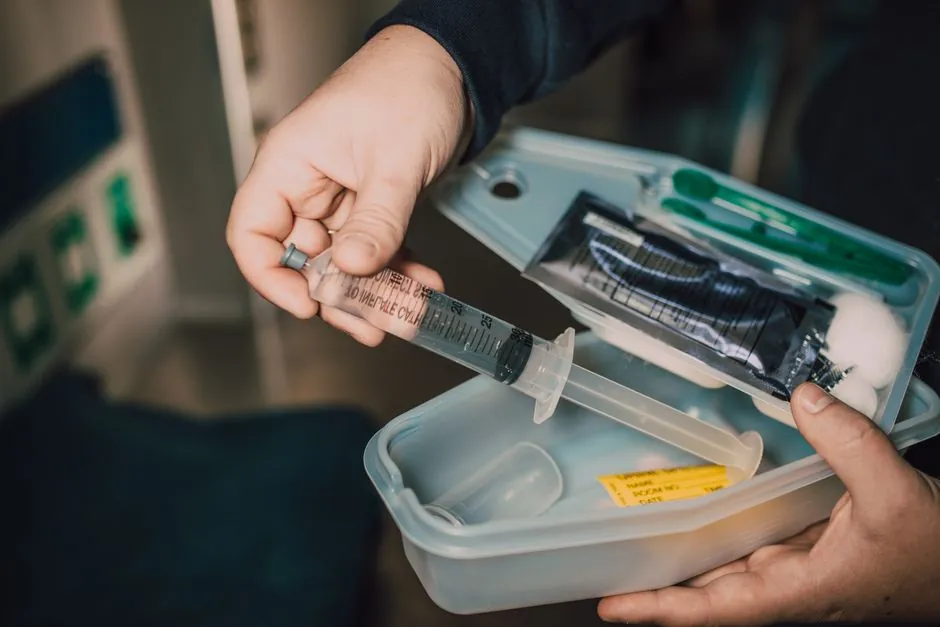
Choose a Type III kit for portable indoor or outdoor work where environmental damage is unlikely; choose Type IV where mobile industrial use exposes supplies to significant moisture, corrosion, impact, or rough handling [S1][S2].
Both ratings describe the container, while Class A or Class B describes the contents, so a Type III container and a Type IV container may carry the same class of fill [S2].
Type III and Type IV differ at the damage-risk boundary
Type III is intended for portable use in mobile, indoor, or outdoor settings where damage to the supplies from the environment is not likely. Its container must be mountable and have a water-resistant seal, making it suitable for service vehicles, mobile crews, schools, and mixed indoor/outdoor facilities [S1][S2].
Type IV addresses a materially harsher duty cycle: mobile industries and outdoor work where environmental damage and rough handling are significant risks. Its container must be mountable and meet the applicable corrosion, moisture, and impact-resistance requirements [S2]. Type IV kits are portable, intended for mobile industries and outdoor use where damage is a real risk, and must be mountable while meeting the standard's corrosion, moisture, and impact requirements [S2].
The practical distinction is not simply outdoor versus indoor. It is the likelihood and severity of physical damage. A Type III kit can be exposed to rain or dust during mobile use, but it is not the proper selection when a kit may be dropped, struck, crushed, stored in a wet industrial vehicle, or exposed to corrosive conditions.
Use a direct criterion comparison for procurement
For mobility, both Type III and Type IV are portable. For mounting, both must support mounting. Type III adds a water-resistant seal for indoor or outdoor mobile use where environmental damage is not likely, while Type IV requires stronger protection against corrosion, moisture, and impact when significant damage is plausible [S2].
Cost should follow exposure, not inventory habit. Type III is the rational minimum for mobile indoor/outdoor duties with low damage risk, while Type IV is the defensible specification where the transport and operating environment can ruin or disable a standard case.
Choose contents separately from the container
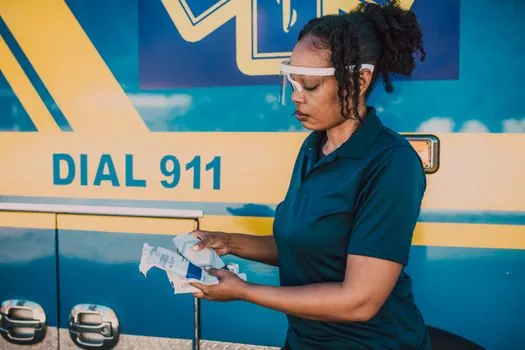
Class A is intended for lower-risk workplaces such as offices and retail spaces and is described with 19 essential item types. Class B is intended for higher-risk work such as manufacturing, warehousing, and construction and includes 21 item types, with greater quantities and additional supplies for more serious injuries [S3].
That means Type III versus Type IV does not determine whether a kit has the treatment capability required for the workforce. The label should identify both dimensions, for example a Type III container with a Class A or Class B fill [S2]. Workplace hazard assessment remains necessary because employers may need supplies beyond the baseline set selected by risk category [S3][S4].
The 2021 revision of ANSI/ISEA Z308.1 retained the Class A and Class B classification, added a mandatory foil blanket, clarified tourniquet requirements, expanded guidance for bleeding-control kits, and strengthened guidance for workplace hazard assessment [S4]. A foil blanket can support hypothermia treatment, act as a windbreaker, or provide an emergency waterproof wrap [S4].
Type III fits controlled mobile work, not general-purpose ruggedization
Type III kits are portable for indoor or outdoor mobile use, have a water-resistant seal, and include a way to mount them [S2]. Its defining construction feature is the water-resistant seal, while its defining operating limit is that damage from the environment is not probable [S1][S2].
Type III is not the right specification for a construction site, truck tailgate, plant floor, or other setting where the kit can be struck, dropped, contaminated, or stored under severe weather. Commercial summaries specifically limit Type III to environments without a high potential for environmental damage [S5]. The first aid kit selection should therefore be driven by the worst credible handling event, not the average day.
Mountability does not make a Type III case rugged. It permits secure placement, such as a wall bracket or vehicle mount, reducing movement and exposure. It does not change the container classification from Type III to Type IV.
Type IV is the choice for mobile industrial exposure

Type IV is intended for mobile industries and outdoor settings where damage from the environment and rough handling is a significant possibility. Its enclosure must be mountable and satisfy corrosion, moisture, and impact-resistance requirements under ANSI/ISEA Z308.1-2021 [S2].
Type IV kits are portable, intended for mobile industries and outdoor use where damage is a real risk, and must be mountable while meeting the standard's corrosion, moisture, and impact requirements [S2]. The additional enclosure performance is the reason to specify Type IV, not a claim that every Type III case is inadequate outdoors. Type III remains valid for outdoor use where the risk of supply damage is not likely [S1][S2].
For confined-space, industrial, or vehicle-based programs, the confined space versus general-purpose first aid kit guide is useful for separating treatment-content requirements from enclosure durability. Verify the actual mounting method, exposure history, and contents before assigning a Type IV rating to a supplier’s product description.
Validate the label, contents, and inspection cycle
A valid procurement record should state the container type, Class A or Class B fill, manufacturer, model or part number, and applicable revision of ANSI/ISEA Z308.1. Type and class are independent: either content class can be placed in any container type [S2]. Do not accept “ANSI-compliant” as a complete specification because it does not identify either decision dimension.
Check the complete kit rather than the case alone. For example, the listed Class B contents include 50 adhesive bandages, 4 sterile pads at 3 x 3 in., 4 trauma pads at 5 x 9 in., a 1 in. wide tourniquet, a 4 x 24 in. splint, and 2 triangular bandages at 40 x 40 x 56 in. [S4]. These figures show why a Type IV enclosure can still be paired with an inadequate fill if procurement treats durability and medical capability as one package.
Maintain the kit in an easily accessible location and inspect it frequently, replenishing used or expired supplies; some supplies have expiration dates [S4]. For a mobile Type III kit, include inspection of the seal and mounting hardware. For a Type IV kit, also inspect the case for impact damage, corrosion, moisture intrusion, closure damage, and degraded mounting points [S2].
Standards and procurement evidence must match the edition
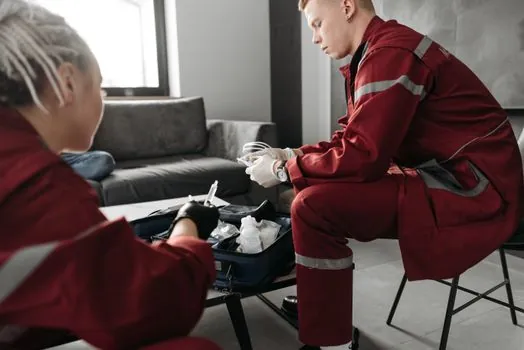
ANSI/ISEA Z308.1-2021 separates container type from contents class and defines the Type III and Type IV conditions summarized above [S2]. ANSI’s coverage of Z308.1 identifies Type III as a portable indoor/outdoor classification where environmental damage to supplies is not probable [S1]. The supplied material also references ANSI/ISEA Z308.1-2026, but the detailed container definitions in [S1] are not reproduced sufficiently there to use its full text as a substitute for the 2021 requirements.
USACE EM 385-1-1 states that Type I kits contain the minimum fill in Table 3-1 and that Type II, Type III, and Type IV kits have additional fill provisions [S6]. For a project specification, obtain the applicable standard edition and verify the minimum fill, labeling, mountability, sealing, and environmental-resistance provisions directly rather than inferring them from a marketplace listing.
The next procurement checkpoint is the exposure assessment: record the kit’s location, mounting method, handling frequency, moisture exposure, corrosion exposure, and likely impact severity. Type III is the defensible choice when damage is not probable; Type IV is the defensible choice when significant mobile industrial exposure makes failure of a lesser case credible.