
Type IL portland-limestone cement is now the most common blended hydraulic cement shipped in North America, and the American Concrete Association tracks its national share above 60% [S4].
Type IL is an ASTM C595 product containing 5-15% interground limestone, ground finer than Type I (typical 450-500 m2/kg versus 350-420 m2/kg for Type I/II) and is accepted by 45 state DOTs in varying scope [S3]. This article lays out the spec differences, the performance trade-offs, and the decision matrix a specifier or producer needs in 2026.
Standard, Composition, and Limestone Cap
ASTM C150 governs Type I and Type I/II, capping limestone content at 5% in those types [S1]. ASTM C595 governs Type IL and allows 5-15% interground limestone, with the same clinker base as Type I/II but a finer finished grind [S2][S3].
Because the additional limestone replaces a portion of energy-intensive clinker, CO2 emissions drop by roughly 10% per ton of cement at 15% limestone versus an equivalent Type I baseline; the same shift also removes about 94,000-146,000 tons of CO2 per million tons of cement produced [S1][S3]. ASTM C595 cements are designed to satisfy ASTM C150 performance criteria when proportioned and cured correctly, and sub-designations such as Type IL(MS) for moderate sulfate resistance are available under the same C595 family [S1][S7].
A specifier comparing the two side by side on the relevant criteria would see: standard body (ASTM C150 vs C595), limestone cap (5% vs 5-15%), typical fineness (350-420 vs 450-500 m2/kg), sulfate-resistant variants (Type V vs Type IL(MS)), and 28-day strength (matched when properly proportioned). For an overview of where portland cement sits in the broader binder family and how cement concrete performance is graded, the linked encyclopedia pages cover the baseline chemistry.
Fresh Concrete Behavior: Bleed, Set, and Finishability
The Indiana DOT has measured an average 10% reduction in setting time for PLC mixes compared to OPC at equivalent w/c, while producers consistently report less bleed water on the slab [S5]. Finer limestone improves particle packing but raises surface area, so net water demand depends on the specific source [S5].
In hot weather, PLC mixes can set faster; in cool weather, hydration can lag Type I. Contractors interviewed in the field describe the mix as "thirstier" and "stickier," with surface behavior that punishes late water addition and over-finishing [S1][S4]. For slab and paving work, this means holding the ticket slump, watching the surface moisture rather than the clock, and tightening curing windows. Producers have responded with SCM ternary blends (limestone plus fly ash, slag, or pozzolan) to recover workability without sacrificing the carbon reduction.
Hardened Properties: Strength, Durability, Modulus

At 28 days, properly ground PLC matches Type I in compressive strength, flexural strength, and elastic modulus, because the finer limestone accelerates early hydration and refines the pore structure [S5].
Durability data is broadly equivalent for freeze-thaw resistance, scaling, and chloride transport when the mix design is held constant [S5]. ASR (alkali-silica reaction) expansion can actually drop with PLC because the limestone dilutes alkalis and provides additional nucleation sites, which is one of the secondary benefits cited in DOT trial data [S3]. For aggressive chemical exposure (high sulfates, low pH, marine), Type V or Type IL(MS) blends should be specified rather than a generic Type IL, and the specifier should confirm local DOT acceptance for that exposure class [S3][S7]. Background on special cement variants covers the sulfate-resistant and low-alkali sub-categories that bracket Type IL.
Specification and Acceptance: DOT, ACI, and Owner Side
By 2024, TxDOT Item 421 lists Type IL as an allowed cement for classes A, B, E, S, P, CO, LMC, and SS, the same acceptance envelope as Type I/II, with only the high-early class C and a few specialty classes retaining Type I/II only [S3]. ACI 301, ACI 318, and ACI 350 have accepted Type IL as an approved material, and 45 state DOTs list it in some form [S3].
Owners and engineers who have not yet updated their project specifications should explicitly allow both C595 blended cements and C150 cements unless a project-specific performance requirement (such as a sulfate class or a low-alkali callout) rules out PLC [S1]. The single most common specification error in 2025-2026 is still writing "ASTM C150 Type I/II" without listing "or ASTM C595 Type IL," which forces producers to either substitute or import non-IL clinker, defeating both the cost and carbon savings.
Decision Matrix: When to Pick Type IL vs Type I
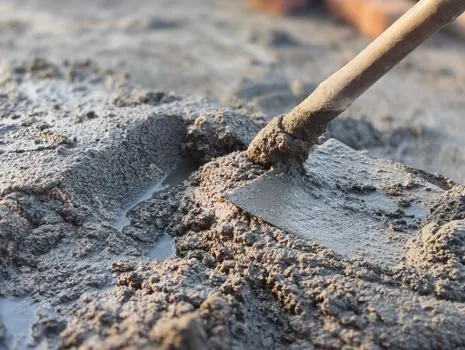
For general ready-mix structural concrete, pavements, buildings, and foundations with no aggressive exposure, Type IL is now the default in most North American markets and is the lower-carbon choice with no performance penalty at 28 days [S1][S4].
Specifiers should hold Type I/II or Type V when the project calls for sulfate resistance beyond moderate (S3 exposure class), when mass concrete heat-of-hydration limits dominate, when legacy specifications explicitly require C150, or when the producer cannot source Type IL within the required lead time. For tilt-up and architectural concrete, Type IL works but finishing crews must adjust timing and tool selection, because the surface dries faster and overworking will scale [S6]. For precast and high-early applications, Type III remains a separate decision outside the Type I vs Type IL axis. The decision rule is straightforward: choose Type IL unless the exposure class, the specification book, or the producer's supply chain forces a Type I/II or Type V baseline.
Field Execution Adjustments for Type IL
Finishers should treat Type IL as a new cement source, run a trial batch with project-specific materials, and confirm set, bleed, and strength before the first structural pour [S5].
Hold the mix water, avoid re-tempering at the chute, and use a mock-up or surface moisture meter to time floating and troweling, because the visual cues that worked with Type I no longer line up [S4][S5]. Adjust air-entraining admixture dosage to maintain the specified air content, and verify early strength with field-cured cylinders rather than relying on historical Type I/II maturity curves. Where SCMs are already in the mix (fly ash, slag, calcined clay), calorimetry on a trial batch gives the most reliable setting-time prediction.
What to Track Through 2026

Watch for additional state DOT moves that add Type IL to the remaining high-performance and mass-concrete classes, and watch ternary blend availability as producers combine limestone with slag or calcined clay for higher carbon cuts without losing finishing window. [S1]
Specifiers should also track the next round of ACI 318 exposure-class revisions, since the 2026 cycle is the first where Type IL(MS) is being written into the moderate-sulfate column on equal terms with Type II; the w/c limits and SCM ceilings tied to that exposure class will set the floor for Type IL use in chemical and coastal projects through the end of the decade.
Background reading: Portable vs Bench-Mounted Stud Welder Power Units: Spec Decision.