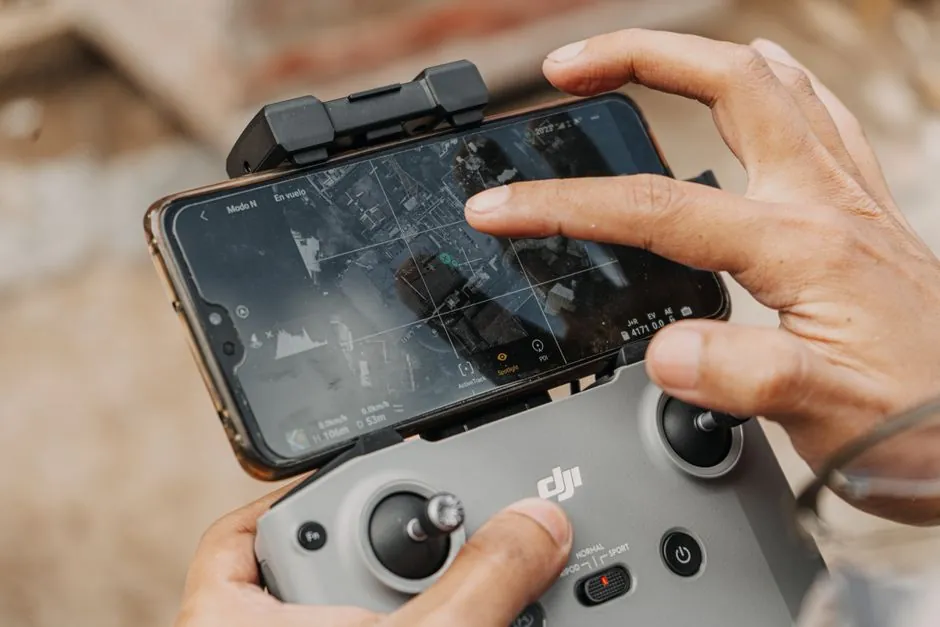
The Department of War's Drone Dominance Program (DDP), backed by $1.1 billion from the Big Beautiful Bill and announced by Secretary of War Pete Hegseth in December 2025, sets a four-phase target of more than 340,000 one-way attack (OWA) small unmanned aerial systems (sUAS) for combat units by 2027, with the Defense Innovation Unit (DIU), Naval Surface Warfare Center Crane Division, and the S2MARTS consortium as the executing triad [S4].
For an industrial buyer, the DDP is not a single contract to chase but a layered procurement stack: a mass-production Gauntlet pipeline for attritable airframes, a brand-name DLA Special Operations Equipment (SOE) Tailored Logistics Support (TLS) channel for off-the-shelf sUAS, and a GSA Advantage path for rapid fielding of compliant commercial platforms. Picking the wrong vehicle is the single most expensive mistake a new entrant can make [S3][S5].
Program Structure: Four Gauntlets, 340,000 Airframes, $1.1B
Gauntlet I runs February to July 2026 at Fort Benning, Georgia, with up to 25 vendors invited and 12 selected for prototype delivery orders totaling approximately $150 million; each of the 12 vendors delivers its share of 30,000 drones at a maximum unit cost of $5,000, with military operators flying and assessing every system before award [S4]. Gauntlet II in late 2026 narrows the pool to roughly eight companies, Gauntlet III in 2027 consolidates to about five, and Gauntlet IV in 2027 leaves three to five vendors producing up to 150,000 drones at a $2,300 target unit price, with cumulative spending across all four phases approaching $1 billion [S4]. The DDP timeline is also pinned externally: the Phase IV conclusion is fixed at January 28, 2028, which the program office is treating as a hard deliverable date for the surviving vendor cohort [S2].
Per the source coverage, the DoW's stated end-state industrial base requirement lands at roughly 150,000 drones per phase ceiling, an order of magnitude that effectively converts OWA sUAS into a Class V consumable rather than a traditional program of record [S2].
Procurement Vehicle Map: DLA SOE TLS vs. GSA Advantage vs. Direct DIU Award
For off-the-shelf sUAS and accessories, the DLA SOE Tailored Logistics Support Program (TLS) is the workhorse: a 10-year, $33 billion multiple-award IDIQ with four prime vendors, brand-name and part-number procurement, 4-6 week average processing time, and acceptance of PROC, OMA, and RDTE funding lines, accessible through G-Invoicing (GINV) and MILSTRIP with MORD as a fallback [S3][S5]. As of October 1, 2025, DLA no longer accepts legacy Military Interdepartmental Purchase Request (MIPR) funding without justification, so any GINV-unprepared buying command will be blocked at the funding step [S3]. Ordering flow under SOE TLS is six steps: register with a valid DoDAAC and FOPOC, receive a welcome package with a customer number, submit the SOE Order Spreadsheet to [email protected], accept the contracting officer's scope determination, fund the order, and receive an award, typically within days of funding acceptance [S3].
GSA Advantage is the parallel off-the-shelf path, used for rapid fielding of Blue UAS list, NDAA-compliant commercial platforms such as the Skydio X2D, with autonomous 360-degree obstacle avoidance and GPS-denied navigation as the headline specs [S5]. The DIU / S2MARTS Gauntlet path is structurally different: it is a prototype-to-production OT-style competition, not a stock-buy, and the buying command writes a delivery order against the selected vendor's share of the 30,000-unit Phase I pool rather than against a catalog line [S4]. For a procurement officer, the decision tree is: (1) need a Blue UAS NDAA-compliant commercial drone today, use GSA Advantage; (2) need a part-numbered UAS, cUAS, or accessory with custom incidental services, use DLA SOE TLS; (3) need a Phase I/II/III/IV OWA sUAS production slot, compete through S2MARTS and DIU [S3][S4][S5].
Who the DDP Is For, and Who It Is Not For
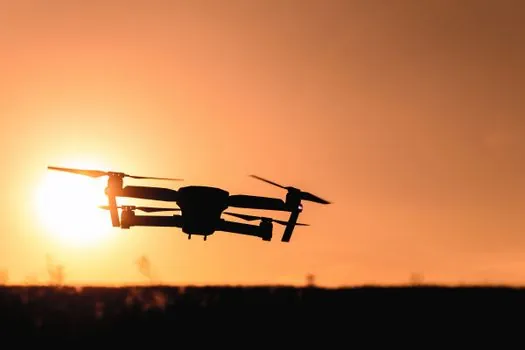
The DDP is built for vendors that can sustain high-rate production of attritable airframes at a $5,000 ceiling in Phase I, with the operational requirement to scale toward 150,000 cumulative units by Phase IV at $2,300 each [S4]. The DDP is not for vendors whose business model rests on exquisite, low-rate, multi-million-dollar ISR platforms, the category the DoW is explicitly deprioritizing in favor of mass [S2]. A common procurement trap is conflating the SOE TLS catalog buy with a Gauntlet production award: SOE TLS orders are competed among the four primes on a per-line basis, while Gauntlet awards are prototype-to-production transitions against an industry-day-selected cohort, with a different evaluation rubric, different funding mechanic, and different delivery cadence [S3][S4].
Small businesses that want in should treat the 2026 calendar as a portfolio play: register for SOE TLS for steady off-the-shelf revenue, monitor FedBiz Access and SAM.gov for the seven named 2026 small-business set-aside vehicles, and only spend prototype capital on a Gauntlet bid if your supply chain can clear the $2,300 Phase IV unit-cost gate while still passing DoD supply-chain provenance rules [S4]. The seven contracting pathways published in March 2026 are scoped for companies that already have a current SAM registration and the appropriate socioeconomic certification [S4].
Supply Chain Risks: Motors, Batteries, and the Industrial Base Gap
The DDP's binding constraint is not funding but the U.S. industrial base's ability to deliver at the program's stated volumes, with the Cipher Brief's analysis identifying reliance on foreign components, including Chinese motors, as a structural risk to Phase II and beyond [S2]. The same source flags a U.S.-China-Iran geopolitical trade-off: keeping U.S. production lines running while trying to out-innovate the suppliers those lines still depend on [S2]. The Drone Dominance spotlight on war.gov frames the DDP's explicit response as bolstering the U.S. drone manufacturing base rather than accepting the foreign-content status quo [S1].
For component specifiers, the practical implication is that the OWA sUAS power chain, propulsion motors, flight-controller boards, RF datalinks, and battery packs, has to be dual-sourced or onshored before Phase III volumes kick in, and a battery procurement strategy for adjacent markets such as agricultural UAS is already being written around takeoff-load electrical behavior and heavy-load discharge curves [S6]. A high-rate OWA sUAS cell pack that cannot sustain the takeoff current profile will fail Phase I flight evaluation regardless of airframe price, which is why battery spec discipline is now a Gauntlet-gating item rather than a downstream integration concern [S6]. Sourcing teams should map the bill of materials for a $2,300 airframe down to the motor magnets, ESC FETs, and cell chemistry before committing to a Gauntlet prototype submission.
Comparison: DDP Gauntlet vs. DLA SOE TLS vs. GSA Advantage
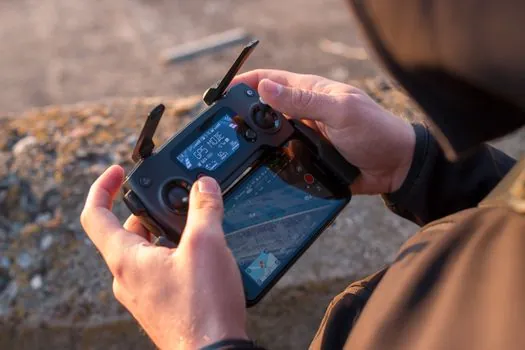
Across the three primary procurement vehicles, the decision criteria line up as follows. (1) Product type: DDP is OWA sUAS production, SOE TLS is part-numbered UAS, cUAS, accessories, GSA Advantage is commercial Blue UAS NDAA-compliant platforms. (2) Funding mechanic: DDP uses prototype delivery orders against the S2MARTS OT agreement, SOE TLS uses GINV/MILSTRIP/MORD against the $33B IDIQ, GSA Advantage uses standard GSA task orders. (3) Time to award: DDP is multi-month to multi-year depending on Gauntlet, SOE TLS pricing arrives in 1-2 weeks and award in days of funding acceptance, GSA Advantage is same-day to a few weeks for stocked items. (4) Unit price target: DDP $5,000 (Phase I) to $2,300 (Phase IV), SOE TLS priced per line against the four primes, GSA Advantage priced against commercial catalog [S3][S4][S5].
Counter-Drone and Adjacent Sourcing Signals
The DLA Drone and Counter-Drone Program covers the full cUAS scope, including detection, defeat, and incidental services such as operator training that must be ordered at the same time as the supply line on the SOE Order Spreadsheet [S3]. A parallel Department of Homeland Security $115 million counter-drone office is part of the broader 2026 federal sUAS contracting landscape that small businesses should map alongside the DoW $1.1B DDP, since cUAS and sUAS contracts increasingly share vendor rosters and Blue UAS list entries [S4]. For institutional buyers outside the federal market, university procurement offices such as Texas Tech's OP 72.22 maintain their own approved-vendor UAS how-to guide with periodic updates, a useful template for private-sector buyers who want a controlled-vendor list rather than an open RFQ [S7].
Two signals to track in the next reporting cycle: the Gauntlet I vendor shortlist announcement out of Fort Benning (12 of 25, target late July 2026) and the first DLA GINV-only funding cutoff enforcement data, since any post-October 1, 2025 MIPR-only orders will be the leading indicator of how much friction the new finance flow is creating in the SOE TLS channel [S3][S4].
Spec-level background on the components involved: linear guide, crossed roller guide, and pressure transmitter.
Background reading: Manual Pallet Jack Sizing for Air Cargo Warehouses.