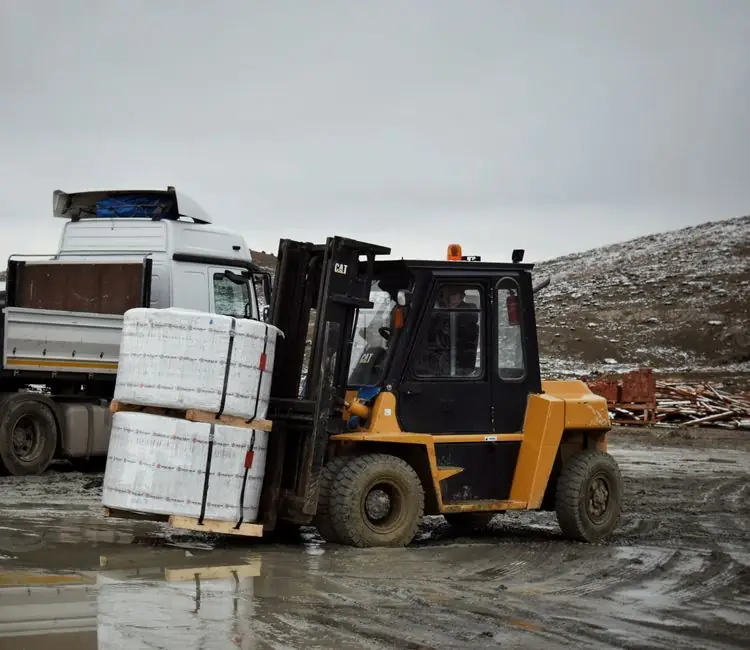
Manual pallet jacks rated at 2,500 kg or 3,000 kg remain the workhorse for short-haul moves inside an air-cargo terminal, where unit load device (ULD) dwell typically stays inside a 24 to 48 hour window before dispatch [S5].
Across standard GMA-style pallets, a 2,500 kg rated manual pallet jack covers the majority of general-cargo loads, while the 3,000 kg class adds margin for dense freight such as consolidations of machine parts or bottled liquids [S1][S2]. Air-cargo floor conditions, mostly flat sealed concrete with painted lane markings, suit hand-pump hydraulic units, but the higher net weight of a 3-ton truck (78-81 kg versus 75-78 kg for the 2.5-ton variant) erodes operator efficiency during repetitive shift work [S1].
Air-Freight Warehouse Drivers That Set Capacity and Fork Spec
Air-cargo terminals are sized for throughput, not for long-term storage, so dwell time rarely exceeds 48 hours and the equipment mix is dominated by short, frequent moves between screening, build-up, and dispatch zones [S5].
Three facility parameters set the spec envelope for any hand hydraulic pallet truck deployed on the apron side: a) ULD and pallet mix, which includes standard 1,219 x 1,016 mm GMA pallets plus airline-specific base plates; b) aisle width and turn radius, which on a 2,500 kg chassis with 540 mm or 680 mm overall fork width remains under 1.4 m for a 90-degree turn; c) screening and ETD throughput, which IATA data shows pushed global cargo tonne-kilometres up 5.6% year-on-year in January 2026, raising pallet-move counts per shift [S5]. Fork length choices of 1,150 mm or 1,220 mm cover both single-standard and Euro-plus-oversize GMA footprints, and minimum lowered fork height of 75-85 mm is needed to slide under low-clearance air-cargo skids without snagging on the bottom deck [S1].
2500 kg Versus 3000 kg: When the Extra 500 kg Pays
A 2,500 kg manual pallet jack is the right tool when typical palletized loads stay below 2,000 kg, when shift moves per operator stay under 40, and when tight 540 mm fork widths are needed to thread screening lanes [S1].
The 3,000 kg class earns its place when consolidated single-pallet weights regularly land between 2,000-2,800 kg, when operators handle dense freight like boxed machine tools or palletised perishables, and when shift-cycle fatigue on a heavier 78-81 kg chassis is offset by fewer rejected overload stops [S1][S2]. A 3000 kg rated jack also doubles as a contingency unit for occasional dense-freight builds, which on the air-cargo side tend to spike during pharmaceutical and electronics cool-chain consolidations [S1][S5].
Hydraulic Fluid, Seals, and Cold-Chain Caveats

Standard hand hydraulic pallet trucks run on ISO VG 32 hydraulic oil, with ISO VG 46 specified for higher ambient temperatures or heavier load cycles, per typical manufacturer maintenance guidance (2026-03) [S4].
Air-cargo terminals that handle pharmaceutical cold-chain freight drop ambient zones toward 2-8 degrees C, where ISO VG 32 thins enough to bypass seals and cause slow-lift or drift-down faults on the release valve; switching to ISO VG 46 in those zones restores viscosity and protects the valve block assembly used on Crown PTH series and Toyota HPT series manual trucks [S4]. Cold-chain operators should also bias toward synthetic or bio-degradable fluids because they resist viscosity breakdown across repeated door cycles better than mineral oils (2026-03) [S4]. On the hot side of the ramp, summer tarmac surface temperatures can push storage-zone air above 40 degrees C, which pushes ISO VG 32 toward the upper end of its 32 cSt at 40 degrees C window; a winter-summer fluid swap aligned to ISO VG grade is cheaper than seal replacement (2026-03) [S4].
Electric Versus Manual: Where Power Wins on the Ramp
Electric pallet jacks typically run 3,300-8,000 lb (1,500-3,630 kg) rated capacity and move two to three times the pallets per hour of a manual unit in long-haul pick operations, but the air-cargo side is dominated by short moves where manual units remain more cost-efficient [S2].
Electric models justify their 3-5x purchase premium when travel distance per move exceeds 30-50 m, when shift volumes cross roughly 200 pallet moves per operator, and when the operator pool includes workers who cannot sustain repetitive pumping cycles. Xilin manual models like the 11,000 lb WB series double standard capacity for dense loads such as steel or packed machinery without a motor, which is useful as a low-cost dense-freight contingency unit beside the main 2,500-3,000 kg fleet [S2]. For a typical air-cargo gate moving 80-120 pallets per shift across distances under 20 m, the manual 2,500 kg or 3,000 kg class remains the lower total-cost-of-ownership choice, with no battery swap logistics and no charger infrastructure to add to the bonded zone [S2].
Comparing the Two Manual Classes Against Air-Cargo Decision Criteria
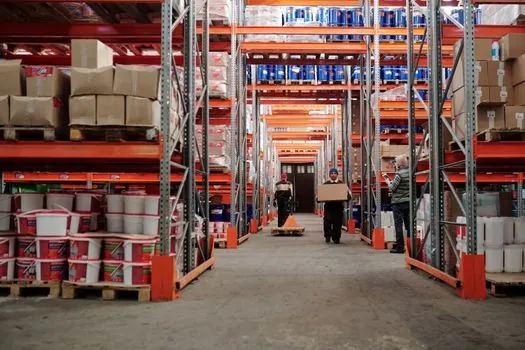
Four decision criteria dominate air-cargo pallet-jack buying: rated capacity, net weight, fork footprint, and per-unit cost. [S1]
Against those criteria, the 2,500 kg class wins on net weight (75-78 kg versus 78-81 kg), operator fatigue over a 200-move shift, and acquisition cost, while the 3,000 kg class wins on maximum single-pallet headroom, dense-freight contingency, and future-proofing if pallet weights trend upward [S1]. Forks at 1,150 mm or 1,220 mm length and 540 mm or 680 mm overall width are shared options across both classes, so terminal planners can standardise a single fork footprint fleet-wide and mix capacity classes by duty [S1]. Minimum fork height of 75-85 mm and maximum lift of 190-200 mm are identical between the two ratings, which means lift cylinder spec and seal kits are interchangeable and reduce spare-parts inventory by class [S1].
Lay-Out and Equipment Fit Inside an Air-Freight Terminal
Air-cargo warehouse layout should separate ULD build-up, screening, and dispatch zones so that manual pallet moves stay under 20 m per cycle, which is the band where 2,500-3,000 kg manual units remain the most efficient tool [S2][S5].
Project managers planning a new terminal should anchor bonded storage and customs-clearance zones next to screening, then locate the ULD build-up area on the landside of the dispatch lane to keep manual moves unidirectional and reduce back-tracking that drives operator fatigue [S5]. Equipment fit on the landside stays manual for short pallet shuffles, with electric pallet jacks reserved for the longer hauls between consolidation shed and aircraft stand, where 30-50 m travel per cycle justifies the motor and battery infrastructure [S2][S5]. Selection criteria for adjacent material-handling systems, including the slewing ring bearings used on cargo loaders, follow similar load-and-cycle logic, so a coordinated spec across jacks, bearings, and dock gear keeps spare-parts and operator training in one envelope [S5].
Track the IATA quarterly CTK release for the next directional read on throughput; if the 5.6% year-on-year growth recorded in January 2026 sustains, plan a phased upgrade of one 2,500 kg manual unit per gate to a 3,000 kg class before the next peak, and audit hydraulic-fluid grade seasonally (ISO VG 32 versus VG 46) to keep seal failures off the critical path through summer 2026 and winter 2026-2027 (2026-03) [S4][S5].
Component reference pages worth checking: air pick, and air impact wrench.