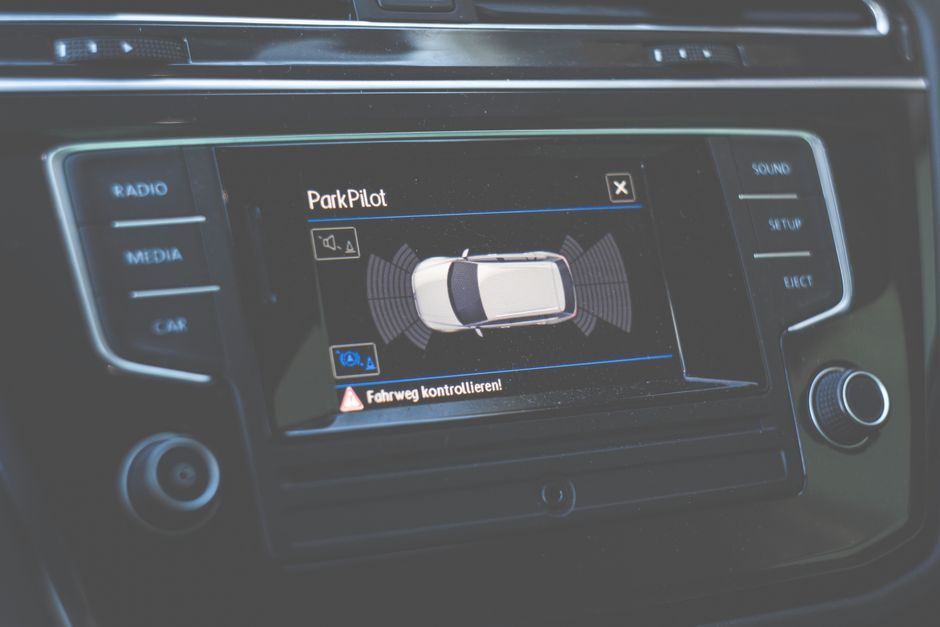
Specifying proximity sensors is a 4-step filter: target material, sensing range, target surface behavior, and environment. Ultrasonic sensors measure distance by time-of-flight of a sound pulse, typically using the piezoelectric effect with common 40 kHz modules such as the T/R40 series, and require no contact with the target. Capacitive sensors measure change in an electric field generated by an oscillator plate, and respond to any material with a dielectric constant above roughly 1.1 — meaning virtually every solid, liquid, powder, and granulate can be detected [S5].
For a 2026 plant floor, the practical boundary line sits at about 30–60 mm of sensing distance: above that, ultrasonic dominates because of its long throw (HKTDC-listed combined transmitters/receivers reach 6 m in object-detection housings) [S1]; below it, capacitive wins on cost, switching speed, and ability to "see" through thin non-metallic walls such as glass, plastic, or paper packaging. capacitive sensor basics covers the electrode/oscillator design that makes that field-based detection possible.
Operating Principle and Sensing Range
An ultrasonic sensor head contains a piezoelectric ceramic (common parts are the T/R40-10 and T/R40-12 series) driven at 40 kHz; the same element doubles as the receiver for the echo, and distance is computed from the round-trip time. Practical industrial housings offer 0.1 m minimum (the dead zone where the transducer ring-down masks the return) up to 6 m in air [S1][S5]. Blind zone and beam angle — typically 8° to 15° cone at half-power — set the lower and lateral limits respectively, and both are frequency-dependent.
A capacitive proximity sensor generates an alternating electrostatic field at its active face, detects the dielectric loading change caused by a target, and triggers an output when the loading exceeds a threshold. Standard industrial models switch at 0.5–50 mm depending on body diameter (M12, M18, M30) and target material; flush-mountable units allow side-by-side installation in tight tooling. They are contactless, dust-tolerant on the active face, and work on materials a photoelectric or inductive sensor cannot "see."
Target Material Behavior: What Each Technology Can and Cannot See
Ultrasonic sees anything that reflects acoustic energy — metal, plastic, wood, liquid surface, granulate, even a human body. It is color-, transparency-, and finish-independent because acoustic impedance, not light, drives the echo. The trade-off is acoustic absorption: foam, soft rubber, fibrous textiles, and very soft powders absorb the pulse and dramatically shrink the working distance; angled or curved specular surfaces can deflect the beam away from the receiver. S5 notes the canonical use-cases of ultrasonic sensors as anti-collision ranging on vehicles, automatic doors, burglar alarms, and liquid-level measurement in open or closed tanks. [S2]
That includes wood, paper, cardboard, glass, plastic pellet, oil, water, grain, and even the level of a fluid through a 1–6 mm glass or plastic container wall. They are insensitive to dust, smoke, and most vapor in the gap, but they are fooled by conductive films (water condensation, oily residue) that re-tune the oscillator, and a grounded metal shield between the face and the target can fully block the field.
Decision Matrix: 4 Criteria Side-by-Side
On sensing range, ultrasonic covers 0.1–6 m with a fixed blind zone of typically 20–100 mm; capacitive covers 0–50 mm with no blind zone. On target material, ultrasonic works on all sound-reflective surfaces but is degraded by absorbers like foam, fabric, and rubber; capacitive works on virtually all materials with εr > ~1.1 and fails on grounded metal shields. On environmental tolerance, ultrasonic handles dust, smoke, mist, and dark/glossy targets that defeat photoelectrics; capacitive handles dust and non-conductive contamination but drifts with humidity, condensation, and large temperature swings on the active face. On cost per channel, capacitive is roughly 1/3 to 1/2 the price of an equivalent industrial ultrasonic module — a meaningful margin on a 200-sensor conveyor build. [S2]
Per use case: choose ultrasonic for tank level through vapor, vehicle anti-collision at 0.3–5 m, roll/diameter measurement on web lines, and presence detection of clear plastic or liquid in a metal trough. For non-contact level of bulk solids in dusty silos, ultrasonic is a common specification — see the ultrasonic level meter reference for tank geometry, blocking distance, and foam-failure mode.
Limitations and Failure Modes Engineers Hit in the Field
Three failure modes account for most ultrasonic service calls. First, temperature gradient across the beam — hot air above a heated tank refracts the pulse, so a sensor that reads accurately at 25 °C can lose the echo on a 60 °C day. Second, condensation on the diaphragm, which attenuates the outgoing pulse; heated-face variants exist for cold/refrigerated tanks. Third, mechanical ringing inside the housing, which extends the blind zone beyond the data-sheet value when the sensor is mounted in a small bracket that re-radiates the pulse. [S4]
Capacitive failure modes cluster around the dielectric environment. Water film, oil mist, or detergent residue on the active face re-tunes the oscillator and shifts the switching point by 10–30% of the nominal range — typically a nuisance on a washdown line. Adjacent sensors of the same frequency can cross-talk if mounted too close, so a 3–5× diameter spacing rule is standard. Finally, a target whose dielectric constant is only marginally above the background (e.g.
Output, Wiring, and Integration
Both technologies ship in the same 3-wire PNP/NPN, 4-wire complementary, and IO-Link variants that fit on a 12–30 V DC industrial bus. Ultrasonic modules typically offer a 0–10 V or 4–20 mA analog output proportional to distance, a switching output with a teachable setpoint, and IO-Link for window/setpoint/hysteresis adjustment. Capacitive sensors usually ship as a discrete switch with a teach-in or potentiometer-adjustable threshold, and the high-end models add IO-Link for fine tuning. For flow measurement on a partially filled pipe, see the ultrasonic flowmeter entry, which uses the same 1–4 MHz piezoelectric principle in a clamp-on or inline body. [S2]
For OEM sourcing, ultrasonic modules are commonly listed on B2B marketplaces like HKTDC Sourcing with descriptions calling out waterproof/dustproof IP65+ housings, a "broad range of usable temperature," and long-range detecting ability up to 6 m for combined transmit/receive units [S1]. Capacitive M12/M18/M30 cylindrical sensors are stocked as commodity items by every major automation distributor and rarely need a quote — the price spread is narrow and lead times are days, not weeks. NDT buyers who need pulse-echo thickness or flaw sizing at higher frequency should reference the ultrasonic thickness gauge and ultrasonic flaw detector pages, which operate at 0.5–10 MHz rather than the 40 kHz industrial-proximity band. Industrial sites wiring perimeter intrusion around the same facility will cross-shop with perimeter alarm sensor selection for the same housing and environmental reasons.