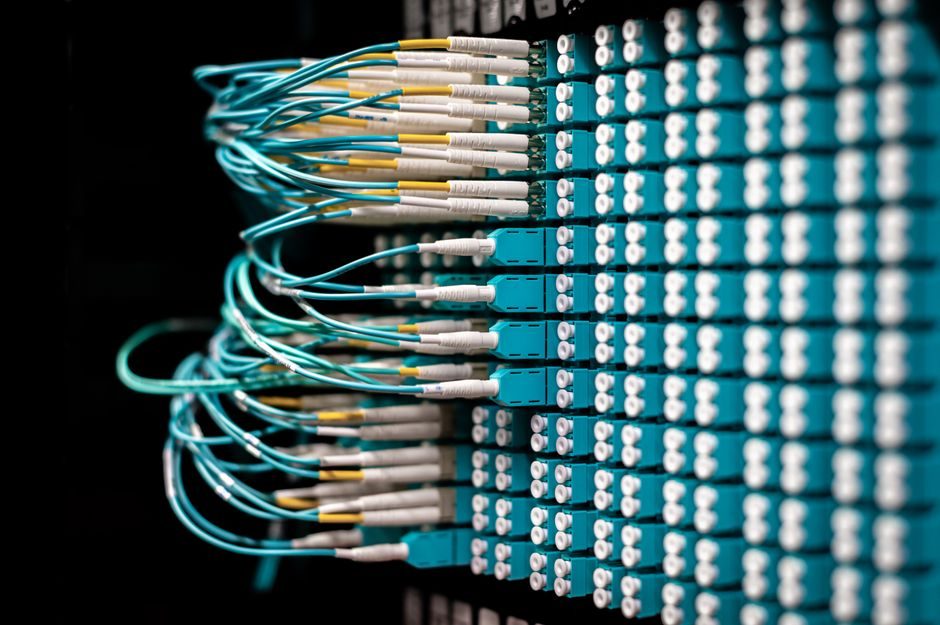
A 2026 fiber optic sensor system splits into two billable parts: a plastic or glass fiber-optic cable and a separate amplifier/conditioner, and the total price is dominated by the amplifier electronics rather than the glass [S1].
Baumer's 2026 product range offers over 350 customized fiber-optic cable variants paired with amplifiers that expose IO-Link dual-channel interfaces and OLED readouts, with glass fiber optics rated from -60 °C to +250 °C for the cable itself [S1]. On the Chinese wholesale side, Made-in-China lists fluorescent, single-channel temperature, and distributed acoustic sensing fiber-optic instruments in Fuzhou, Qingdao, and Changsha, while the Suzhou channel concentrates on Omron E32-C31N, Keyence FU-10, and Keyence FS-N15CP equivalents [S2].
Cost drivers ranked by weight on the BOM
Amplifier/conditioner electronics are the single largest line item, typically 60-75% of the total system price for a through-beam or diffuse-reflective pair [S1]. The fiber-optic cable is the second driver: plastic PMMA coils run cheap, while glass fiber-optic cables with metal armor, PTFE sheath, or array geometry add 2-5x the bare-fiber cost [S1]. Sensing principle is the third driver — a generic object-detection amplifier is commodity-priced, whereas a Fiber Bragg Grating (FBG) interrogator or a distributed temperature sensing (DTS) unit moves into four-figure pricing because the optoelectronics and signal-processing chain are fundamentally different [S8]. Certifications (ATEX/IECEx for hazardous areas, IP67/IP69K for washdown) and IO-Link or fieldbus protocols sit on top of the base electronics, each adding a discrete adder rather than a multiplier [S1].
Indicative price bands by sensor class
For generic diffuse-reflective and through-beam object-detection amplifiers, OEM-branded units (Omron E32 series, Keyence FU/FS series) typically list in the $80-$300 single-unit range, with Chinese equivalents on Made-in-China showing visible-light double digital display amplifiers at the lower band [S2]. A 2025 eBay listing for a Keyence FU-40 fiber optic sensor, sold as new, carries a 4.9/5.0 description accuracy rating and is positioned in the "fair price" bracket for a single-unit resold component [S5]. Specialty signal conditioners, such as the FPI-HS/HE EED/HERO unit on OFS, cover a 0 °C to 120 °C measurement range and command a meaningful adder over commodity amplifiers because of the safety-rated application envelope [S3]. At the top of the stack, FBG interrogators and DTS/DAS units (e.g., the high-spatial-resolution distributed acoustic sensing instrument on the Qingdao supplier listing) move into the $5,000-$50,000+ band per channel, with the downhole DTS cable variant engineered for extreme heat and pressure as a separate high-cost line [S2].
Comparison: amplifier classes against 4 decision criteria
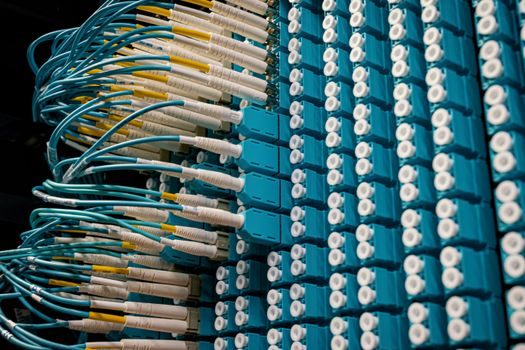
Choosing between a commodity amplifier, an IO-Link amplifier, an FBG interrogator, and a DTS/DAS unit is a four-axis decision, and the price difference mirrors the sensing capability gap. A commodity diffuse-reflective amplifier (e.g., Omron E32-C31N, Keyence FU-10 equivalent) delivers on/off presence detection, a 50 µs-class response time, and the lowest cost; an IO-Link amplifier adds dual-channel parametrization, an OLED readout, and a teach button, with Baumer documenting a 12 µs jitter at 50 µs response in the higher-performance variants [S1][S2]. FBG interrogators measure strain, temperature, vibration, and pressure by tracking Bragg wavelength shift, and remain immune to EMI in high-voltage and explosive environments, but require wavelength-demodulation electronics that no generic amplifier carries [S8]. DTS/DAS systems read the full length of a fiber as a continuous sensor, which is why pipeline-leakage and downhole monitoring products on Made-in-China are quoted as full systems, not as point sensors [S2]. The relevant working principle for a standard fiber-optic pair is intensity-modulated reflectance: an LED transmitter sends light down one fiber, the photodiode receiver reads the return, and the change in intensity encodes the detection event [S1].
Use cases that justify each price tier
Wafer-handler and semiconductor tooling favor Ø1.5 mm thin cylindrical or 2 mm ultra-flat fiber optics with lateral light emission, where 0.1 mm thin wafer repeatability and 12 µs jitter are the deciding factors rather than price [S1]. Pharmaceutical pill ejection and small-parts counting use array fiber optics with a linear fiber arrangement for area detection from 1300 mm in the x-direction down to 100 mm in the y-direction, where the array geometry is the cost driver [S1]. High-temperature process lines (-60 °C to +250 °C cable rating) and chemically aggressive media require glass fibers with PTFE sheath or metal armor, which moves the cable line item up but leaves the amplifier class at commodity level [S1]. Structural-health, oilfield, and downhole monitoring require FBG or distributed sensing because they need to measure strain, temperature, and acoustic signatures along the full fiber length, and that is the use case where the system price steps up by an order of magnitude [S2][S8].
Total cost of ownership beyond the unit price
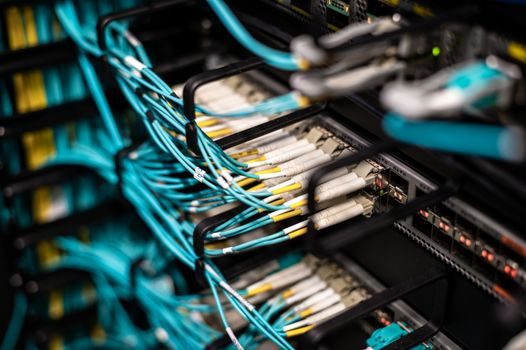
Installation cost is dominated by the fiber routing: a glass fiber-optic cable can be routed through hazardous, high-temperature, or confined spaces that an electrical sensor cannot enter, but the routing length itself drives the cable cost linearly, so spec'ing 50 m where 5 m will do doubles the cable line [S1]. Maintenance and recalibration are minor for intensity-modulated amplifiers, but FBG and DTS systems require periodic reference-cell recalibration and connector cleaning, and the connector interface (FC/APC, MPO/MTP) becomes a recurring consumable cost [S1]. IO-Link dual-channel amplifiers reduce lifetime cost by enabling fast format changes and remote parametrization via the vendor's suite, which lowers changeover labor on packaging and assembly lines [S1].
Standards, sourcing, and selection guardrails
Buyers sourcing from the Chinese supplier base should verify ISO 9001:2015 quality management certification as a baseline, with one Shanghai-area sensor manufacturer on Made-in-China additionally holding ISO 14001 and ISO 45001 certifications, which is the documented floor for serious industrial supply [S2]. Hazardous-area deployments need explicit ATEX or IECEx marking on the amplifier and on the cable gland, and the cable's temperature rating (-60 °C to +250 °C for glass) must cover the full process envelope, not just the ambient [S1]. For FBG and DTS deployments, the sensing principle is wavelength modulation of the Bragg coupling peak, where temperature and strain both shift the peak, so applications requiring discrimination between the two need either a reference fiber or a dual-parameter sensor design rather than a bare FBG [S8]. Buyers should treat the Made-in-China listings as a price-discovery channel for OEM-equivalent amplifiers (e.g., Keyence FU-10, Omron E32-C31N, FS-N15CP equivalents) and confirm warranty and traceability terms before substituting into a production line [S2].
For a 2026 procurement decision: request a unit quote on the amplifier class (commodity vs. IO-Link vs. FBG interrogator vs. The most common cost overrun is under-spec'ing the cable jacket for the chemical or thermal environment, which forces a re-pull after commissioning — a far more expensive outcome than buying the PTFE or armored variant at the quote stage [S1]. Buyers evaluating fiber-based sensing as part of a wider factory sensing stack can also review the laser cutting machine spec landscape, since fiber laser sources share the glass-fiber handling discipline and connector-cost logic that drive fiber optic sensor cable pricing. For background on the underlying optical sensing physics, the fiber optic sensor encyclopedia entry covers the through-beam, diffuse-reflective, and retro-reflective topologies alongside their typical detection ranges.
Spec-level background on the components involved: linear guide, and crossed roller guide.