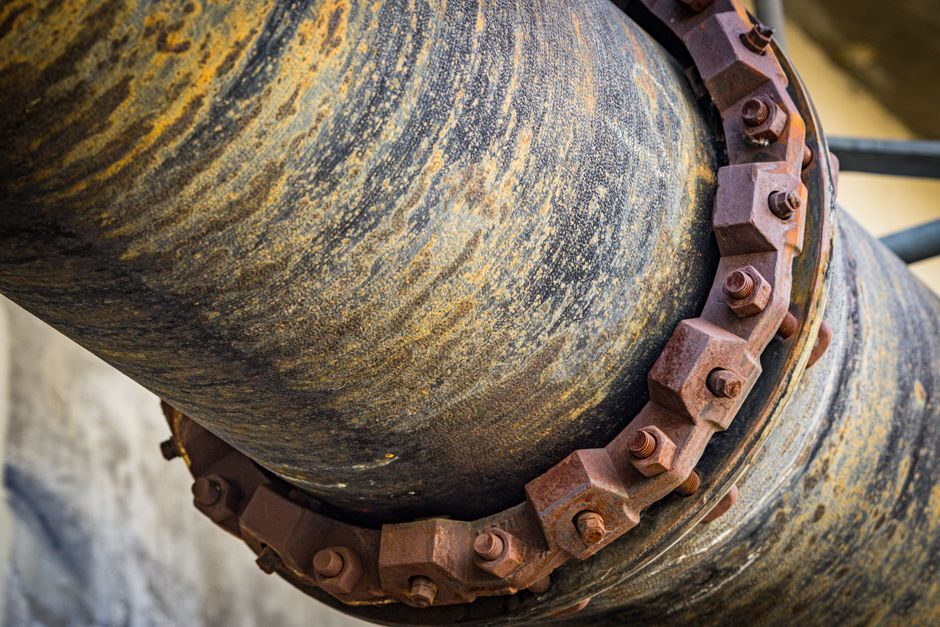
The universal joint (U-joint) market in mid-2026 still routes almost every decision through one of three variables: the industry-standard series number, the bearing style (inside snap ring, outside snap ring, or bearing plate), and whether the joint is greasable (with a zerk fitting) or sealed for life. Cross-referencing retail SKUs against OEM data, Moog 246 and a Dodge-Ram 6GPB46 cross are both listed at US $42.65 on eBay, while a TRW 20191 non-greasable Brute Force front-axle joint sells at US $13.88 [S3][S4][S6]. A Taizhou-based supplier on MDGloble lists a 100,000-piece finished-goods inventory and a 45-day delivery window for stock universal joints with free samples [S5].
Two factories frame the sourcing landscape: TK (Korean homepage, six product lines including UNIVERSAL JOINT, BALL JOINT, and QUICK COUPLING, with rolling-mill guides as a secondary line) and UJK, a Chinese manufacturer advertising 25 years of production experience, 200+ overseas customers, and 1,000+ active SKUs across outside-snap-ring, inside-snap-ring, and bearing-plate families [S1][S2]. Both are credible export-tier sources; both publish in the OEM/ODM idiom rather than retail.
Series Numbers and What They Lock In
U-joint selection is dominated by the American-gear-system series code stamped on the trunnion: 1310, 1330, 1350, 1410, 1480, 1550, 1610, 1710, 1810, 1820, 1880, and the heavy-duty 7260 are the workhorse codes buyers see on cross-bearing caps and on packing-box labels. The series fixes the trunnion diameter, the journal length, and the overall span between the two cap centers — in other words, it is the dimensional contract that determines which yokes, slip yokes, and drive flanges a given U-joint will mate with. A 1410 cross is the common light-truck default; a 1480 uprates trunnion diameter for higher torque transfer on half- and three-quarter-ton applications; the 7260 (and adjacent 7290) codes are reserved for heavy commercial drivelines [S3][S4].
The engineering consequence: if you buy a 1410 joint and your yoke is a 1480, no amount of grease or preload fixes the mismatch — the trunnion journals will not seat. This is why automotive listings name the series explicitly: the Moog 246 listing cross-references 1410-series applications, and the 6GPB46 listing cross-references 2011-2019 Ram 2500 fitments, where 1410/1480 transitions are common across model years [S3][S6]. When in doubt, pull the driveshaft and read the stamp on the existing bearing cap — never trust a vehicle-make alone.
Bearing Style: Inside Snap Ring vs Outside Snap Ring vs Bearing Plate
Three retention styles are in current production at the major Asian OEM suppliers: outside snap ring (the legacy domestic-car default), inside snap ring (the dominant light-truck style, where the circlip sits in a groove machined into the yoke ear), and the bearing plate (a four-bolt retainer plate, common on flange yokes and on certain HD truck and industrial couplings) [S1][S2]. UJK publishes all three as core product families and explicitly markets 1,000+ part numbers across them [S2].
The choice is dictated by the mating yoke, not by preference. Buyers specifying replacement joints should match the OEM retention style; retrofitting an inside-snap-ring cross into an outside-snap-ring yoke is a press-fit error waiting to happen, and a bearing-plate joint into a snap-ring yoke will not seat. For OEM programs and for export distributors handling mixed fleets, stocking both inside and outside snap-ring SKUs in 1310/1410/1480 is the minimum viable catalogue [S2].
Greasable vs Non-Greasable: The Service-Life Trade

Greasable U-joints carry a zerk (grease nipple) on each cap; non-greasable (sometimes labelled "sealed for life" or "Brute Force" in aftermarket catalogues) have the needle bearings and cups prepacked with grease and staked shut at the factory. The TRW 20191 listing explicitly flags the variant as "Brute Force Non Greaseable" for a 4WD front-axle-at-wheel position [S4]. The retail spread — US $13.88 for a non-greasable 20191 versus US $42.65 for a Moog 246 — partly reflects the premium that premium greasable crosses command in the aftermarket [S4][S6].
From a process-engineering standpoint: greasable joints are the correct call for any application where the cross runs at high articulation angles, in dirty environments, or where periodic re-lubrication is part of the maintenance plan. Non-greasable joints are the right call where the joint is buried inside a sealed assembly, where relube is impractical, or where the OEM has validated a sealed-for-life L10 life that meets the vehicle's design duty cycle. Specifying the wrong one is a warranty event; matching the OEM retention style and lube strategy is the cleanest procurement gate [S4].
Materials, Heat Treatment, and What the Spec Sheet Should Show
Forged medium-carbon alloy steel (typically 5140 / 4140 grades) is the standard for the cross (spider) and the bearing cups; needle bearings are through-hardened chromium steel. The yokes are usually forged or rolled steel, with the bearing-cap journals induction-hardened to a defined case depth and surface hardness window. Industrial buyers should expect the supplier to publish, or to provide on request, the following minimum data set: material grade for cross and yokes, hardness (HRC) on the journals, needle-bearing grade, and dynamic load rating. UJK's 1,000+ SKU catalogue and 25-year production history, plus TK's published patent and certification record, are the kind of supplier-level evidence that material and process discipline is in place [S1][S2].
Two fields the spec sheet must also nail down: (1) the running clearance between needle bearings and the journal, which sets the joint's NVH behaviour, and (2) the grease specification, which is the most common single source of early failure when mismatched. For export programs, a typical 1-5 piece free-sample policy (as MDGloble lists for its Taizhou-origin stock) is the lowest-cost way to validate the lot before committing to a 100,000-piece inventory run [S5].
Pricing, MOQ, and Lead Time in 2026

Three distinct price points sit in the 2026 retail and wholesale market. At retail (aftermarket eBay, US-shipping): US $13.88 for a TRW 20191 non-greasable light-truck U-joint, US $21.53 for a Moog 246 plus US $25.74 shipping (so a delivered total around US $47.27), and US $42.65 for the 6GPB46 Dodge-Ram 2011-2019 cross [S3][S4][S6]. At OEM/export wholesale, MDGloble lists a Taizhou, China-origin universal joint at US $5 unit price for the 100,000-piece inventory position, with 45-day delivery and free samples available [S5]. The roughly 3-9x spread between retail and wholesale is the standard distribution markup; the take-away is that buyers placing full-container orders should always request a factory-direct quotation rather than accept retail-list prices.
Lead time is the second hidden cost. The 45-day MDGloble quoted window covers stock SKUs; custom series, custom bore, or special packaging typically extends to 60-90 days at Asian OEM shops. For buyers running just-in-time service-parts programmes, holding a 100,000-piece buffer (as that supplier advertises) is a real option, but it ties working capital — the more disciplined approach is a vendor-managed inventory (VMI) agreement with a 30-day safety stock and a published RPO (resupply order point) [S5].
Industrial vs Automotive: When a U-Joint Is and Is Not the Right Choice
For driveline applications — rear axles, prop shafts, steering columns, PTO drives — the universal joint is the default because the operating angles are small, the speeds are well-defined, and the misalignment is constant-velocity only at paired joints. For applications with continuous high misalignment, large parallel offset, or axial travel, a constant-velocity (CV) joint is the engineering-correct solution; a U-joint in that service will thump, wear, and fail early. For thermal-growth or building-movement applications where the misalignment is large but slow, an expansion joint is the correct element, and a U-joint is the wrong specification. These are the hard yes/no gates [S1].
For linear-motion and slide systems, the linear guide or the crossed-roller guide is the right answer; U-joints do not translate, they pivot, and the failure mode of using one in a linear slide is immediate and self-evident. Buyers writing a procurement spec should treat the U-joint as a rotation-coupling element only, and the linear-guide and crossed-roller families as separate commodity lines with their own catalogue and supplier base.
Sourcing Channels and the Verification Gate
Three sourcing channels are live in mid-2026. (1) Direct OEM factory purchase: UJK (China) and TK (Korea) are both publicly listed with full product-line catalogues, patent/certification records, and export-trace references; this is the correct channel for OEM programmes and for buyers who need first-article PPAP/ISIR documentation [S1][S2]. (2) Wholesale B2B platforms: MDGloble and similar portals list MOQs as low as 1 piece for samples and as high as 100,000 pieces for inventory runs, with 45-day delivery [S5]. (3) Aftermarket retail (eBay, Amazon, RockAuto equivalents): used for spot-buy service parts at the series level, with a US $13.88-$42.65 retail spread as the live price band [S3][S4][S6].
The verification gate for any of the three: confirm the series stamp on the cross, confirm the bearing style against the mating yoke, confirm the lube strategy against the service environment, and confirm the supplier's material and process documentation. For export orders, request a pre-shipment inspection report covering journal hardness, dimensional report against the series print, and a salt-spray or similar corrosion result if the joint is destined for a marine or de-icing-salt environment. A 1-5 piece pre-shipment sample run is the minimum cost of de-risking a full-container commitment [S5].
Failure Modes and Field Limits
The dominant failure modes in service are: (a) needle-bearing brinelling from impact loads (curb strikes, shock loading on U-joints used in industrial couplings), (b) journal wear leading to radial play, which then reads as driveline vibration, (c) grease washout or contamination where the lube interval is missed or where the wrong grease grade is used, and (d) cap-failure in the snap-ring groove when an underspec yoke is paired with an overspec cross. Buyers should size U-joints to the continuous-torque duty, not the peak-torque rating, and should derate the published dynamic load by a service factor of 1.5-2.0 for industrial applications with shock or reversing loads. [S1]
Two operational signals to instrument on a critical service: (a) radial play at the cap (a feeler gauge or dial-indicator check at every PM interval), and (b) temperature at the trunnion housing (an infrared spot reading during steady-state operation; a sustained rise above baseline is the first warning of lube starvation or bearing distress). A programme that monitors both will catch a failing joint one to two PM cycles before a catastrophic separation, which is the difference between an unscheduled outage and a planned swap.
For buyers writing the 2026 procurement spec, the practical signals to track over the next quarter are: (1) retail-list price stability on the 1310/1410/1480 SKUs (the Moog 246 at US $42.65 and the TRW 20191 at US $13.88 are the reference anchors), (2) any posted change in MOQ or sample policy at the Taizhou-origin OEM suppliers, and (3) any visible tightening in the 45-day OEM lead time — a 60-90 day slip would be the first sign of container-freight or hot-rolled-steel feedstock pressure flowing downstream. For driveline coupling selection criteria and the torque/misalignment/service-factor decision tree that sits alongside a U-joint spec, the gear-coupling selection criteria reference covers the heavy-industrial counterpart where the gear coupling vs clutch-brake comparison is the adjacent decision most buyers will face.