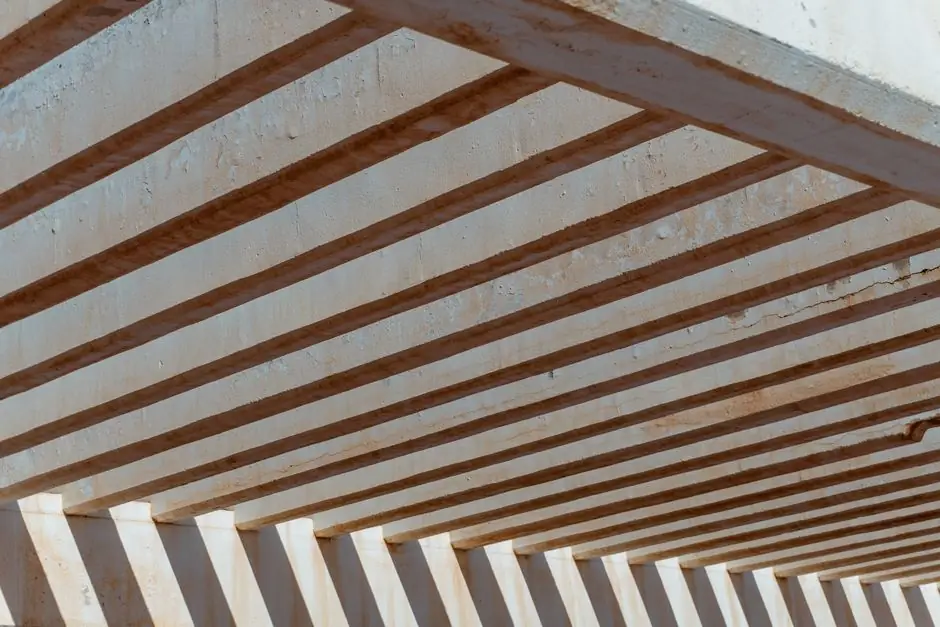
European U channels split into two families: UPN with tapered flanges governed by EN 10279, and UPE with parallel flanges governed by EN 10365, with UPE depth ranges matching IPE beams from 80 to 400 mm [S2][S4]. The decisive difference is flange geometry: UPN thickness decreases from the web toward the flange edge, while UPE holds a constant flange thickness across its full width [S1][S3].
For procurement, that geometry change is the line item that drives weight, connection cost, and section capacity. UPE runs thinner web and flange stock than UPN at the same nominal depth, giving roughly 11% mass reduction per metre and a load-to-weight improvement reported between 9% and 34% depending on the application [S2]. UPN, with its tapered flange, often wins on first-cost steel buy and on availability in tighter legacy sizes, and the geometry is still the default in many infrastructure and vehicle-frame specifications [S3][S1].
Flange geometry: tapered versus parallel, and what each does to the connection
UPN flanges taper from the web outward, with the inner face slightly inclined so the cross-section reads as a shallow triangle at the flange tip [S3][S1]. That taper forces fitters to add bevelled washers, wedge packs, or shims when bolting a flat plate to the flange face, and a small bevel is usually required to land a full-penetration weld on a flush face [S2].
UPE flanges run parallel, which means the inner and outer flange faces are flat and square to the web. A standard plain washer lands cleanly, a backing bar sits flush for welding, and a gusset plate can be specified without contoured machining [S2][S4]. For assemblies with many beam-to-channel joints, this is the line item that decides whether the fitter spends 20 minutes or 5 minutes per node.
Mass, strength, and material efficiency
ArcelorMittal's published comparison reports that the UPE web and flanges are both thinner than the UPN equivalent, and that this combination cuts mass per metre by about 11% [S2]. The same source quantifies a 9–34% uplift in load-bearing capacity per unit weight relative to UPN, with the upper end reached in bending-dominated cases where the parallel flange keeps the outer fibre at maximum distance from the neutral axis [S2].
Independent descriptions diverge on absolute weight. Masteel and Hollow Section Pipe both note that UPE is not always the lighter profile at a given nominal size: the parallel design typically carries thicker flanges and slightly more material than UPN [S1][S3]. The reconciliation is that UPE wins per-metre weight when you normalise against the section modulus delivered, not against the labelled depth. For a like-for-like section modulus, UPE is the lighter buy; for a like-for-like nominal depth, UPN can come out marginally ahead on raw kilogrammes [S1][S2].
Standards, size ranges, and section property data sources
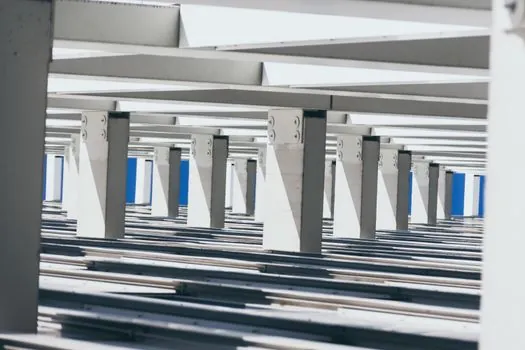
UPN is covered by EN 10279 for tolerances on shape, dimensions, and mass, with section property data traditionally tabulated as UPN 50 through UPN 400, where the number equals section depth in millimetres [S4][S3]. Steel grade selection normally defaults to EN 10025 structural grades such as S235, S275, and S355, with the supplier confirming impact and through-thickness requirements per project [S1].
UPE is covered by EN 10365, the European standard prepared by ECISS/TC 103 that consolidates section property data for UPE, PFC, and UPN channels in a single document, with EN 10279 still governing the dimensional and mass tolerances [S5][S4]. The UPE depth range of 80–400 mm is intentionally aligned with the IPE beam range, so designers specifying mixed frames can keep the top-of-steel and connection details consistent between channels and beams [S2][S4].
Selection matrix: when to pick UPN, when to pick UPE
Specifying UPN is the right call when the priority is lower unit-cost steel in a light-to-medium structural role, where tapered-flange detailing is already standard on site, or where legacy drawings call out a UPN size. UPN suits braces, studs, and frames in machinery, vehicle chassis rails, and building secondary steel where connection count is modest and first-cost steel buy dominates the budget [S1][S3].
Specifying UPE is the right call when connection count is high, when the assembly is field-bolted with standard flat washers, when welded gussets must land flush, or when the structural layout mixes channels and IPE beams at the same depth. UPE is also the better pick when the structural requirement is a target section modulus rather than a target depth, because the parallel flange puts more material at the outer fibre for a given nominal size [S2][S4]. For projects that demand architecturally exposed steelwork with crisp, flat flange lines, the UPE face is the cleaner aesthetic read [S4].
Fabrication, welding, and on-site handling

UPE's flat flange cuts welding preparation time: a square-cut root face sits flush against the flange, and a standard backing bar carries the weld pool without contoured shimming. For bolted connections, a standard flat washer and a standard hole through the flange are all that is needed, which removes the bevelled-washer inventory that UPN detailing tends to require [S2][S4].
UPN's tapered flange is not a fabrication defect, it is a deliberate design choice that saves material on the lower-stress outer tip. The cost shows up only at the connection: fitters either accept a non-flush bearing surface, machine a small bevel, or pack a wedge. For low-connection-count industrial skids and for projects that already standardise on tapered-flange detailing, this overhead is absorbed into the normal workflow [S1][S3].
Adjacent channel types worth knowing for specification
PFC, or parallel flange channel, is the British designation and shares the parallel-flange concept with UPE, and is tabulated in the same EN 10365 family [S5]. UPA is a lighter parallel-flange alternative, also tabulated to EN 10365 with tolerances per EN 10279, but with equal flange and web thickness and lower static values than UPE at the same depth, so it sits in the cost-effective lighter-duty slot [S4].
UAP is a regional designation, common in Switzerland, that is not standardised under the major European codes, so dimensions and mechanical data must be taken from the manufacturer rather than from a published EN table [S4]. For procurement documents that need a stable, traceable spec basis, UPE and UPN remain the safer choices, while PFC is the British equivalent of UPE and UPA is the lighter economy option. For engineers comparing the channel family to other structural families used on the same project, the UB versus UC flange and web proportion reference walks the parallel logic on the beam side, and the Fe 500 versus Fe 500D versus Fe 550D rebar grade decision covers the analogous grade-selection discipline for the rebar side of the same project. For thermal performance of the wall assemblies these channels often sit inside, the U-value calculation for a 200 mm AAC block wall is a useful cross-check on the envelope spec.
Two trackable signals for the next 6 months: first, watch whether ArcelorMittal or other long-product mills issue a fresh UPE versus UPN mass-and-capacity table tied to EN 10365:2017 updates, since current published numbers date from the original 2017 release and a refresh would reset the procurement data behind every channel callout. Second, watch for project specifications on European industrial builds shifting the default from UPN to UPE for mezzanine purlins and equipment-support frames, where the connection-count math now tips toward UPE in any assembly with more than roughly eight bolted nodes per tonne of steel. [S2][S5]
Spec-level background on the components involved: flange, tapered roller bearing, and pressure transmitter.