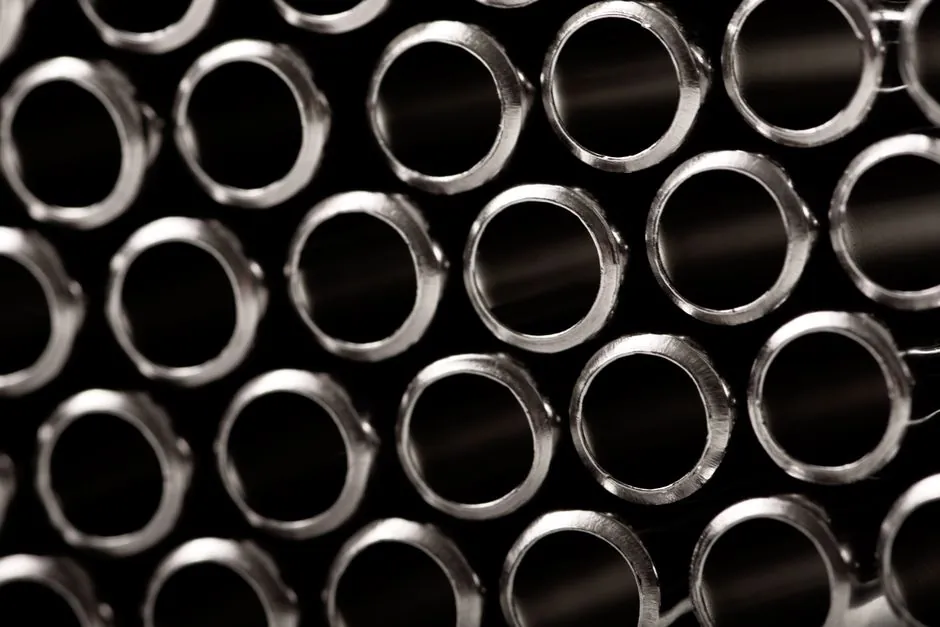
An internally threaded chemical anchor sleeve forms a bonded fixing that accepts metric bolts and threaded rod, allowing the fixture to be removed while the sleeve remains in the substrate.
The approach suits temporary equipment, façade access, MEP supports, and other detachable installations in concrete, hollow brick, and other masonry, provided hole preparation, resin selection, embedment, and cure time match the design.
What the Internally Threaded Sleeve Does
The working principle is a steel sleeve bonded to the surrounding substrate with injectable adhesive, creating a reusable internal thread rather than a permanently bonded fixture [S1] [S2]. The M10 sleeve is a steel internal threaded socket for hollow brick and concrete, where adhesive fills the cavity and forms a solid plug around the sleeve [S2].
Chemical anchoring transfers load through the bond between cured resin and substrate, rather than through expansion pressure on the concrete. This makes the method suitable for close anchor spacing and close-to-edge fixings where expansion stress would be undesirable [S3]. It also permits the sleeve to remain in place when a bolt or rod is removed, unlike a conventional bonded stud that is normally left permanently in the hole.
For fixture categories where threads and access points recur, the chemical anchor should be treated as a permanent substrate interface, while the removable bolt is the replaceable or temporary component.
Concrete, Brick, and Masonry Selection
Concrete and masonry are not interchangeable installation conditions: a sleeve approved for solid concrete may not be suitable for hollow brick without a suitable cavity-filling geometry and an anchor system validated for that base material. The M10 steel socket described for hollow brick and concrete forms an adhesive plug in brick or block cavities, which addresses the void around the insert [S2].
Fischer categorizes its chemical fixings as resin capsules, injection mortar, anchor rod/internal thread anchors, anchor sleeves, and accessories [S4].
A practical comparison is straightforward: a concrete sleeve relies on substrate bond around a defined drilled hole; a masonry socket needs geometry compatible with masonry voids; and a hollow-brick sleeve must create an effective adhesive plug. The correct choice depends on base material, hole diameter and depth, threaded size, edge distance, and the required load path, rather than thread size alone.
Material and Thread Options

Corrosion exposure determines the sleeve material as well as the fastener and fixture materials. The Hilti HIS-N is an anchor rod and element featuring an internally threaded sleeve [S1].
Ramset New Generation Threaded Inserts are available in High Performance Grade 5.8 carbon steel or AISI 316 stainless steel [S3]. Drop-in internally threaded anchors are commonly used in hollow base materials such as concrete masonry units and hollow-core plank, as well as in solid normal-weight and lightweight concrete [S5].
Ramset inserts use a multicone geometry, an integrated splined segment to prevent rotation under torque, and a sealed centering cap that protects the internal thread from dust and resin [S3]. Their sleeves finish flush with the substrate, leaving no projection when the fixture is absent, which matters for access panels, temporary services, and architectural fixings [S3].
Use the architectural hardware interface to coordinate the visible fastener head with the sleeve and substrate condition. An exposed stainless head does not compensate for a carbon-steel sleeve in a corrosive environment.
Installation Controls That Determine Performance
Installation starts with the specified drill or core diameter and depth. Ramset New Generation Threaded Inserts are designed to be installed with Fast curing ChemSet 801 Xtrem, Epcon C6 PLUS, or Extra Heavy Duty ChemSet Reo 502 Plus chemical injection systems [S3].
Resin placement must fill the designed annular space without creating an unintended void. Where adhesive volume and cartridge yield affect the number of anchors, the chemical anchor cartridge size and anchor count guide provides a separate decision path for that calculation.
The inserted sleeve must be positioned to the specified embedment and kept under control while the adhesive cures. Ramset uses a splined segment to resist rotation when torque is applied, while a protective cap prevents contamination of the internal thread during installation [S3]. The hole condition also affects the bond, so chemical anchor hole tolerance for bond strength should be reviewed before approving a drilled or cored installation.
Load Cases and Removal Behavior
The adhesive bond supports tensile loading after cure and can be used for cyclic and vibrating load cases where the manufacturer’s approved system and design procedure permit them.
The removable fixture must still be designed for the loads applied during insertion, service, and removal. Repeated removal can expose the internal thread to tool wear and handling damage, even though the sleeve remains bonded in the substrate. Any replacement bolt must match the sleeve thread and the load requirement; an M10 sleeve, for example, is not a universal designation for every fixture [S2].
This product is not the first choice when the connection must be permanently buried, the fixture is never removed, or the substrate cannot accept a drilled or cored hole. It is also unsuitable where a system has not been assessed for the actual base material and load combination. Chemical bonding does not remove the need for edge-distance, spacing, substrate-crack, and installation-quality checks.
Specification and Installation Checklist
Specify the base material first: solid concrete, hollow brick, perforated masonry, or aerated concrete. Then identify the sleeve type, nominal thread, material, permitted base materials, hole dimensions, embedment depth, resin or capsule, and installation equipment. Fischer’s range contains 42 chemical-fixing product families and 496 variants across resin capsules, injection mortar, anchor rods, internal-thread anchors, sleeves, and accessories [S4].
Require evidence for the exact application rather than copying a generic chemical-anchor capacity. Ramset’s design method uses technical data validated from testing in Australian and New Zealand concrete, and its Grade 5.8 carbon steel and AISI 316 stainless steel threaded inserts are identified for structural loads [S3]. Those statements do not replace project-specific design for cracked concrete, seismic loading, fire, or sustained load.
The final inspection should confirm the stated hole diameter and depth, substrate type, cleanliness, adhesive batch and expiry, injection volume, sleeve position, thread protection, and cure completion before the bolt is tightened. Field acceptance also needs to verify that the fixture can be removed without damaging the sleeve and that the replacement fastener matches the certified system.
The trackable specification signal is simple: require the manufacturer’s approval to name the base material, thread size, material grade, hole geometry, embedment, adhesive, and load case together, then verify that the installed sleeve remains serviceable after the intended removal cycle.