
Classical A/B/C/D/E and metric narrow-wedge SPZ/SPA/SPB/SPC profiles still dominate industrial material-handling drives, with the right pick driven by three numbers: actual horsepower, small-pulley diameter, and the operating environment (heat, oil, dust) [S2][S5].
The five-step workflow used in 2025-08 by Bestorq (identify drive, apply service factor, pick belt section, run design software, install/maintain) maps cleanly to conveyor, bucket-elevator, crusher, and mill service, and lines up with the Heavy-Duty V-Belt Drive Design Manual published by Gates [S3][S6]. For a broader look at how V-belts fit alongside flat belts, timing belts, and ribbed belts in a typical conveyor head pulley, the selection logic is largely the same: wedge the belt harder as torque climbs.
V-belt construction and material choices
A standard wrapped V-belt stacks four layers: a top cover fabric (oil, abrasion, and UV protection), a tension member of polyester or aramid cords aligned longitudinally, a neoprene or EPDM compression body, and a bottom contact surface that mates with the sheave groove [S5]. EPDM compounds resist heat better and are the default for under-hood or hot-process service, while neoprene handles oil-contaminated environments such as machine-tool sumps and gearbox rooms [S5]. Raw-edge (unwrapped) sidewalls trade that contamination shield for higher friction, so they suit clean, dry, high-torque drives but fail quickly when coolant or hydraulic oil is present [S5]. Cogged (notched) profiles cut bending hysteresis, which lowers operating temperature and lets the belt wrap smaller pulleys than a wrapped section of the same top width [S3].
Profile families: classical vs narrow wedge vs FHP
Classical A/B/C/D/E sections use a wider top and a deeper cross-section and remain the most common general-purpose choice, with A at 1/2 in top width, B at 21/32 in, and C at 7/8 in being the workhorses in 1–20 HP conveyor and mill service [S7]. Narrow-wedge SPZ/SPA/SPB/SPC sections use steeper sidewall angles and a narrower top to push higher power through the same sheave width, which is why new European conveyor and packaging builds often default to SPA or SPB instead of A/B [S5]. Fractional-horsepower 3L/4L/5L belts cover sub-1 HP service such as small fans, instrument blowers, and lightweight tabletop conveyors, and they should not be substituted for full A/B sections when the design HP climbs [S5]. Double-sided (hex) V-belts and variable-speed belts are niche picks: hex for serpentine drives that must turn shafts in opposite directions, variable-speed for adjustable-pitch sheaves on conveyors and machine tools [S5].
Service factors and design horsepower for handling duty
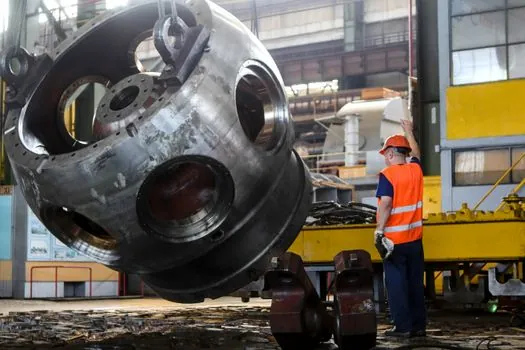
Selecting a belt by nameplate HP is the most common cause of premature failure: actual horsepower must be multiplied by a service factor that reflects load type, duty cycle, and shock [S3]. Bestorq's published guide puts agitators, blowers, and light conveyors at 1.0–1.2, mixers, printing machinery, and positive-displacement pumps at 1.1–1.4, and crushers, mills, and rubber calenders at 1.3–1.8 [S3]. For a 10 HP crusher on a typical 1750 RPM motor, that 1.5 service factor pushes the design point to 15 HP and almost certainly forces a move from a single A-section belt to a B, C, or SPB section, or to a matched multi-belt set [S3]. The Gates Heavy-Duty V-Belt Drive Design Manual (T219) reinforces the same point: serpentine and multi-belt drives are calculated by the program for shaft load, belt tension, and wrap angle rather than by simple HP lookup, and the manual flags that going below the recommended minimum pulley diameter is the fastest path to a cracked cord [S6].
Conveyor and bucket-elevator specific constraints
On a belt conveyor head pulley, V-belts typically drive a shaft-mounted gearbox or a coupled drive pulley, and the limiting factors are belt speed (usually held below about 30 m/s for classical sections to limit dynamic imbalance) and minimum wrap angle on the small sheave (commonly 120° or more for V drives) [S2][S6]. Tracking on long, narrow, or reversing conveyors is solved with V-guide profiles vulcanized or welded to the belt underside: standard sizes run 6 mm to 22 mm base, with PVC and PU as the common materials, and the pulley-side groove should be 8–10 mm (0.31–0.39 in) wider than the guide to allow self-alignment, while the slider-bed groove is held tight at roughly 4 mm (0.16 in) wider than the profile to keep the belt on center [S4]. For bucket elevators handling abrasive or hot material, EPDM-cogged narrow-wedge belts are increasingly specified over wrapped classical sections because the cooler-running cogged profile survives the elevated ambient that an enclosed boot and head box create [S5].
Failure modes and environment-driven derating
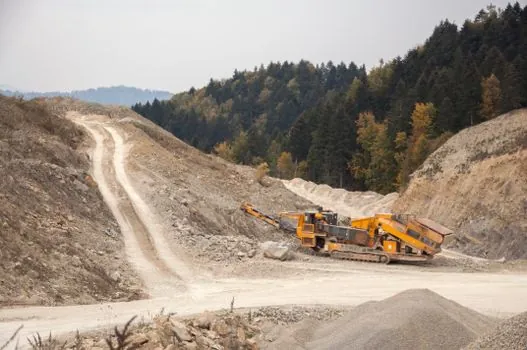
Most field V-belt failures cluster into four buckets: undersized sheave diameter, wrong compound for the chemical environment, contamination, and tension errors [S1][S5]. GlobalSpec's selection guidance explicitly calls out chemical resistance and UV exposure as application filters, because polyester cords and neoprene both degrade when exposed to solvents, fuels, and prolonged sunlight [S1]. Excessive tension overloads bearings and shreds the cord, while too little tension causes slip, glazing, and heat buildup that hardens the compression section [S2][S3]. Raw-edge sidewalls on cogged belts amplify this: they grip harder but tolerate neither oil nor dust, so a quarry, foundry, or wash-down application almost always wants a wrapped section, while a clean machine-room or HVAC fan room is a textbook raw-edge application [S5].
Sourcing, standards, and RFQ inputs
Buyers should send suppliers five numbers and two environmental tags: actual horsepower, driver and driven RPM, center distance, both sheave effective diameters, and the duty/ambient envelope (peak temperature, presence of oil, dust class) [S3]. Useful cross-reference standards in the V-belt and ribbed-belt space include ISO 4184 (classical V-belts and pulleys), ISO 5294 / ISO 5291 for synchronous belt drives that often appear next to V-drives in a retrofit, and ARPM / RMA IP-20 / IP-22 for narrow-wedge sections, with manufacturer design software such as Gates' T219 manual and Bestorq's online program used to finalize length and number of belts [S3][S6]. For packaging and conveying lines specifically, an RFQ should also include shaft orientation, any belt-tensioner provision (see belt tensioner for typical idler arrangements), and whether serpentine wrapping is required, since multi-belt matched sets and tensioner-equipped drives change the service-factor math [S3][S6].
Trackable signals over the next sourcing cycle: a shift from wrapped A/B sections to cogged narrow-wedge SPB/SPC on new conveyor and bucket-elevator builds, paired with EPDM compound adoption in hot or outdoor service, and a steady move toward matched multi-belt V-sets with dedicated belt tensioners instead of take-up screws on the drive end. For an applied walk-through on a heavy-thermal handling environment, see the field notes on V-belt selection for cement plant drives.