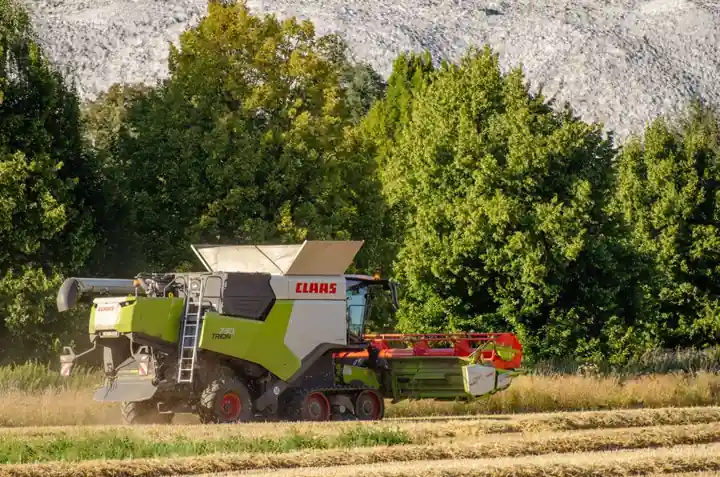
A V-Process vacuum molding line fits agricultural-machinery foundries when the casting mix tilts toward plows, tiller blades, rotary harrow flanges, and gearbox housings weighing under roughly 1.5 tons per piece, since the process uses plastic film, unbonded dry sand, and a 200-400 mbar vacuum differential to hold the mold together [S1].
The line is built around two rigid flasks, a heated film-stretch station, a vibration table, and a vacuum pump skid; cycle times in agricultural foundries typically fall in the 8-15 minute range per mold half, which keeps throughput modest against green-sand automatic molding lines but adequate for batch sizes of 50-500 castings [S1][S2].
Process Boundaries: What V-Process Will and Will Not Cast on the Farm
The V-Process, patented in Japan in the early 1970s and widely used for agricultural and mining castings, clamps dry silica sand between two plastic films held under vacuum of approximately 200-400 mbar, eliminating chemical binders from the mold body [S1]. For agricultural castings, this translates to clean parting lines, low gas evolution, and minimal sand adhesion on cast surfaces, which is why the process is well established for wear parts, drawbar housings, and tractor wheel centers weighing 20 kg to 1.5 t [S1].
The hard ceiling is flask size. Most production V-Process lines built for farm-machinery work cap out at a 1.2 m x 1.0 m flask with a sand depth of 250-300 mm, which sets a single-casting weight limit near 1.5 t for steel and roughly 2.0 t for gray iron when coreprints are modest [S1]. Thin-wall sections under 5 mm in ductile iron are also a poor match, because the unbonded sand cannot hold a sharp edge through pouring, and the process loses against resin sand or shell molding once wall thickness drops below that threshold. Pattern lifetime is another constraint: the plastic film that conforms to the pattern is replaced every 10-40 cycles depending on draft angle and pattern surface finish, so a 1,000-casting job consumes a meaningful stock of 0.05-0.10 mm EVA or PE film [S1].
Selection Criteria for Agricultural Foundries
Selection criteria line up against four decisions a foundry manager has to make: flask size against the largest part, throughput target against cycle time, pattern material against annual casting count, and dust/ventilation against local environmental rules. For a typical mid-sized farm-machinery OEM running 200-400 castings per month of 100-800 kg parts, a V-Process line with a 1.0 m x 0.8 m flask, 25-30 kW total connected load, and a vacuum pump rated 15-25 m^3/h at 50 mbar absolute is the realistic spec band [S1].
For high-volume tiller-blade production above 1,000 pieces per day, an automatic molding line running green sand or a molding line on furan resin will out-cycle the V-Process by a factor of three to four, because the V-Process bottleneck is the film-stretch and vacuum-pulse sequence rather than the pour itself [S1][S2]. Conversely, for prototype tine bars, custom drawbars, and low-volume replacement parts where pattern changes happen weekly, the V-Process wins because a wooden pattern is reusable across thousands of film pulls and pattern changeover is under 30 minutes.
Pattern, Flask, and Vacuum Skid: The Three Subsystems That Decide the Bid
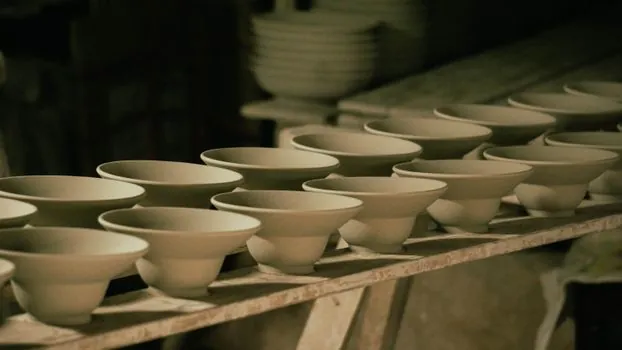
The pattern side is where most agricultural-foundry disputes start. V-Process patterns are typically cast aluminum or machined MDF, vented with 1-2 mm holes on a 25-40 mm pitch, and the pattern must carry a release-agent film so the plastic sheet does not bond to the wood or metal during heating [S1]. A 0.05-0.10 mm EVA film is heated to roughly 100-120 degrees C, draped over the pattern, and vacuum-pulled against it, which takes 30-90 seconds per half and largely dictates the upper bound on cycle time [S1].
The flask side is more straightforward: 12-20 mm thick steel plate frames, drilled with a dense pattern of 1.5-2 mm vent holes on a 15-20 mm grid, sit on a vibration table and get filled with dry AFS 50-70 silica sand before the second film is laid and the vacuum is pulled. Vacuum skid sizing is the most-often mis-specified element; a 1.0 m x 0.8 m flask with 250 mm sand depth holds roughly 250-300 L of air that must be evacuated in 3-5 seconds to avoid soft edges on deep pockets, which means a rotary-vane pump rated 20-30 m^3/h at 50 mbar absolute is the practical minimum, with a 5-10 kW holding pump to maintain vacuum during pour [S1]. A weaker skid shows up immediately as rounded fillet radii and missing detail on the underside of flanges. The line also needs a stripping station where the vacuum is broken and the sand drops out by gravity, since the unbonded sand collapses without external pressure, which makes flask cleanout faster than any chemically bonded process.
Comparing V-Process Against Green Sand, Resin Sand, and Shell for the Same Job
For an agricultural foundry evaluating one casting line against three alternatives on a 200 kg tiller-housing job, the comparison tends to look like this. Green sand wins on raw throughput: an automatic molding line running 120-180 molds per hour is hard to beat at high volume, but green sand carries the bentonite-bonded moisture that drives casting-defect rates up on deep pockets, and the v-belt and drive-train maintenance on a high-speed green-sand line is its own budget line [S2].
Resin sand (furan or phenolic urethane) delivers sharper edges and cleaner steel surfaces than either green sand or V-Process, at the cost of binder chemistry, fume scrubbers, and 10-20% longer cycle times. Shell molding wins on thin-wall ductile iron and on castings with fine surface finish requirements, but the 250-300 degrees C metal-tool temperature and the sand-resin coating add a process calibration burden the V-Process sidesteps. The V-Process sits between green sand and resin sand on surface finish, ahead of both on environmental load (no chemical binder in the sand), and behind green sand on cycle time. For a mixed-product agricultural foundry doing 30-50 active part numbers per year in batch sizes of 50-500, this trade usually tilts toward V-Process or toward a hybrid where V-Process handles the large wear parts and an automatic line covers the high-volume housings [S1].
Power, Footprint, and Integration with Pouring and Shakeout
A V-Process line for a 1.0 m x 0.8 m flask typically draws 30-50 kW of connected load, dominated by the 15-25 kW infrared heater bank for pattern-side film forming and a 7.5-15 kW main vacuum pump, with the auxiliary holding pump at 2-4 kW and a small 1-2 kW vibrator on the fill table [S1]. Footprint for the line itself, excluding the sand bin and conveyor, runs 8-12 m long by 4-5 m wide, which is smaller than a comparable green-sand automatic line at 15-20 m but larger than a single-station shell core shooter.
Integration with pouring and shakeout is where agricultural foundries most often stumble. The vacuum must hold until the pour is complete and the casting has formed a solidified skin, typically 4-8 minutes for a 200 kg steel casting, which means the vacuum lines and the pouring ladle path have to coexist on the same bay floor without compromising either the flask seals or the ladle refractory life. A related decision is whether the V-Process line sits next to a green-sand line or stands alone; a dual-process bay lets the foundry route deep-pocket jobs to V-Process and high-volume housings to the automatic line without re-routing cranes. The related V-Process line selection for automotive castings discussion covers similar flask and vacuum-skid logic, while the resin sand molding line selection for energy equipment castings piece shows where resin sand pulls ahead for tighter-tolerance energy parts.
Failure Modes and Sourcing Discipline Specific to Agricultural Castings
The recurring failure modes in agricultural-foundry V-Process work are predictable: rounded fillet radii traceable to under-sized vacuum pumps; sand inclusions from torn films, which usually mean the EVA film thickness has been driven below 0.05 mm to save cost; veining and rat-tails on cast surfaces when the sand moisture creeps above 0.3%, which is a reclaim-system problem rather than a process problem [S1]. For tractor parts that bolt to high-vibration assemblies, surface defect density is the metric that drives warranty cost, and the V-Process tends to keep that figure roughly 30-50% below a comparable green-sand line on the same casting [S1].
Sourcing discipline comes down to two questions: where the flask steel is fabricated, and who services the vacuum skid. Flasks for agricultural work are routinely fabricated in mild steel plate with welded bosses, but a foundry running 8-15 vacuum cycles per shift should specify cast-iron or welded-steel flasks with machined sealing faces, since flange warpage above 0.5 mm will leak vacuum faster than the pump can hold it. Vacuum-pump service is the line's single point of failure, and the practical hedge is a two-pump skid with a manual crossover, so a seal or vane failure does not stop the foundry for the 24-48 hours a replacement part typically takes to arrive. Specifications worth pinning in the purchase contract are flask plate thickness at 12-20 mm, vent hole pattern on a 15-20 mm grid, vacuum-pump absolute pressure at 50 mbar, infrared heater watt density at 8-12 kW/m^2, and a documented film-thickness range of 0.05-0.10 mm for the EVA or PE plastic film [S1].