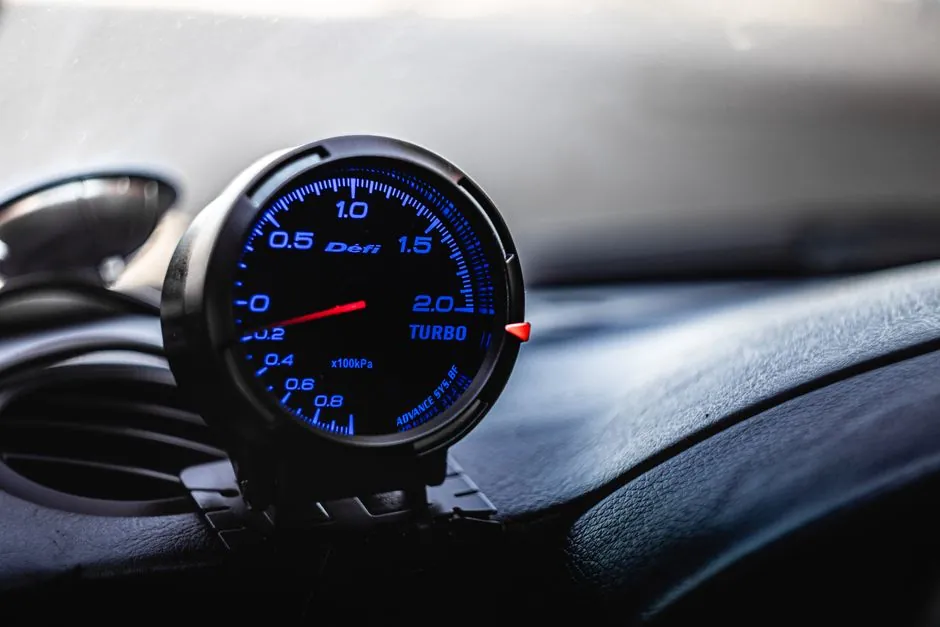
A vacuum gauge is selected by its measurement range, gas-type dependence, and mechanical ruggedness, with no single sensor covering atmosphere to UHV [S5].
For HVAC service the practical target is 500 microns or less, measured with a digital micron gauge that resolves 0.1 micron below 10,000 microns; analog manifold gauges cannot resolve this region [S1].
Pressure Ranges and the Need for Multiple Sensors
No single vacuum measurement method covers the full span from atmospheric pressure to ultra-high vacuum, so different sensor families are stacked per range [S5]. The SI unit is pascal (1 N/m²); common practical units are 1 mbar = 1 hPa = 100 Pa, and 1 Torr = 133.322 Pa [S5]. Atmospheric pressure equals 760 Torr, 760 mm Hg, or roughly 760,000 microns; 1 micron equals 1 mTorr (0.001 Torr) [S1][S2].
Diaphragm (capacitive) gauges are the gas-independent, direct-measurement family; a piezo-resistive variant uses diffused strain gauges on a silicon diaphragm and tolerates gas inrush well, while a capacitive variant can resolve four decades per sensor with a stated lower limit near 10⁻⁵ hPa [S5]. Direct force-based measurement becomes impractical below 1 hPa, forcing the switch to thermal-conductivity or ionization methods that are inherently gas-type dependent [S5].
Direct vs Indirect Measurement: When Each Applies
Direct measurement translates a force on a defined diaphragm area into a reading; the output is independent of gas composition, which is why capacitive diaphragm gauges are used as a calibration reference and in corrosive-gas service [S5]. Capacitive gauges use either stainless-steel diaphragms or vacuum-metalized ceramic diaphragms; ceramic diaphragms reduce temperature drift and resist corrosive gases [S5].
Indirect measurement reads a gas property (thermal conductivity for Pirani/thermocouple, ion current for hot/cold cathode) and therefore reads differently for nitrogen versus helium versus water vapor at the same true pressure [S5]. For HVAC evacuation diagnostics this is why a "rise rate" reading is interpreted as outgassing (moisture desorption) versus a true leak: the indirect sensor is responding to changing gas composition, not just pressure [S1].
Spec Comparison: Main Sensor Families
Four families cover the working envelope a buyer actually faces. The table below lines them up against range, gas dependence, accuracy class, and a representative use case from the research. [S5]
Capacitive diaphragm: 10⁻⁵ hPa to roughly 10³ hPa, gas-independent, four-decade spans per sensor, ceramic or stainless diaphragm, typical use is process gauge and reference standard [S5]. Thermocouple (Teledyne Hastings DV-6S): 0.001 to 1 Torr (1 to 1000 mTorr), gas-dependent, MIL-STD 202 Method 213 to >2,000 g for 6 ms and 23.9 grms random vibration, 1/8 in NPT standard with KF-10/16/25 and 1/4 in VCR options, typical use is mobile cryogenic LNG/LN2/LOX/LH2/LAr/LCO2 vessel vacuum jacket [S3]. Pirani: thermal conductivity, gas-dependent, used for rough-to-medium vacuum monitoring in laboratory and process skids (per the vacuum gauge reference framework). Digital HVAC micron gauge (thermistor/pirani-class): 0 to 25,000 microns typical, 0.1 micron resolution below 10,000 microns, IP54 housing, wireless to 1,000 ft, typical use is HVAC/R evacuation verification at the service port [S1].
The selection rule that falls out: if the gas composition is unknown, varying, or corrosive, default to a capacitive diaphragm gauge; if the duty is HVAC evacuation, a 0.1-micron digital gauge at the port beats a manifold-mounted analog dial [S1][S5].
Duty-Cycle Fit: HVAC Field Service vs Cryogenic Transport
HVAC service in 2026 has tightened because A2L refrigerants (R-32, R-454B) and POE oil create hydrofluoric acid when moisture remains, so evacuation must hit 500 microns or less and be verified with a real-time curve rather than a final dial reading [S1]. The wireless trend is now mainstream: Fieldpiece's MG44 connects to the Job Link app at up to 1,000 ft with an IP54 housing, letting a technician read the evacuation curve from inside the service truck, while the AccuTools BluVac+ Pro adds a "Rise Time" analyzer and "Vacuum Leak Rate" indicator to separate moisture outgassing from a real leak [S1]. The 8 cfm vacuum pump class (Fieldpiece VP87 and the A3-compatible VP833) is the mid-range pairing for this work, with a 6 cfm unit still in the lineup as a lighter option [S4].
Cryogenic transport is the opposite problem: the vessel does not move during measurement, but it is subjected to road vibration, rail harmonics, and loading impacts. The Teledyne Hastings DV-6S is specified against MIL-STD 202 Method 213 to >2,000 g for 6 ms, 23.9 grms random vibration, and 30 g at 3,000 Hz sinusoidal, all in a stainless-steel housing with an O-ring-sealed aluminum cap and captive lanyard, with a 0.001 to 1 Torr (1 to 1000 mTorr) range that matches the standard DV-6 series [S3]. The same DV-6S is a drop-in for the HPM 4/5/6 handheld, DCVT, DVT, VT-6A, and DAVC instruments, so fleets can swap without rewiring [S3].
Reading the Scale: Units, Elevation, and the Last Inch

Vacuum readings on a 0-30 in Hg scale are relative, not absolute: in Denver (about 5/6 of sea-level pressure) the same pump that pulls 30 in Hg at sea level will only pull about 25 in Hg, so the last inch of a rough gauge is meaningless for absolute process decisions [S2]. Below that last inch, the convention flips: smaller micron or millitorr numbers mean deeper vacuum, while bigger inch numbers mean deeper vacuum on the 0-30 in scale [S2]. This is why professional evacuation is reported in microns or torrs rather than inches of mercury [S1][S2].
Standard oil-sealed rotary pumps reach 1 x 10⁻³ Torr (1 millitorr), about 1,000 times deeper than "rough" service; rough vacuum is defined as the region where ambient is taken as the 0 in reference [S2].
Who Should NOT Pick the Mainstream Option
A general-purpose 0-25,000 micron HVAC gauge is the wrong tool for any of the following: (a) a process line with unknown or corrosive gas, where a gas-independent capacitive diaphragm gauge is required for accurate pressure readout [S5]; (b) a calibration lab that needs a transfer standard, where a spinning rotor gauge (SRG) is the reference because it derives pressure from the deceleration of a magnetically levitated spinning ball, making it traceable and gas-type-aware in a defined way [S5]; (c) a cryogenic road or rail vessel, where MIL-STD 202 shock and vibration to >2,000 g is the actual binding requirement, not micron resolution at the port [S3].
Equally, buying a cryogenic-rated thermocouple gauge to verify HVAC evacuation is over-spec: the 0.001 to 1 Torr (1 to 1000 mTorr) range is too narrow to read the 500-micron (0.5 Torr) target accurately, and the 1/8 in NPT port hardware is wrong for an A2L service port [S1][S3].
Sourcing, Standards, and Shortlist Logic

The shortlist rule: define range first, gas-type dependence second, mechanical environment third, and digital interface fourth. For HVAC field service, prioritize a digital micron gauge with 0.1 micron resolution below 10,000 microns, IP54 or better, and wireless logging to a phone or job app [S1]. For laboratory and process skids, specify a capacitive diaphragm gauge with ceramic diaphragm for corrosive gases, four-decade span, and electronic temperature compensation [S5]. For mobile cryogenic service, require MIL-STD 202 Method 213 (>2,000 g, 6 ms) and 23.9 grms random vibration on the sensor data sheet, and confirm the readout instrument is on the same vendor's compatible list [S3].
Track the following signals when qualifying a vendor: published shock and vibration test method (not just a "rugged" label) [S3]; explicit gas-type or gas-independence statement on the datasheet [S5]; wireless range and app integration stated in numerical terms rather than marketing language [S1]; and verified compatibility with existing readouts, since a drop-in thermocouple tube that fits the HPM 4/5/6, DCVT, DVT, VT-6A, and DAVC instruments avoids fleet retooling [S3]. For a deeper look at how diaphragm and Pirani choices feed into a vacuum generator build-out, or how absolute force gauge calibration chains interact with low-pressure transfer standards, follow the linked reference pages. Buyers sourcing HVAC evacuation tooling should also cross-check vacuum packaging machine duty cycles if the same gauge is being repurposed for food or pharma lines, where chamber geometry and pump size change the rise-rate interpretation [S1][S5].
For related coverage, see Spec-First Guide: Absolute Pressure Transmitters for Chemical Processing.