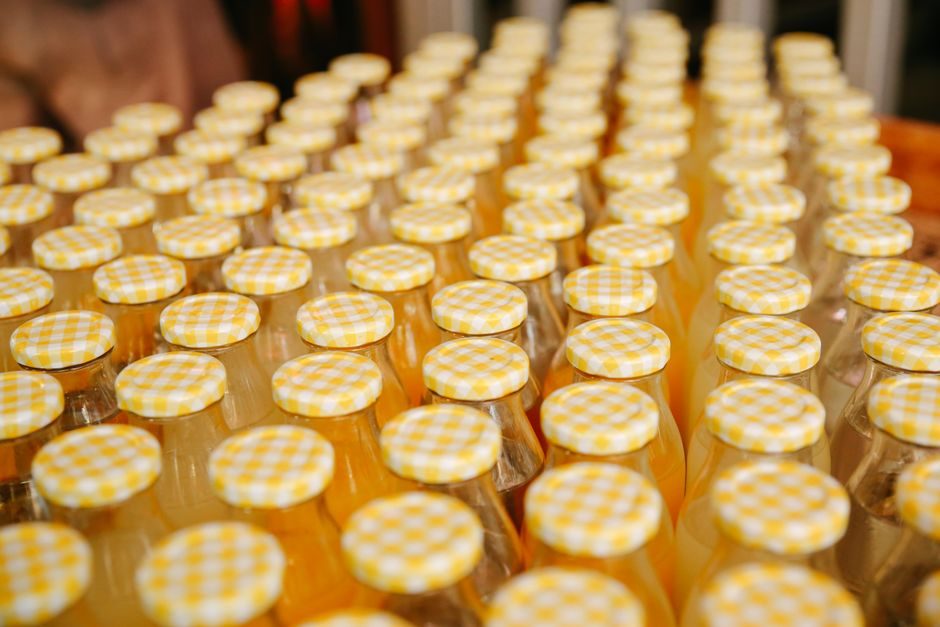
A vacuum packaging machine and a capping & sealing machine solve two different closure problems on a packaging line: the former removes headspace gas before sealing, the latter applies and tightens a cap or a heat-seal lid on a rigid container [S1][S2]. On a 2026 beverage line citing GTL-Packaging data, a single vacuum capping module is rated at 12,000 containers per hour for PET, glass, and can formats [S1]. On the food side, Sirman Spa's automatic chamber unit combines a Busch suction pump with a low-temperature cooking function for small servings, signaling a hybrid trend in compact vacuum packaging [S2].
Specifying the wrong class is the single most common error on greenfield lines, because the two machine families overlap in only one function: producing a hermetic final seal. The rest of the working envelope — pump sizing, chamber geometry, torque control, cap-feed system — diverges sharply.
What Each Machine Actually Does
A vacuum packaging machine pulls air out of a chamber or from inside a bag, then heat-seals the bag or a lidding film. Two architectures dominate: chamber (table-top, single-chamber, double-chamber) and external/bag-style, where the bag hangs outside the machine and a nozzle evacuates it [S5][S9]. Sirman Spa's compact automatic model is explicitly chamber-type with a removable sealing bar, paired with a Busch pump for short cycle times [S2]. Kaohsiung's external vacuum sealer attaches the bag externally and evacuates/seals in one step — the bag never enters the machine [S9].
A capping & sealing machine takes an already-filled rigid container and applies a threaded cap, a press-on cap, a pump, or an induction/heat-sealed lid. GTL-Packaging's automatic vacuum capping module is rated 12,000 p/h, operates in automatic mode, and targets glass bottles, PET bottles, and cans in the beverage industry [S1]. Vacuum capping is the crossover sub-class: it evacuates headspace gas immediately before the cap is applied and torqued.
Selection Criteria: 4 Decision Levers
Engineers pick between the two families on four numbers. (1) Container format: flexible bag → vacuum packer; rigid bottle/jar/tray → capper or tray sealer [S1][S7]. (2) Required throughput: chamber vacuum packers typically plateau in the low thousands of pouches per hour per operator, while inline vacuum cappers can hit 12,000 containers/h on a beverage line [S1]. (3) Headspace gas control: if oxygen ingress is the failure mode (meat, cheese, coffee, electronics), a chamber or vacuum-cap machine is mandatory; if it is tamper evidence and torque retention, a capper is the right tool [S9][S10]. (4) Floor space and utilities: table-top chamber units are 220 V/380 V three-phase compatible, with the common supply listed as 3-phase 220 V/60 Hz and 380 V/50-60 Hz across floor and double-chamber models [S5].
Material handedness matters too. Wenzhou Zhuoyue Machinery Co., Ltd. and Wenzhou Dingli list both Vacuum Packaging Machine and Capping Machine in their core product mix, alongside Sealing, Filling, Coding, and Strapping machines, which is the practical signal that mid-tier Chinese suppliers treat them as adjacent line modules rather than competitors [S4][S6]. Huaqiao Packing Machine Factory (KUNBA) similarly bundles "vacuum packaging machines, bag vacuum sealers, case sealers, cup sealers and other machinery" under one roof, founded in 1987 [S5][S10].
Comparison: Vacuum Packer vs Capping & Sealing Machine
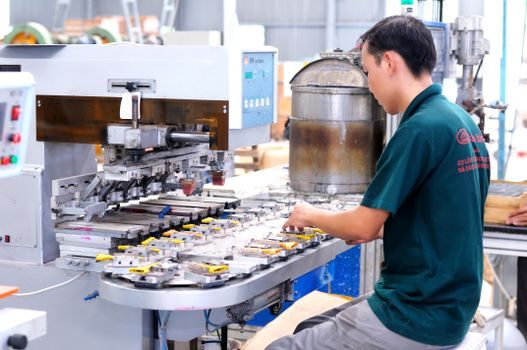
Set against four decision criteria, the two classes separate cleanly for spec sheets. [S1]
Container type: vacuum packer — flexible pouches, bags, thermoformed trays; capper/sealer — rigid PET/glass bottles, cans, jars, cups [S1][S7][S9].
Primary failure mode addressed: vacuum packer — oxygen-driven shelf-life loss; capper/sealer — torque retention, tamper evidence, leak integrity [S9][S10].
Throughput ceiling (per published 2026 vendor data): vacuum packer — chamber units sized for batch-style operation, multi-operator lines; capper — 12,000 containers/h on a vacuum capping module [S1][S2].
Utility footprint: vacuum packer — 3-phase 220 V/60 Hz or 380 V/50-60 Hz supply plus Busch-class pump circuit [S2][S5]; capper — usually 220 V single-phase or three-phase depending on torque station, no high-vacuum pump required unless vacuum capping is specified [S1].
The crossover is the "vacuum capper," which is mechanically a capper with a vacuum head added before the chuck [S1]. Treat it as a capper that owes a duty of care to a vacuum packer's leak-rate spec.
Use Cases That Drive Each Choice
Food and beverage: a chamber vacuum packer with a Busch pump, a removable sealing bar, and adjustable vacuum/seal times is the standard for small-portion sous-vide or retail-ready meat packs [S2]. Daewon GSI lists a vacuum packaging machine on Hong Kong Trade Development Council sourcing for industrial and parts buyers [S3]. Dajiang Machinery, operating since 1995, supplies both tray sealing machines and vacuum packaging machines as a combined line solution [S7]. Huaqiao Packing Machine Factory and Kunba both target the food-service segment with the same dual offering [S5][S10].
Industrial and non-food: a vacuum packaging machine is also used for electronics, medical devices, and hardware — Daewon GSI's listing sits under Industrial Machinery, Parts & Raw Materials, not food [S3]. For rigid containers, the capper path is universal: bottles (PET/glass) and cans route through the GTL-style automatic vacuum capping module at 12,000 p/h [S1].
Small shops and lab kitchens: a table-top chamber unit on 220 V single-phase is the typical entry point; external/bag sealers such as the Kaohsiung model handle the very-low-volume case where bags are sealed one at a time outside the machine body [S5][S9].
Limitations and Failure Modes
Vacuum packers fail in three characteristic ways: pump oil contamination (Busch and similar rotary vane pumps require scheduled oil and exhaust-filter service), seal-bar element burn-through on a stalled cycle, and lidding-film incompatibility with the chamber's seal temperature [S2]. Sirman's compact unit mitigates the last by exposing a "removable sealing bar" for service and a "low temperature cooking" mode that shares the same vacuum/seal timing controls [S2].
Cappers fail in different modes: cap-feed starvation on a rotary bowl, torque drift on worn clutch drives, and — for the vacuum-cap variant — incomplete evacuation of headspace, which silently defeats the purpose of the vacuum stage. A 12,000 p/h module is only as good as its vacuum pull-down time relative to the rotary indexing period [S1].
For buyers who are not yet ready to commit to a full inline line, the practical floor in 2026 is a chamber vacuum packer (table-top or single-chamber) with a 3-phase 220/380 V supply, or an external bag sealer for very small batches; a stand-alone capper makes sense only when bottle/jar volume justifies a torque station and cap feed [S5][S9].
Standards, Sourcing and Where the Market Is Pointing
No single ISO or IEC number governs "vacuum packaging machine" or "capping machine" as a product standard; instead, electrical safety on 3-phase 220 V/60 Hz and 380 V/50-60 Hz supplies falls under the usual IEC 60204-1 machinery-safety regime and regional equivalents [S5]. Food-contact machinery in the EU is additionally evaluated against EU 1935/2004 framework requirements (material migration, hygienic design), and GMP-aligned hygienic construction is a routine OEM claim [S2][S5][S10]. Buyers specifying Busch-class pumps should confirm oil-mist exhaust filtration matches the room's ventilation class [S2].
On the supply side, the 2026 sourcing map is dominated by Wenzhou and Zhejiang province OEMs that pair vacuum packaging, sealing, capping, filling, coding, and strapping in one factory [S4][S6]. Established 1987-vintage plants such as Huaqiao/KUNBA still compete on breadth of catalog rather than on a single flagship architecture [S5][S10]. A 2013-established Wenzhou Dingli lists tea-leaf grinders and ball mills alongside vacuum packing and sealing machines — typical of the trading-company-plus-factory hybrid that is common in this segment [S6].
Two signals worth tracking: (1) the spread of "vacuum capping" modules — the GTL-style 12,000 p/h unit — into non-beverage rigid-container lines, where they replace nitrogen-flush plus cap as a lower-cost alternative [S1]; (2) the bundling of chamber vacuum packing with low-temperature cooking in a single compact frame, as Sirman Spa has shipped, which compresses two process steps into one footprint [S2]. Buyers writing RFQs in 2026 should request a published Busch or equivalent pump model code, a stated seal-bar watt density, and a measured cycle time on the actual product, not just on a generic bag.
Trackable signals for the rest of 2026: 3-phase supply availability on chamber units (the 220 V/60 Hz and 380 V/50-60 Hz dual spec is now table-stakes for cross-region OEMs) [S5], and the appearance of more combined "vacuum pack + cook" or "vacuum cap + induction seal" hybrids in OEM catalogs of the Wenzhou and Guangdong clusters [S2][S4][S6][S7].
For component-level specifications, see vacuum die casting machine.
For related coverage, see Fixed Gas Detector 2026 Price & Cost Guide: Sensor, Cert and Output Levers.